





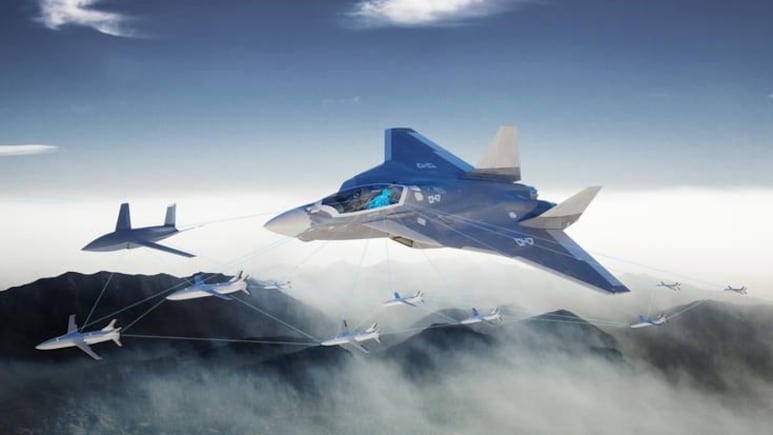
India is formally considering joining one of Europe's ambitious 'sixth-generation' fighter jet programs, marking the first official indication that the Indian Air Force (IAF) could partner in the development of a next-generation combat aircraft beyond the homegrown 5th-generation Advanced Medium Combat Aircraft (AMCA).
The Ministry of Defence (MoD) has informed the Parliamentary Standing Committee on Defence that the IAF is exploring collaboration with one of two European consortia currently working on sixth-generation fighters: either the UK-Italy-Japan partnership developing the Global Combat Air Programme (GCAP), previously known as Tempest, or the France-Germany-Spain Future Combat Air System (FCAS). The committee was told that the IAF intends to evaluate joining forces with one of these projects to ensure India does not lag behind in the development of advanced combat aircraft technologies.
Sixth-generation fighters represent the next leap in combat aviation beyond current stealth aircraft such as the American F-22, F-35 or China's J-20. While fifth-generation jets emphasise stealth, sensor fusion and networked warfare, sixth-generation platforms envision highly networked "systems of systems" capable of controlling swarms of unmanned drones, collaborative unmanned combat aircraft operating with advanced artificial intelligence decision aids, and deploying next-generation sensors and electronic warfare suites. Adaptive-cycle engines for greater power and efficiency, laser-like directed-energy weapons and extremely low observability are also expected features.
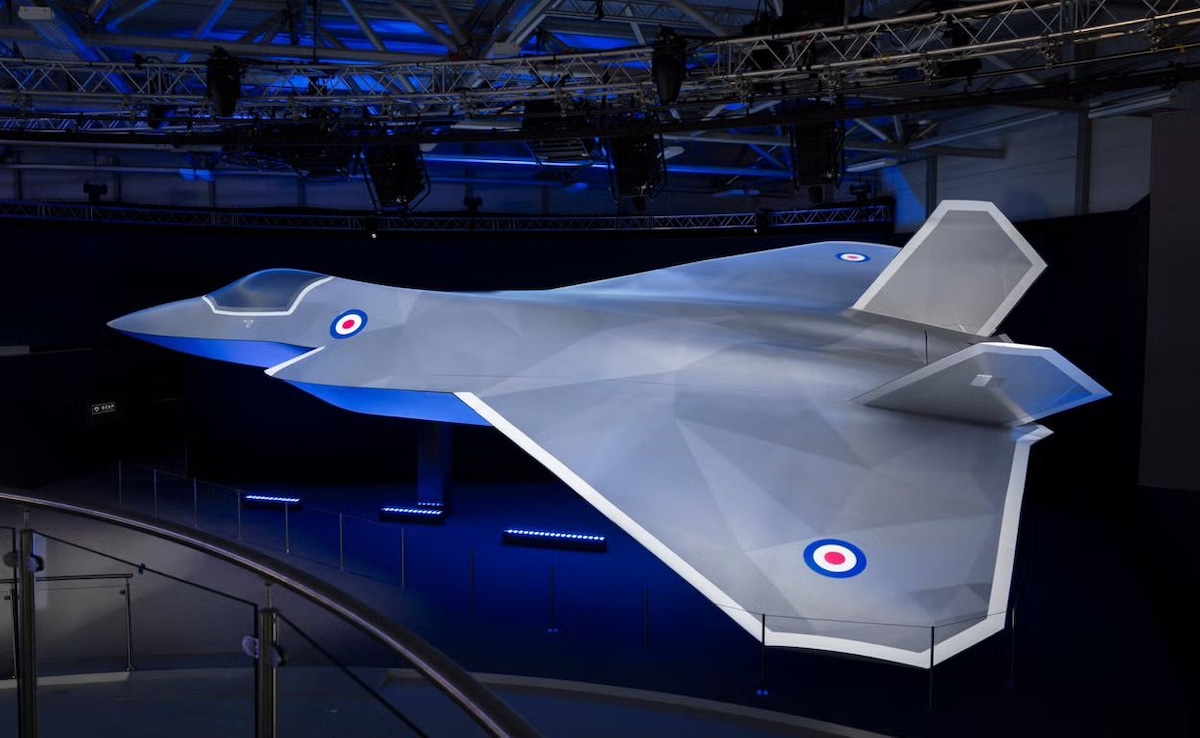
The Global Combat Air Programme (GCAP), previously known as Tempest.
The sixth generation race is already global. The United States is pursuing the Boeing F-47 program to replace the F-22, while China is widely believed to be developing its own sixth-generation stealth platform under the PLA Air Force's next-generation fighter effort, with two platforms already breaking cover in the last two years.
The urgency around such capabilities is becoming visible in real conflicts. The ongoing war in Iran has underscored the growing importance of stealth, electronic warfare, and unmanned systems on the modern battlefield. Even as relatively low-cost drones like the Shahed have dominated headlines for their ability to overwhelm expensive air defence systems, US and Israeli stealth aircraft remain critical for penetrating Iranian airspace, gathering targeting data and coordinating complex strike missions. Future air wars are expected to involve dense air defence networks, electronic warfare battles and autonomous systems operating at scale, exactly the kind of environment sixth-generation fighters are being designed to dominate.
India, currently struggling to get deliveries of its fourth-generation Tejas Mk1A fighters flowing, is moving ahead to accelerate its AMCA program that should produce an operational fighter in the next decade. But planning ahead for the next step is now an official priority for the Indian government, as enunciated by the MoD to the Parliament panel.
The Global Combat Air Programme (GCAP) brings together the United Kingdom, Italy and Japan in what could become the world's first operational sixth-generation fighter by the mid-2030s. Meanwhile, the Future Combat Air System (FCAS) led by France, Germany and Spain is pursuing a similar timeline, though the project has experienced delays due to industrial disagreements among partners. Both initiatives aim to field a next-generation stealth fighter supported by a family of unmanned "remote carriers" and a powerful digital combat cloud linking multiple platforms in real time. Given India's entry into the Rafale ecosystem, with a massive order for 114 Rafales in the pipeline, France is pushing hard for India to choose the FCAS program as a 'logical' choice.
For India, joining one of these programs would represent a major strategic decision. Participation in a sixth-generation program could allow Indian industry and scientists to gain early access to cutting-edge technologies in propulsion, sensors, artificial intelligence and next-generation materials, areas that are extraordinarily expensive and complex to develop independently.
At the same time, such a move would signal that New Delhi intends to remain in the top tier of combat aviation powers well into the 2040s and beyond. The Parliamentary panel's disclosure suggests that while the AMCA remains India's immediate priority, planners are already looking beyond it to the next horizon in air power. If India ultimately joins one of the European programs, it would place the country among a small group of nations directly shaping the future of air combat.
Track Latest News Live on NDTV.com and get news updates from India and around the world

