





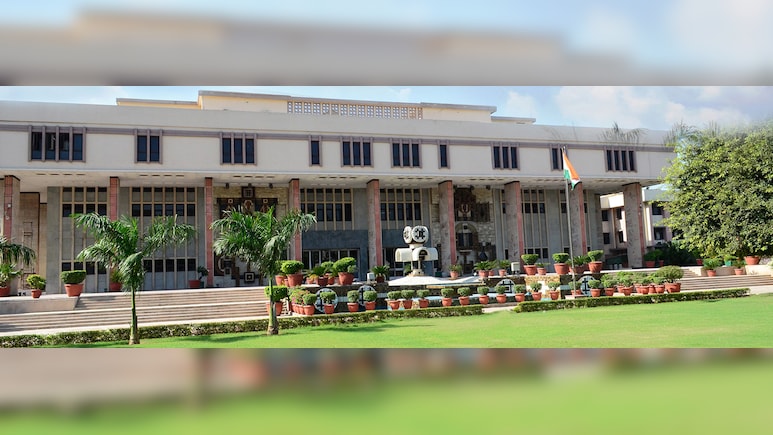
- The Delhi High Court upheld a conviction for sexual harassment from 2013 against a man.
- The court condemned blaming a girl’s clothing for corrupting boys as an unacceptable mindset.
- It ruled that a woman’s attire is her personal choice and irrelevant to the offense.
The Delhi High Court on Monday stated that a girl's choice of clothing is her personal decision and suggesting that her wearing jeans might 'corrupt young boys' reflects a deeply troubling and unacceptable mindset.
Justice Chandrasekharan Sudha, while convicting a man of sexually harassing a girl in 2013, observed that instead of controlling the clothes of girls, parents and society must teach their children to control their conduct, respect personal boundaries and treat every human with dignity.
The girl alleged that the accused, her neighbour, stalked her, made sexually coloured remarks and touched her inappropriately.
Before the high court, the State challenged the acquittal of the accused by the trial court in 2014.
In the judgement, the court took exception to the girl's character assassination in the "line of cross-examination and arguments" adopted by the counsel for the accused in the trial, noting that the questions put to her included her "western" dressing, religion of the people in the locality and their objections to her clothing.
"What a girl or woman chooses to wear is a matter of her personal choice. Neither her neighbours, nor society, nor the accused, nor counsel appearing in a court of law has any right to dictate her clothing. It is simply none of their concern. The suggestion that a woman wearing jeans may 'corrupt young boys' reflects a deeply troubling and unacceptable mindset," said the court.
"The answer does not lie in controlling the clothes of girls and women. Parents and society must instead teach their children to control their conduct, respect personal boundaries and treat every human with dignity, whether at home or outside," it added.
Justice Sudha noted that the cross-examination in the present case was "wholly irrelevant" and "improper", and ought to have been disallowed at the very outset by the trial judge.
Asserting that a woman's choice of attire neither diminishes her dignity nor serves as justification for unlawful conduct directed against her, the court held, "Questions based on a woman's clothing, character, lifestyle, religion or personal choices, unless strictly relevant to an issue arising in the case, must not be permitted." The court emphasised that "even a woman of easy virtue" was entitled to protect her person and the only question in the present case was whether an offence was committed.
The religion of the residents of the locality, and the clothes worn by her have no connection with that issue, it said.
"PW4 (girl) may be wearing clothes not palatable or approved by the accused or the other residents. That is no ground to disbelieve or discard her testimony. The grounds on which the trial court disbelieved the case are immaterial, and they do not in any way affect the core prosecution case," the court stated.
It held that the trial court's decision to acquit the accused was erroneous, and concluded that the material on record clearly made out an offence contemplated under Section 354A(1)(i) of IPC.
"Therefore, I find the appellant/accused guilty of the commission of the offence punishable under Section 354A (1)(i) IPC and hence convict him thereunder," ordered the court.
It, however, stated that POCSO cannot be invoked in the case as the prosecution failed to satisfactorily establish that the girl was a minor.
(Except for the headline, this story has not been edited by NDTV staff and is published from a syndicated feed.)
Track Latest News Live on NDTV.com and get news updates from India and around the world

