





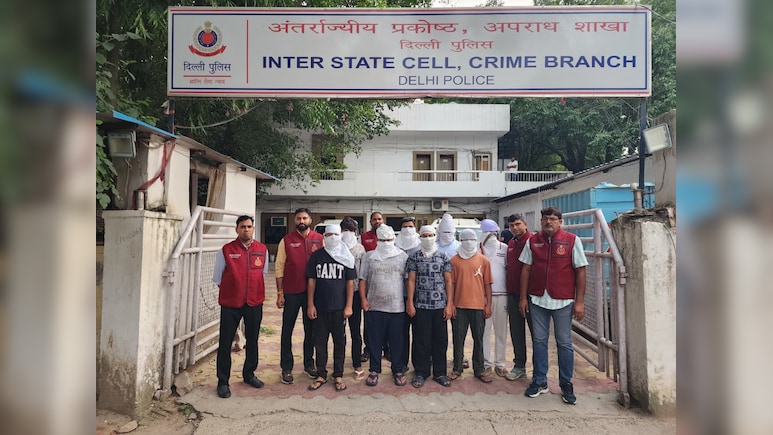
- Delhi Crime Branch arrested 17 in a racket dealing in illegal anti-cancer medicines across multiple states
- The network sourced drugs via counterfeit means and diversion from hospitals and government institutions
- Raids in Delhi and Navi Mumbai recovered medicines worth Rs 9 crore, cash, devices, and packaging materials
The Delhi Crime Branch has busted an alleged interstate racket involved in the illegal procurement, storage, repackaging and supply of expensive anti-cancer medicines, with 17 people arrested so far, officials said.
The network, according to investigators, stretched across Delhi-NCR, Mumbai, Navi Mumbai, Hyderabad, Haryana, Uttar Pradesh and Rajasthan.
Police suspect that the racket was dealing not only in counterfeit medicines but also in anti-cancer drugs allegedly diverted from hospitals and government institutions.
During raids and subsequent investigation, the Crime Branch recovered 588 filled anti-cancer drug vials, six empty vials, seven empty medicine boxes and 3,021 units of other medicines. The total estimated value of the seized medicines is around Rs 9 crore.
Police also recovered around Rs 50 lakh in cash, along with mobile phones, electronic devices, packaging material and registers and diaries allegedly containing details of drug transactions and financial dealings.
How The Network Allegedly Worked
According to the Crime Branch, the syndicate had a structured supply chain, with different members responsible for sourcing, storing, repackaging and distributing the medicines.
Investigators have identified three alleged sources through which the accused obtained the medicines. These include counterfeit drugs procured through unauthorised channels, medicines allegedly removed from hospitals treating cancer patients, and drugs supplied to government institutions and warehouses that were allegedly diverted into the illegal market.
The medicines were then allegedly sold without valid bills, drug licences, purchase records or other mandatory documents. Police said the drugs were concealed at different residential and other locations before being moved through intermediaries to buyers in different cities.
The investigation also revealed that the accused allegedly reused old cartons and empty medicine boxes for repackaging. Police suspect that batch numbers, MRP details and other identifying information were deliberately removed or altered. Investigators have also found the alleged use of chemicals such as acetone for this purpose.
The medicines were then packed using thermocol boxes, bubble wrap, tape and polythene before being transported to different locations.
Raids Across Delhi And Navi Mumbai
The Inter-State Cell of the Crime Branch received intelligence about the alleged racket on June 22, 2026. Following the information, investigators identified suspected locations in East Delhi, Rohini and Mumbai and began tracking people allegedly linked to the network.
Seven teams were formed on July 11 and, in coordination with the Drugs Department and local police, simultaneous raids were conducted at several locations in Delhi and Navi Mumbai.
The raids led to the recovery of several expensive anti-cancer medicines, including Darzalex, Imfinzi, Erbitux, Opdyta, Gazyva, Bavencio, Adcetris and Keytruda.
An FIR was subsequently registered at the Crime Branch police station on July 12.
Key Accused And Their Alleged Roles
Among those arrested are Abhishek Vaishya and Shubham Kumar Chaudhary, both residents of Delhi's Laxmi Nagar.
Police allege that Vaishya had been involved in procuring and supplying anti-cancer medicines through illegal channels since 2022. Registers, diaries, electronic devices, packaging material, medicines and Rs 4 lakh in cash were recovered from his premises.
Shubham Kumar Chaudhary is accused of being involved in the supply of anti-cancer medicines since 2023 through cash transactions and without proper bills. Police said medicines and Rs 23 lakh in cash were recovered from him. His younger brother Suraj Chaudhary is also alleged to have joined the network in 2024.
Gagan, a wholesale medicine trader from Ghaziabad, has been accused of supplying medicines received from Satish Kumar to Abhishek Vaishya. Satish Kumar, who had earlier worked as a medical store salesman for nearly a decade, allegedly acted as an intermediary between Mukesh and Gagan.
Police allege that Gurugram-based Mukesh sourced anti-cancer medicines from hospitals and supplied them to pharmacists and brokers. Twelve vials, other medicines, packaging material and Rs 16.50 lakh in cash were allegedly recovered from his vehicle.
Navi Mumbai resident Ayush Kumar has been accused of procuring anti-cancer medicines from Gagan and supplying them further into the market. Ghaziabad resident Vishwas Tyagi allegedly helped arrange invoices despite the absence of genuine drug supplies and assisted in financial transactions through a company bank account.
Paramjeet Sheoran, who runs a medical store in Haryana's Jhajjar is also among the accused. Nine anti-cancer vials were allegedly recovered from his premises.
Noida resident Anand Kumar has been described by investigators as an important intermediary in the supply chain. Police said 337 anti-cancer vials and a large quantity of other medicines were recovered from his possession and premises.
Hospital Diversion Angle Under Probe
One of the key aspects of the investigation is the alleged diversion of medicines from hospitals.
Police have accused several people with links to hospitals of removing medicines meant for cancer patients and passing them into the illegal supply chain.
In Hyderabad, police allegedly recovered 23 suspected counterfeit anti-cancer medicines from Srinivasulu Kalva, who is accused of being part of a network involved in sourcing and supplying medicines from hospitals.
Ramdas Satish Kumar has been accused of removing anti-cancer medicines meant for patients while working at a reputed hospital and supplying them further.
Malugari Srinath Reddy, a B.Pharma graduate working at a reputed hospital, has also been accused of allegedly taking medicines meant for patients and passing them on to other members of the network.
Investigators have also arrested Mayank Garg from Gurugram, who is accused of sourcing anti-cancer medicines through people connected to hospitals. Police said 55 suspected anti-cancer vials were recovered from him.
Faridabad resident Deepak alias Ravi, who had worked as a personal assistant to an oncologist at a reputed hospital, allegedly received anti-cancer vials from nursing staff. Police said 108 vials and Rs 6.50 lakh in cash were recovered from his residence.
Jaswant Sharma, who has a nursing background and had worked as a nursing in-charge at a hospital, is accused of removing anti-cancer vials from the oncology department and supplying them to the network.
In Rajasthan's Alwar, Manish Sharma has also been accused of allegedly removing anti-cancer injections meant for patients from a hospital. Five filled and four empty vials were reportedly recovered following his arrest.
The Crime Branch is now probing the wider network, including the source of the suspected counterfeit medicines, the alleged diversion of genuine drugs from hospitals and government institutions, and the financial trail behind the interstate operation.
Track Latest News Live on NDTV.com and get news updates from India and around the world

