





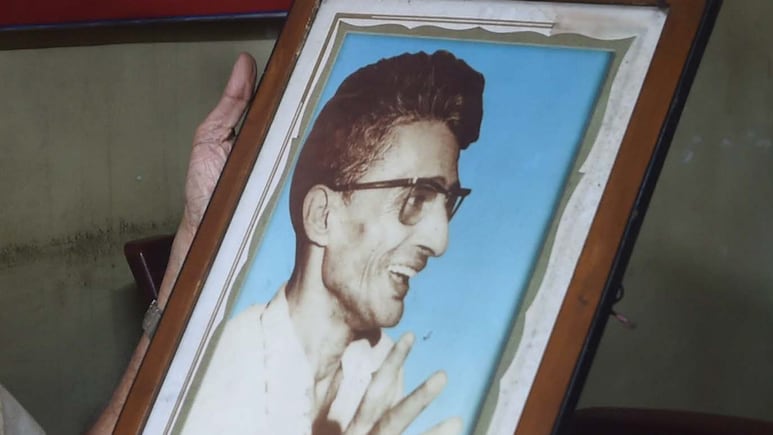
- Naxal movement began in 1967 in North Bengal as a farmers' uprising against landlords
- Charu Majumdar, Kanu Sanyal, and Jangal Santhal led the movement, spreading it to urban youth
- Crackdowns from 1971 weakened the movement; Majumdar's 1972 death caused factional splits
The Naxal movement, which sparked a six-decade-long insurgency that cuit a swathe through nine states and stretching all the way from Karnataka to Nepal, had started in a tiny place in north Bengal. It was a class war of sorts, started by farmers who lashed out against the centuries-old oppression by landlords. Its ideologues had dreamt of a class-less society -- an ideology that inspired many for decades - the final shape it got was beyond the ambit of the main players back in 1967.
The date was May 24, 1967, when farmers at a remote village, armed with hoes and sticks, got together. Tempers ran high, since there was news that one of them was killed by a landlord. They attacked the house.
When called in, the police, unable to control the mob, started firing. By the time they wrapped up, more than 20 bodies had piled up.
The conflagration could not be contained. In the days that followed, some of the landlords in neighbouring areas -- Naxalbari, Kharibari and Phansidewa -- were beaten to death, marking the beginning of a class struggle.
The movement was not pre-planned - much like others of this nature, including the 1917 Bolshevik Revolution in Soviet Union. But the deft handling ensured that the news - and ideology - spread.
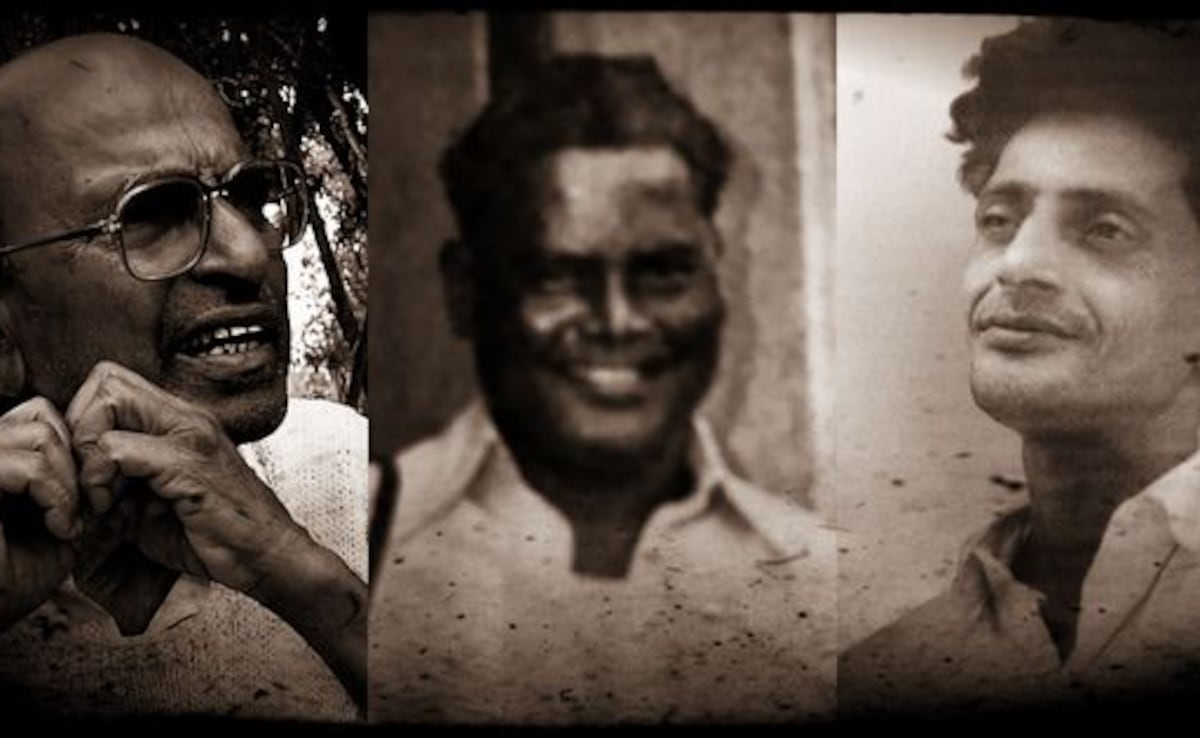
From left: Kanu Sanyal, Jangal Santhal, Charu Mazumdar
Under the leadership of Charu Majumdar, Kanu Sanyal, and Jangal Santhal, it became a well-managed movement that led to major escalation of tensions. It caught the imagination of the urban elite and inflamed state capital Kolkata. Students and young people from prestigious colleges and universities - especially the Presidency College and Jadavpur University -- joined in, deserting the classrooms.
It also increased the scope of the movement which spread fast to neighbouring states, including Bihar and Odisha.
The authorities then decided to act. Starting in1971, the crackdown continued for months, and saw hundreds die in encounters and in police custody.
The movement lost momentum after the death of Charu Majumdar in police custody in 1972. Factionalism gradually weakened it further. But the ideology remained and over the years, saw further splits in the Left bloc, and emergence of increasingly radical thoughts.
The big element here was the Maoist ideology flourishing in neighbouring China.
Various international socialist ideas had already influenced Indian communists. Amid it, Mao Zedong's theory of a peasant-based revolution had deeply inspired the Naxal leaders. It formed the backdrop of their ideology.
The Communist Party in India - established in 1925 - had already split into CPI and the CPM. Now, there mushroomed another faction - the CPI(ML)-the Communist Party of India (Marxist-Leninist) - which became the crucible for a full-blooded Maoist generation.
Ideological Battle
The ideological warfare continued along international lines. The Naxals opposed what they saw as Soviet revisionism. They contended that the Soviet Union had deviated from authentic revolutionary principles and had aligned itself with imperialist and neo-imperialist forces.
While the CPI was generally considered more pro-Soviet in its orientation, the CPM was seen as more sympathetic toward China.
The Naxals rejected both parties and advanced a more militant revolutionary approach inspired by Maoist ideology. Their movement evolved as a more radical and revolutionary current within the Left.
Maoist Years
Through the 80s and 90s, Maoist groups continued their activities in various regions. Their presence was particularly strong in states such as Chhattisgarh, Jharkhand, and parts of Karnataka. These regions saw significant Maoist insurgent activity for many years.
In Chhattisgarh, especially, Maoist influence was once dominant.
The Bastar had long been considered one of the most intense centres of Maoist activity in India.
Barring Bastar, the whole of Red Corridor has now almost fallen silent with sustained security operations on the one hand and multiple efforts by governments to provide development, employment and hefty surrender packages.
On Monday, Union Home Minister Amit Shah declared in parliament that Maoist menace is over. Their influence is almost gone from their last bastion Bastar.
From Bullets To Ballots
Although the movement initially relied heavily on armed struggle, over time, parts of it gradually entered the parliamentary system as well.
Organisations such as the Indian People's Front (IPF), under the leadership of figures like Pankaj Bhattacharya, began participating in parliamentary politics, even though the armed dimension continued unlike neighbouring Nepal.
The Nepal Twist
In Nepal, the Maoist movement led by key Maoist Prachanda began as an armed insurgency in the jungles. Eventually, however, the Maoists entered mainstream parliamentary politics and became part of the democratic political system.
Prachanda, who had earned the sobriquet "ferce one" through his intense ideas, ended up as Prime Minister Pushpa Kamal Dahal of the Himalayan nation.
Track Latest News Live on NDTV.com and get news updates from India and around the world

