





- Masood Azhar remains in hiding eight years after the Pulwama attack
- India's retaliation strategy forced Jaish and Lashkar leaders underground
- Pulwama bombing plot involved Pakistani and local conspirators trained in Afghanistan
Seven years after Pulwama, Jaish-e-Mohammad chief Masood Azhar remains elusive, his freedom of movement curtailed. India's assertive retaliation strategy has forced him into hiding, stripping Pakistan of its erstwhile safe haven status.
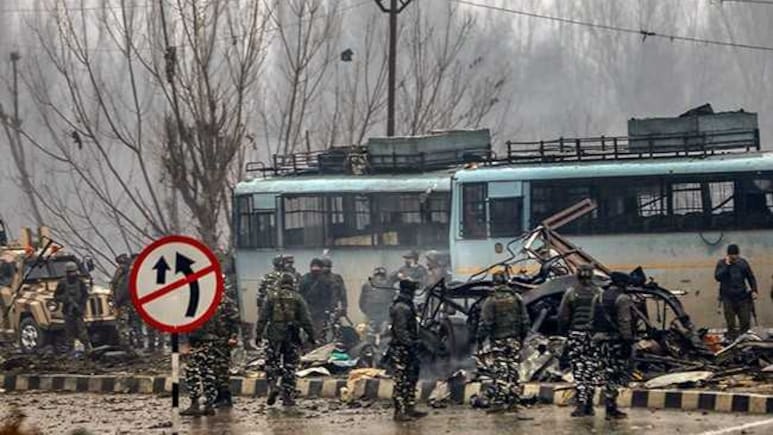
It was on this very day the terror attack, which claimed 40 CRPF lives, was orchestrated by 22-year-old Adil Dar, a JeM operative who rammed an IED-laden SUV into a CRPF convoy in Pulwama.
India's paradigm shift in military strategy post-Uri attack evidently rattled terror commanders. Operation Sindoor, a recent reprisal, has forced Jaish and Lashkar leaders into hiding.
Last year, after the Pahalgam attack, India unleashed cruise missiles, decimating Jaish headquarters in Bhawalpur and Lashkar headquarters in Muridke, signalling that any attempt to target Indian civilians will lead to strong retaliation.
Masood Azhar, once brazenly operational in Pakistan, now lurks in hiding, resorting to audio clips to assert presence. Pakistan's erstwhile safe haven has evidently shrunk for terror outfits.
"The Uri attack and Pulwama bombing underscored India's resolve to strike back with ferocity," Lt Gen RJ Reen (retired) said.

The 2019 IAF strike on Balakot's JeM training camp was a testament to this resolve. Within days of the Pulwama bombing, IAF penetrated 65 km inside Pakistani territory and decimated a Jaish terror centre.
The Pulwama bombing catalysed a change. Prime Minister Narendra Modi swiftly abrogated Article 370, dismantling the terror and separatist ecosystem in Jammu and Kashmir.
The Pulwama attack
The Pulwama bombing was orchestrated by Masood Azhar, his brother Abdul Rauf Asghar, and 17 others, with Pakistan's backing. The plot involved key planners undergoing training in Afghanistan, aided by 12 local Kashmiris.
Mohammad Umar Farooq, the son of hijacker Ibrahim Athar and Azhar's nephew, was a key accused. Farooq trained in Afghanistan (2016-17), infiltrated India (April 2018), and commanded the Pulwama outfit. With Pakistani compatriots and locals, he planned the IED attack on security forces.
The NIA chargesheet was filed in 2020, or 18 months after the attack. It revealed:
Farooq, Kamran, Ismail, and Qari Yasir, along with Sameer Dar and Adil Ahmad Dar, prepared for the attack.
Shakir Bashir, Insha Jan, Peer Tariq Ahmad Shah, and Bilal Ahmad Kuchey provided logistics and shelter.
Bashir reconnoitred security forces' movement on the Jammu-Srinagar highway (December 2018 onwards).
Mudasir Ahmad Khan arranged gelatin sticks; RDX was brought by Pakistani terrorists.
Sajjad Ahmad Bhat bought a Maruti EECO car for the attack; Waiz-Ul-Islam ordered aluminium powder.
Farooq, Sameer Dar, and Adil Dar made a propaganda video at Insha Jan's house, released post-attack.

Mobile phone evidence
The NIA faced a daunting task when it took over the Pulwama attack probe, initially hitting a dead end. However, crucial breakthroughs were facilitated by the mobile phone of Jaish terrorist Mohammad Umar Farooq, a key planner, who was killed.
During the investigation, NIA's Rakesh Bhalwal got to know that two mobile phones - an iPhone and a Samsung S9 Plus - were recovered from Umar Farooq, who was killed in an encounter a few days after the Pulwama bombing.
Despite being damaged, Bhalwal took these phones from Nowgam police station and sent them for examination, yielding significant data within days. The phone contained images depicting pre-attack planning, including a blue car parked at Shakir Bashir's house, which was identified through the images.

Another selfie showed three men, including bomber Adil Dar, with silver-coated faces; Bhalwal recognised one as Idrees Bhai. This marked the first connection between Idrees Bhai, Shakir Bashir, and Adil Dar to the Pulwama attack.
Experts recovered 15-20 versions of Adil Dar's video and a picture of Insha Jan, daughter of Peer Tariq Ahmad Shah, a Pulwama resident. Initially, Insha denied knowledge of the terrorists, but confronted with a photo showing her with Idrees Bhai and a gun, she confessed that she and her father were Jaish overground workers.
The NIA team found a black almirah with a red border in Adil's video, matching one at Insha's house, and a packed Amazon order. The consignment number led to the arrest of Waiz ul Islam, who had bought aluminium powder, batteries, and other suspicious items.
Some videos had location tags pointing to a Jaish training camp in Afghanistan's Helmand province, with a voice saying, "Yeh Sangin camp hai."
The NIA subsequently arrested Bilal Kuchey (who bought the phone), Waiz ul Islam, and Shakir Bashir, ultimately cracking the case.
Track Latest News Live on NDTV.com and get news updates from India and around the world

