

)
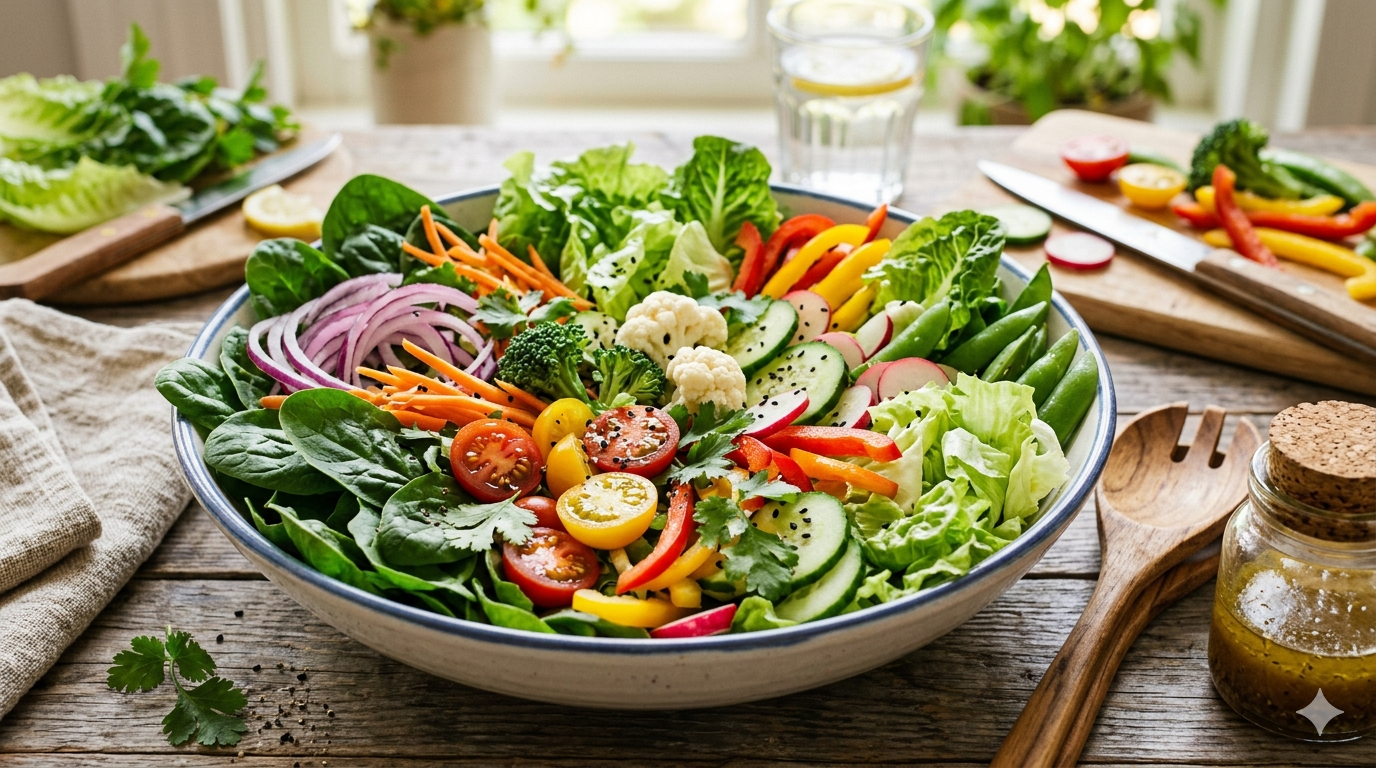
You did everything right. You skipped the burger, ignored the pasta, and ordered the salad. A bowl filled with lettuce, kale, raw onions, chickpeas, cauliflower, cucumber, apple, nuts, seeds, and a light dressing sounds like the perfect lunch.
Until two hours later. Your stomach feels stretched. Your waistband feels tighter. You feel heavy, uncomfortable, and strangely full. And suddenly, you're wondering whether vegetables are the problem.
They're probably not.
The problem is that salads are often marketed as the healthiest meal you can eat, when in reality, they're one of the most poorly designed meals for people with sensitive digestion.
A Salad Isn't Always A Balanced Meal
This might be unpopular, but a bowl of raw vegetables isn't an ideal meal.
A meal should provide protein, healthy fats, complex carbohydrates, and fibre in proportions your body can comfortably digest.
Most salads don't.
They're often extremely high in fibre, low in protein, low in calories, and overloaded with raw ingredients.
Your digestive system suddenly has to process a large volume of food that requires significant chewing and mechanical digestion.
And that's before we even start talking about the ingredients.
The Problem Isn't The Lettuce. It's Everything Added To It
Take a closer look at a typical "healthy" salad.
- Raw onions
- Chickpeas
- Cauliflower
- Mushrooms
- Apple
- Dried cranberries
- Cashews
- A creamy dressing
Individually, many of these foods are nutritious.
The problem is that many of them are also rich in FODMAPs, a group of fermentable carbohydrates that can trigger bloating, gas, and abdominal discomfort.
Raw onions contain fructans. Chickpeas and kidney beans contain galacto-oligosaccharides. Cauliflower and mushrooms contain mannitol. Apples and dried fruits contain fructose and sorbitol. Each ingredient contributes a small amount of fermentable carbohydrates.
Stack them together in a single bowl, and you've created the perfect environment for digestive discomfort. That "light" lunch suddenly becomes a fermentation project.
Raw Fibre Isn't The Villain
One of the biggest myths in nutrition is that raw fibre sits in your gut and starts "rotting." That's simply not how digestion works. Not all fibres behave the same way.
The issue usually isn't the lettuce. It's the combination of fermentable carbohydrates, excessive raw volume, and a gut that's already struggling.
More Fibre Doesn't Mean Better Digestion
Many people eat very little fibre throughout the week. Then, after deciding to eat healthier, they suddenly consume a giant bowl of raw vegetables.
Their gut isn't prepared for that dramatic shift. Increasing fibre too quickly can temporarily increase bloating and discomfort because your gut microbiome needs time to adapt.
Your body isn't rejecting vegetables. It's adjusting to them. The answer isn't to avoid fibre.
The answer is to increase it gradually.
Don't Ignore The Dressing
The dressing deserves some blame, too. Many bottled dressings contain onion powder, garlic powder, chicory root, emulsifiers, preservatives, and sugar alcohols.
Even dressings marketed as "healthy" can contain ingredients that trigger bloating in sensitive individuals. The fat in the dressing can also slow gastric emptying, leaving you feeling heavier and fuller for longer.
The vegetables get all the blame while the dressing quietly escapes criticism.
So, What Should You Do Instead?
If you have a sensitive gut, don't start with a giant bowl of raw vegetables. Start with cooked vegetables.
Steaming, sauteing, roasting, or lightly cooking vegetables helps break down their tough plant structure, making them easier for your digestive system to handle.
Instead of eating large amounts of raw vegetables, begin by adding one or two servings of cooked vegetables to your meals and gradually increase your intake.
Think of salads as a side dish rather than the main event. If you want to build a gut-friendly salad, keep it simple. Start with vegetables that are easier to tolerate. Add a good source of protein such as grilled chicken, fish, eggs, tofu, paneer, or tempeh. Include a healthy fat source.
If needed, add a small serving of carbohydrates such as rice, quinoa, millet, sweet potato, or sourdough.
You can also make a few simple swaps:
- Use spring onion greens instead of raw onions
- Choose berries instead of apples
- Replace cauliflower and mushrooms with cucumber, carrots, pumpkin, zucchini, or roasted vegetables
- Keep the dressing simple
- And don't overload your bowl
Healthy eating shouldn't feel like punishment. And healthy food shouldn't leave you looking six months pregnant by the end of lunch.
The goal isn't to eat the largest salad possible. The goal is to create a meal your gut can comfortably digest.
(By Rashi Chowdhary - Founder and Chief Nutritionist at Nutrition In Sync, Clinical Nutritionist, Certified Diabetes Educator, 18+ Years as Women's Hormone & Health Expert)
Disclaimer: The opinions expressed within this article are the personal opinions of the author. NDTV is not responsible for the accuracy, completeness, suitability, or validity of any information on this article. All information is provided on an as-is basis. The information, facts or opinions appearing in the article do not reflect the views of NDTV and NDTV does not assume any responsibility or liability for the same.