- Women need 20-60 minutes more sleep nightly due to biological and cognitive demands
- Hormonal changes in menstrual cycle, pregnancy, and menopause disrupt women's sleep quality
- Adequate sleep sharpens memory, stabilizes emotions, and regulates hunger hormones in women
According to the Sleep Foundation, adults need 7 to 9 hours of sleep to make their brains well-rested. But women are not able to get this required sleep quota as they juggle an intricate web of professional deadlines, family care, and household management. This relentless multitasking creates a phenomenon known as a high mental load, the invisible, exhausting psychological burden of keeping a life running smoothly. While society expects women to seamlessly sustain this pace, biological science points out a critical vulnerability: the female body requires more time to recover from it.
Emerging clinical studies published in the Frontiers of Sleep highlight that women benefit significantly from roughly 20 to 60 minutes of additional sleep each night compared to men. Despite this biological demand, millions of women consistently shave precious hours off their nightly rest, unaware of the profound metabolic and psychological damage they are triggering due to this choice.
The Science Behind Why Women Need More Sleep
The necessity for extra sleep is not a matter of preference; it is hardwired into neuroanatomy and endocrinology. Pioneering research led by Professor Jim Horne at Loughborough University's Sleep Research Centre revealed a vital truth: the more you use your brain during the day, the more it needs to rest, repair, and recover during the night.
Because women naturally tend to engage in complex multitasking, processing multiple streams of cognitive data simultaneously, they utilize a greater percentage of their cerebral cortex.
During deep non-REM sleep, this highly taxed cortex disengages to repair itself. If this window is cut short, the brain fails to clear away cellular waste adequately.
Beyond pure brain architecture, a woman's sleep cycle is at the constant mercy of lifelong hormonal fluctuations.
Also Read: Tired After A Full Night's Sleep? Expert Shares 5 Hidden Reasons You Wake Up Feeling Drained
Key Hormonal Triggers of Sleep Disruption
- The Menstrual Cycle: Shifting levels of estrogen and progesterone can disrupt core body temperatures and lower melatonin production, making it harder to fall asleep.
- Pregnancy: Physical discomfort, increased heart rate, and fetal movement severely fragment sleep quality, leaving women chronically exhausted.
- The Menopausal Transition: Plummeting hormone levels trigger severe night sweats and insomnia, structurally altering a woman's sleep architecture.
A comprehensive review of 150 studies published in Sleep Medicine Reviews highlighted that women's intrinsic circadian rhythms (the internal body clock) are about six minutes shorter than men's. This tiny mechanical discrepancy makes women far more sensitive to staying awake late, throwing their internal schedules out of sync with external cues.
How Sleep Sharpens A Woman's Brain And Body
When a woman secures a solid 8-plus hours of rest, the physiological rewards are immediate. Sleep functions as the architect for memory consolidation, sorting through daily clutter to lock away vital information. It acts as an emotional stabilizer, recalibrating the amygdala (the brain's emotional processing hub) to keep stress levels in check.
Crucially, adequate sleep preserves metabolic harmony. It regulates leptin and ghrelin, the two primary hormones responsible for signaling hunger and fullness, ensuring the body effectively burns fuel rather than storing it as stubborn fat.
Also Read: Can't Sleep At Night? Here's A Doctor's Guide To Fix Your Sleep Schedule
What Happens If You Skip It?
Systematically robbing the body of that necessary extra cushion of sleep triggers a destructive domino effect. Short-term consequences are immediately apparent: persistent daytime fatigue, sudden mood swings, sharp irritability, and a paralyzing sense of brain fog that makes simple decisions feel monumental.
However, the long-term, systemic health risks are far more alarming.
Long-Term Risks of Chronic Sleep Deprivation
- Anxiety and Clinical Depression: Insomnia and depression are so tightly interrelated that sleep specialists view them as a dual crisis. Studies from Duke University found that sleep-deprived women display significantly higher levels of psychological distress, anger, and hostility compared to men with identical sleep deficits.
- Accelerated Weight Gain: Sleep loss signals the body to crave simple carbohydrates and sugar, paving a direct path toward insulin resistance.
- Cardiovascular Disease and Inflammation: Chronic lack of sleep raises systemic inflammatory markers. Notably, conditions like obstructive sleep apnea (OSA) are linked to a significantly heightened risk of heart failure in women, a correlation not observed to the same degree in men.
Signs Of Severe Sleep Deprivation
It is easy to normalize exhaustion, but the body waves clear warning flags when it is operating on empty:
- An unyielding mid-afternoon energy crash that caffeine cannot fix.
- Intense, uncontrollable cravings for high-calorie, sugary foods.
- A dramatic drop in frustration tolerance and increased irritability.
- Waking up feeling unrefreshed, despite spending seven hours in bed.
How Much Sleep Is Essential?
While the general global baseline for adults hovers between 7 and 9 hours, a woman's body often demands a target on the higher end of that spectrum, frequently requiring a solid 8 to 8.5 hours to achieve genuine restoration.
"Women are highly sensitive to the physical and mental consequences of sleep deprivation," explains Dr. Viny Kantroo, Consultant, Pulmonology, Sleep and Respiratory Medicine, Apollo Hospitals, New Delhi.
She also adds, "Because structural environmental disturbances and caregiving roles frequently interrupt their sleep quality, focusing on increasing both the quantity and the quietness of their sleep environment is vital."
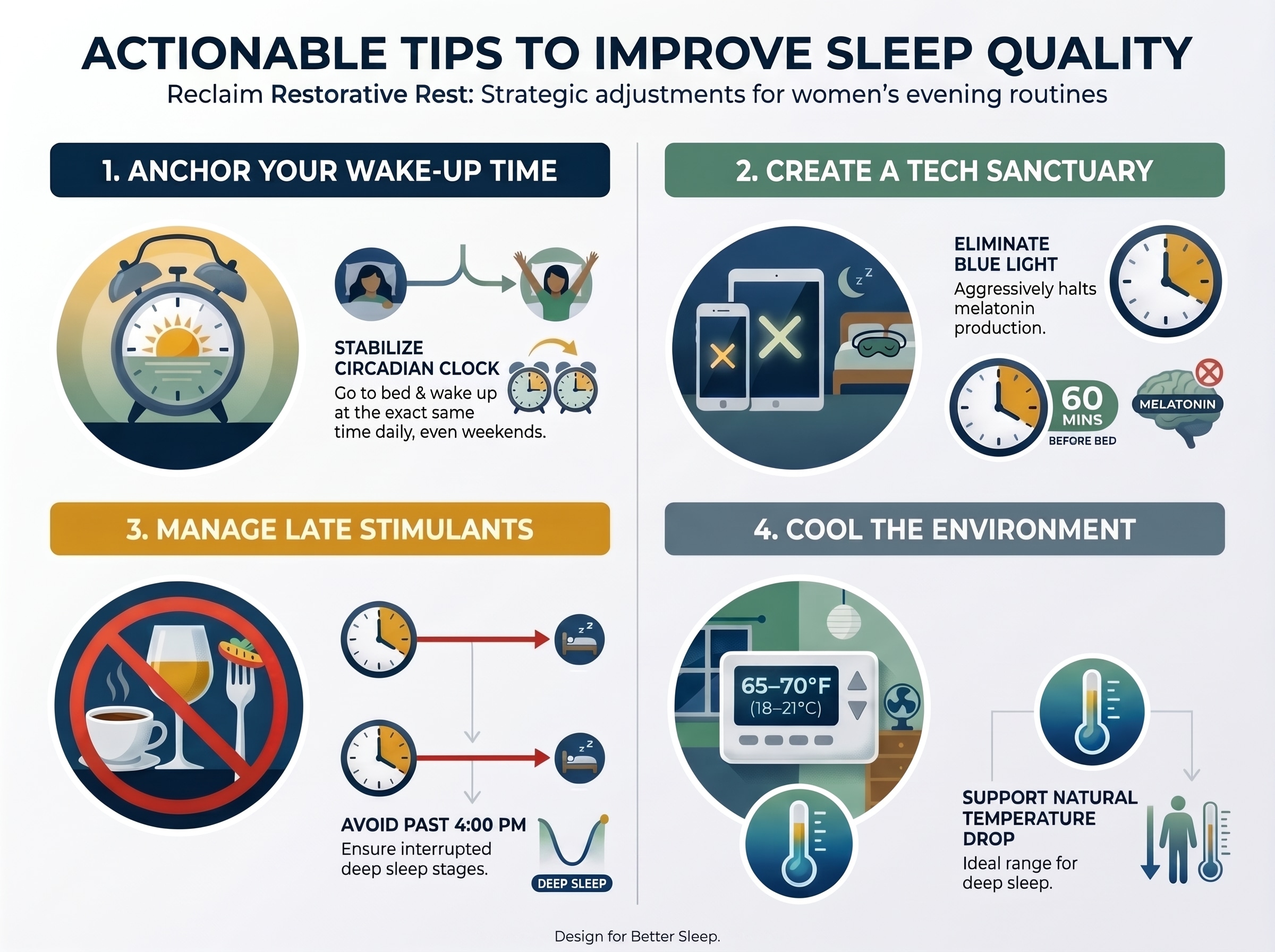
Actionable Tips To Improve Sleep Quality
To reclaim those essential minutes of restorative rest, women can implement a few strategic adjustments to their evening routines:
- Anchor Your Wake-Up Time: Go to bed and wake up at the exact same time every day, even on weekends, to stabilize your internal circadian clock.
- Create a Tech Sanctuary: Eliminate smartphones and tablets at least 60 minutes before bed; the blue light aggressively halts melatonin production.
- Manage Late Stimulants: Avoid heavy meals, alcohol, and caffeine past 4:00 PM to ensure your deep sleep stages remain uninterrupted.
- Cool the Environment: Keep the bedroom temperature moderately cool (around 65–70 degree fahareint or 18–21 degree celusis) to support the natural drop in body temperature required for deep sleep.
Prioritizing sleep is not a luxury or an act of self-indulgence; it is a fundamental biological requirement. By honoring the brain's need for that extra hour of restorative rest, women can dramatically safeguard their long-term health, balance their hormones, and step into each day with a fresh mindset.
\r\n
\r\n
Disclaimer: This content including advice provides generic information only. It is in no way a substitute for a qualified medical opinion. Always consult a specialist or your own doctor for more information. NDTV does not claim responsibility for this information.