- India faces hotter-than-usual months through May due to urban heat pockets caused by concrete
- Night temperatures in cities like Bengaluru and Hyderabad remain high, stressing the heart
- Heat pockets affect dense urban areas lacking green spaces, raising local temperatures by up to 10°C
As India heads into the summer months, the Indian Metrological department has already issued a chilling, or rather, worrying forecast that India is bracing for 'hotter-than-usual' months through May. The real danger isn't just the sun, but it's the widely used concrete. The rise of heat pockets in most neighbourhoods has created invisible zones that are straining the hearts of millions. It's March 5th, 2026, and the air already feels like mid-May. If you feel like your neighbourhood is stuffy or that your heart is racing just walking to the local market, you aren't imagining it. You are likely a victim of a heat pocket, a localised version of the Urban Heat Island (UHI) effect that is turning the residential blocks into cardiac stress-test zones.
This is backed by research, as the Environmental Science and Technology journal has flagged a high mortality risk due to the hot summer days in various Indian cities, pointing to the public health concern of heat stress-induced health impacts. Here is why this is happening and what you can do right now to keep yourself safe.
The No-Cool Crisis
Recent satellite data and a 2026 report from the Centre for Science and Environment (CSE) reveal a concerning trend that urban cities are no longer cooling down at night. In cities like Bengaluru and Hyderabad, where green cover may have increased, land surface temperatures have still spiked by as much as 7-degree Celusis to 15 degree Celusis over the last few decades because of 'grey infrastructure', which is the concrete and asphalt that surround your home.
When the sun sets, these materials release the heat they've trapped all day. This is a catastrophe for your heart. Normally, the heart uses the cooler night hours to rest. As the above-normal minimum temperatures are expected across most of India, this means it will be hot at night, leading to your heart never getting a needed reset.
Why Your Heart Is Under Attack
Science is direct and dangerous, as it reveals that maintaining a stable core temperature is crucial for your heart to pump blood to your skin, facilitating sweating. In a heat pocket, this doesn't happen, leading to a disruption. Here are the reasons exactly why this is happening:
- The Moist Heatwave Factor: 2026 has seen an increase in "moist heatwaves", which are a combination of high temperature and high humidity. As the World Health Organization (WHO) notes and a study in the Environmental Perspective notes that when humidity is high, sweat cannot evaporate. Your body's cooling system fails, and your heart rate skyrockets to compensate, leading to acute heart failure.
- Blood Thickness: Dehydration in these heat pockets makes your blood 'thicker'. Pumping this viscous blood requires immense pressure, often leading to heart attacks in individuals with even minor underlying conditions.
- The Obesity Link: A fresh report from the World Obesity Atlas 2026 ranks India second globally for childhood obesity. This is important, as heat pockets are leading individuals with higher body mass indices to become more vulnerable to heat-induced heart strain, as their bodies struggle more with thermal regulation.
Also Read: World Obesity Day 2026: India's Child Obesity Numbers Soar, Ranks 2nd Worldwide
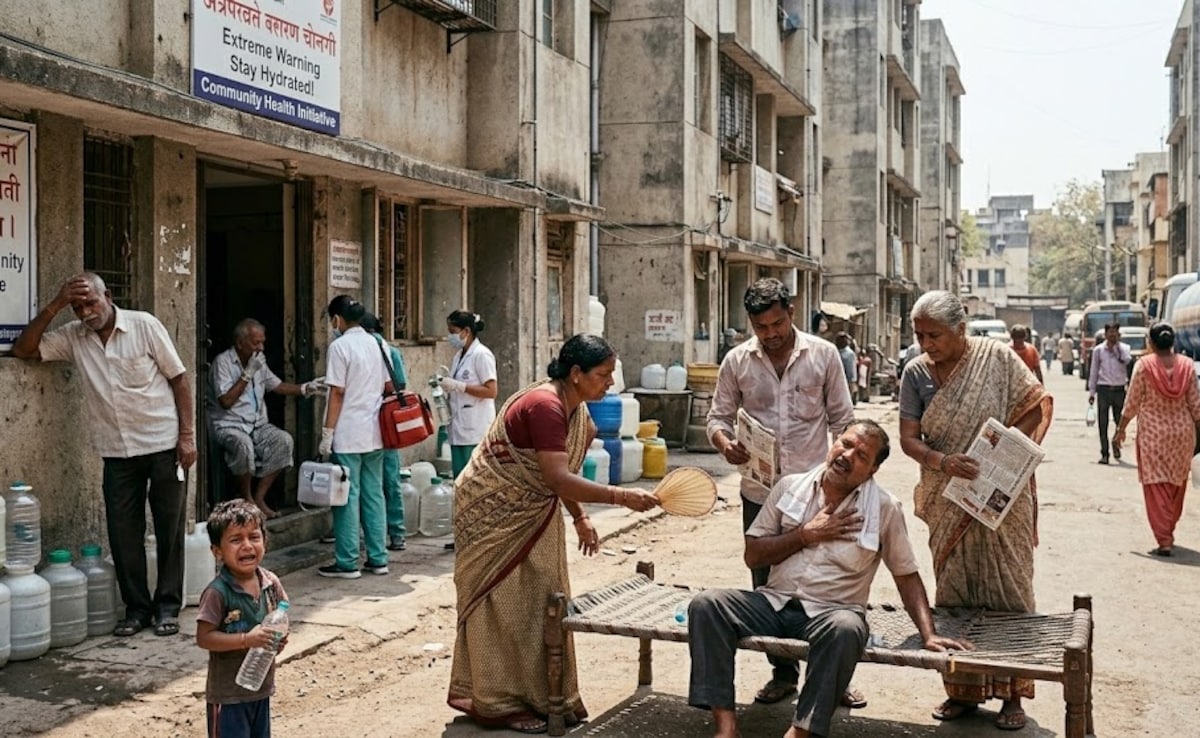
A person suffering from heat stress
Photo Credit: A.I generated image
Hyper-Local Vulnerability
Heat pockets are not democratic, as they hit the densest areas hardest. Whether it's the tin-roofed clusters in Mumbai or the glass-fronted high-rises in Gurgaon, the lack of 'blue-green' spaces (water bodies and trees) means the surrounding air can be 4 degree celusis to 10 degree celusis hotter than a leafy suburb just 2 kilometres away.
According to a 2025 CEEW study, nearly 60% of Indian districts are now at high risk for these extreme heat events. If you live in a locality with narrow streets and heavy AC density, you are living in a heat trap. The waste heat from your neighbour's air conditioner is heating your walls, contributing to a cycle of cardiac stress.
Also Read: What Is The Best Time To Drink Coffee For Maximum Energy Boost?
What Can You Do?
People cannot wait for city planners to fix the concrete. You need a plan that is based on practical science and easily doable for relief; this 'heart-first" heat plan can involve the following steps:
- Identify your microclimate by assessing if your bedroom wall feels warm to the touch at 10 PM; Your heart is at risk.
- Use reflective 'cool roof' paints or heavy bamboo blinds to break the heat absorption.
- Follow the 2:00 PM rule between 2 PM and 5 PM; avoid physical exertion, as during this time, the sun is completely overhead and shines at its brightest.
- Check the 'feels like' temperature, and don't trust the thermometer; trust the heat index. If the humidity is above 60%, even 32 degrees Celsius can be lethal for a vulnerable heart.
Heat is no longer just about 'feeling hot'. It is a physiological assault. As people navigate a record-breaking March, remember that your heart is the first to feel the rise of the heat pocket. Stay cool, stay hydrated, and most importantly, listen to your pulse and take the necessary measures to safeguard your heart health.
Disclaimer: This content, including advice, provides generic information only. It is in no way a substitute for a qualified medical opinion. Always consult a specialist or your own doctor for more information. NDTV does not claim responsibility for this information.