- Rising summer heat increases UV exposure, necessitating daily sunscreen use
- The 2-finger rule ensures sufficient sunscreen for face and neck protection
- Proper application includes clean, dry skin and reapplying every 2-3 hours
The rising summer heat has increased the exposure to ultraviolet rays that can damage the skin barrier. Most people don't apply enough sunscreen on their face, neck, and other directly exposed areas to escape the potential effects of sun damage. Skin is an incredibly sensitive ecosystem that requires consistent and scientific skincare practices to preserve it. Due to this common mistake of not applying enough sunscreen, research published in the International Journal of Cosmetic Science highlights that sunscreen needs to be applied daily to reduce the acute and chronic effects of ultraviolet ray exposure.
This is especially true for those who have a smaller amount of melanin in their skin, as well as those with darker skin tones. As everyone needs to choose a sunscreen with a sun protection factor (SPF) varying as the concentration of the sun's rays and its exposure have dramatically increased due to climate change and erratic weather patterns.
What Is The 2-Finger Sunscreen Rule?
The simple 2-finger sunscreen rule involves squeezing sunscreen along two fingers (index and middle), as this amount is needed for the face and neck. Most people tend to apply sunscreen on their faces but forget their necks, which can lead to skin issues such as pigmentation, sun tan, and other skin-related ailments that can cause visible damage to the skin barrier. This rule has been scientifically researched in the Clinical, Cosmetic, and Investigational Dermatology Journal.
The rule works for creams, lotions, and gel-based sunscreens, but you need to adjust the exact sun-protective factor or SPF as per the time of day and duration of the direct sun.
Why The 2-Finger Rule Matters
The 2-finger rule matters when it comes to reducing skin health-related issues, especially types of skin cancers that affect the Indian population despite having melanin in their skin. The potential DNA and cellular damage that occurs on the skin barrier can vary and affect people in various ways that need to be controlled.
Multiple research papers and reviews, such as the Brazilian Journal of Pharmaceutical Sciences journal, detail why applying enough sunscreen that covers the entire face and neck is necessary. If you use too little sunscreen, then the potential damage due to ultraviolet rays can be reduced.
But with the right SPF usage, Indians can prevent the following issues that may occur after sun exposure:
- Sunburn
- Tanning
- Premature ageing
- Skin damage
How To Apply Sunscreen Correctly
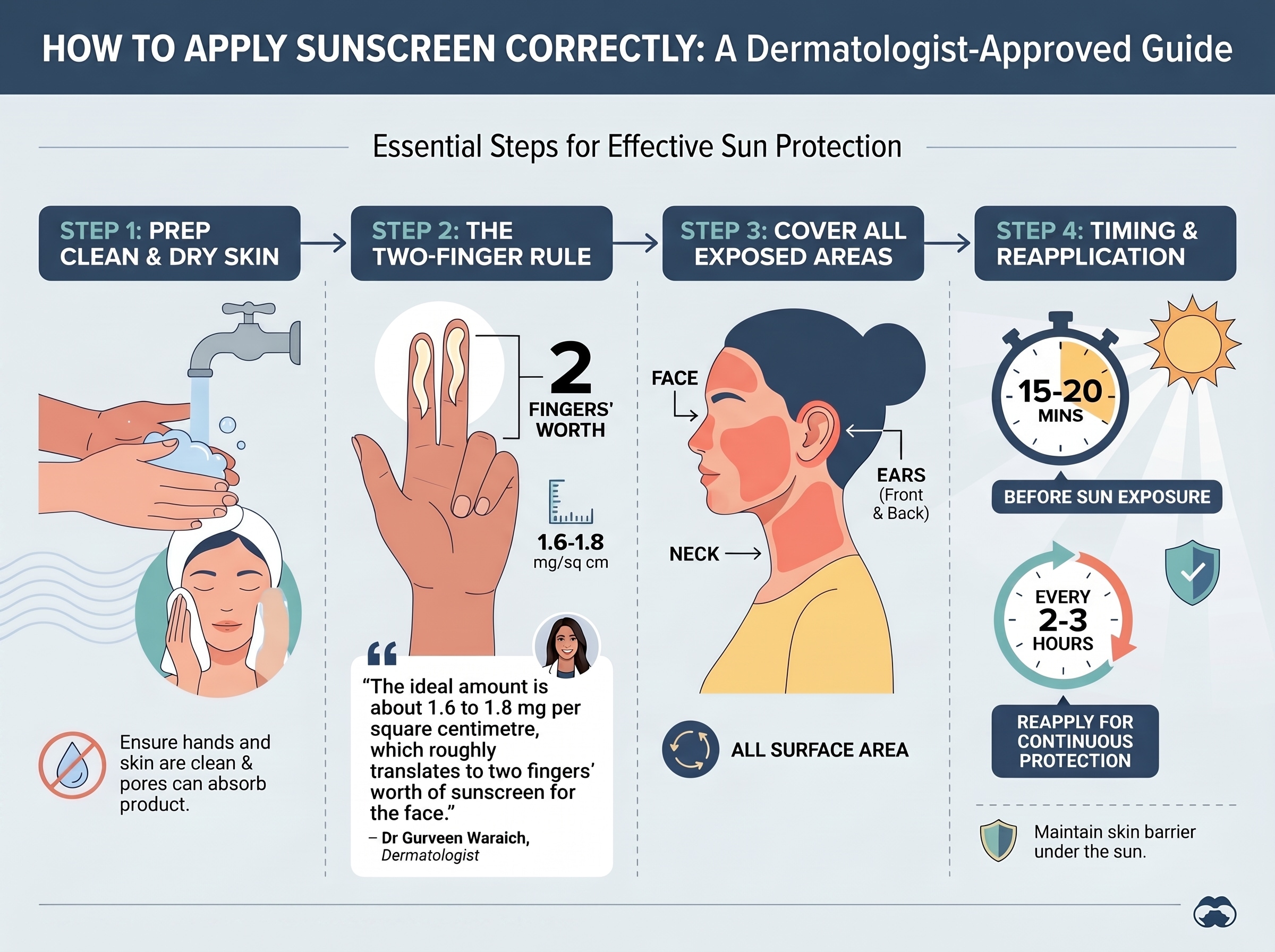
You need to squeeze sunscreen on your index and middle fingers and make sure your hands are clean when you do so. It is also important to make sure that the skin is dry and clean, as the pores need to absorb the sunscreen applied to it.
- It needs to cover the face, neck, and ears, both front and back, to make sure all surface area is covered.
- The right time to apply sunscreen is 15-20 minutes before exposure to the sun.
- You need to reapply sunscreen every 2-3 hours to make sure your skin barrier remains protected under the sun.
Dr Gurveen Waraich, Dermatologist from Gurgaon, explains, "The ideal amount is about 1.6 to 1.8 mg per square centimetre, which roughly translates to two fingers' worth of sunscreen for the face."
Also Read: Don't Throw Away Mango Seeds This Summer! Doctor Explains How They Protect Your Skin In A Heatwave
Common Sunscreen Mistakes You Might Be Making
The simple skincare practice of applying sunscreen can be riddled with mistakes if you happen to:
- Use too little product that doesn't cover your entire face, neck, and ears.
- Don't reapply sunscreen every two to three hours when under the direct sun.
- Skipping ears, neck, and hands, as they are directly exposed.
- Mixing sunscreen with moisturiser (reduces effectiveness) - the first step should be sunscreen, and then moisturiser.
- Assuming SPF in makeup is enough, as the coverage in it can dissolve with the facial oils as time passes by.
Who Should Be Extra Careful?
Sunscreen application should be taken seriously by people who have the following:
- Sensitive skin, as the skin barrier is weaker and reacts to sun damage visibly much more than other skin types.
- Acne-prone skin, as the skin is known to trap oil in the pores, and sun exposure can irritate it further.
- Pigmentation issues that can visibly worsen when exposed to the sun.
- Outdoor workers or commuters in India should be especially careful, as the time they spend under the sun should factor into their sunscreen application routine.
Also Read: Dry Skin And Brittle Nails? Doctor Shares How Hormonal Changes Impact Your Skin and Nails
Which SPF Should You Use?
The Journal of Cosmetic Dermatology suggests that, depending on the Indian climate and skin tone, a minimum SPF 30-50 is needed. This is true for people who spend most of their time under the sun as well as those with limited outdoor exposure, as the sun's rays tend to permeate through the skin.
You need to make sure that your sunscreen offers broad-spectrum protection (UVA and UVB) to give your skin barrier the best chance of protection.
Dr Gurveen Waraich explains, "If sunscreen is not applied in the right quantity, its SPF level drops significantly, meaning your skin does not get full protection."
When it comes to sunscreen usage, the correct quantity matters more than brand, but testing it on your skin type is essential. You need to make sunscreen application a part of the daily routine.
\r\n
\r\n
Disclaimer: This content including advice provides generic information only. It is in no way a substitute for a qualified medical opinion. Always consult a specialist or your own doctor for more information. NDTV does not claim responsibility for this information.