





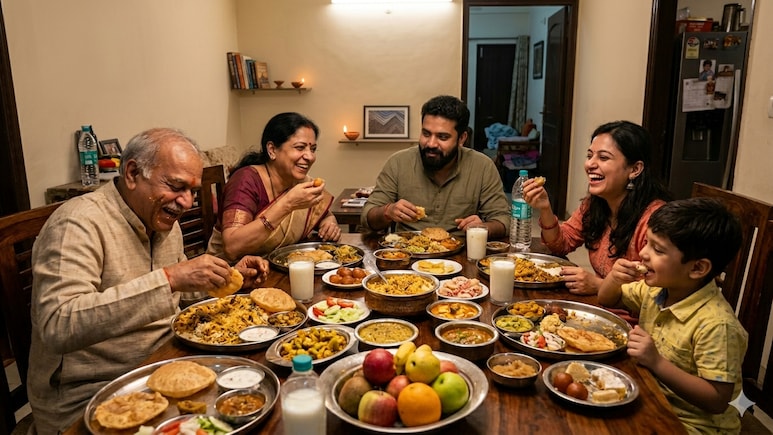
- Fasting during Navratri involves eating light, plant-based foods that aid digestion and metabolism
- Post-fast overeating of rich, fried, and sugary foods reverses fasting benefits and causes metabolic stress
- Excess refined carbs after fasting spike insulin, increase fat storage, hunger, and cause energy crashes
Fasting during Navratri is often associated with discipline, mindful eating, and spiritual reset. Many people follow a sattvik pattern of eating, which includes light, minimally processed, plant-based foods consumed in moderation. This naturally reduces calorie intake, gives the digestive system rest, and may help the body shift towards using stored energy.
However, once the nine days end, many people quickly return to overeating, rich foods, and irregular meal patterns. This sudden shift can reverse many of the metabolic and digestive benefits gained during fasting.
Understanding why this happens helps prevent post-fast setbacks.
Post-Fast Over-compensation: A culprit
After Navratri, people often feel they have "earned" indulgence. This leads to sudden overeating of fried snacks, sweets, refined carbohydrates, and heavy festive meals.
Such over-compensation can:
- Overload the digestive system that adapted to lighter foods
- Cause bloating, acidity, and sluggishness
- Trigger rapid spikes in blood sugar and insulin
- Encourage fat storage rather than fat burning
Instead of easing back into regular meals, the body is forced from a period of digestive rest into metabolic stress.
Mistake 1: Overeating After the Fast
Fasting does not cancel out excess calorie intake later. If someone consumes more calories than the body requires after fasting, weight regain becomes likely. The body efficiently stores surplus energy as fat, particularly after a period of restriction.
Extreme patterns can also reduce muscle mass. Prolonged or aggressive fasting without proper nutrition may lead to loss of lean tissue. Regaining weight after that often results in higher fat proportion and lower muscle mass, slowing metabolism further.
Better approach: Break the fast with small, balanced meals and eat to comfortable fullness rather than excess.
Mistake 2: Excess Refined Carbohydrates
Heavy intake of sweets, sugary beverages, and refined flour foods after fasting causes sharp insulin surges.
Impact of high insulin levels:
- Promote fat storage
- Increase hunger soon after meals
- Cause water retention
- Lead to energy crashes and cravings
This creates a cycle of overeating and fatigue. A moderate-carbohydrate approach helps stabilise blood sugar and prevents sudden metabolic shifts.
Better approach: Choose whole foods such as fruits, vegetables, lentils, nuts, and moderate portions of whole grains instead of refined sweets and deep-fried snacks.
Mistake 3: Returning to Inflammatory Foods
Sattvik meals are naturally low in processed ingredients, unhealthy fats, and excess sugar. Highly processed foods, excess saturated fats, and sugar-rich diets may cause a feeling of heaviness and fatigue. Returning to ultra-processed foods can trigger digestive irritation and inflammation.
Chronic inflammation is linked to:
- Increased fat storage
- Fluid retention
- Poor insulin sensitivity
- Digestive discomfort
Better approach: Continue simple home-cooked meals, include seasonal vegetables, fruits, nuts, seeds, and use healthy fats such as cold-pressed oils in moderation.
Mistake 4: Poor Hydration
During fasting, fluid shifts are common. After fasting, inadequate hydration worsens fatigue, headaches, bloating, and constipation. Electrolyte imbalance can also contribute to weakness and increased cravings.
Better approach: Resume regular fluid intake gradually. Water, lemon water, coconut water, and light soups help restore balance without stressing digestion.
Mistake 5: Losing Mindful Eating Habits
Navratri fasting often improves portion control and eating awareness. Post-festival social gatherings, buffet meals, and celebratory treats can lead to distracted overeating. Mindless eating overrides natural hunger signals, leading to excess calorie intake before the brain registers fullness.
Better approach: Eat slowly, maintain regular meal timings, and avoid overeating late at night.
A Healthier Way to Transition After Navratri
To preserve the benefits of fasting, it is important to reintroduce foods gradually rather than overwhelming the digestive system with heavy meals. Portion sizes should remain moderate to prevent excess calorie intake and digestive discomfort. Meals should prioritise adequate protein and fibre, which support satiety, stable blood sugar levels, and healthy digestion.
Fried and sugary foods should be limited, as they can trigger inflammation, rapid glucose spikes, and unwanted fat gain. Proper hydration is equally essential to restore fluid balance, support metabolism, and reduce fatigue. Maintaining regular sleep patterns and staying physically active further help stabilise hormones, appetite regulation, and energy levels. Fasting is not a quick fix but a metabolic reset, and its benefits are sustained only when healthy lifestyle habits continue well beyond the fasting period.
(By Dt. Sujatha Stephen RD, Chief Dietician, Yashoda Hospitals, Hyderabad)
Disclaimer: The opinions expressed within this article are the personal opinions of the author. NDTV is not responsible for the accuracy, completeness, suitability, or validity of any information on this article. All information is provided on an as-is basis. The information, facts or opinions appearing in the article do not reflect the views of NDTV and NDTV does not assume any responsibility or liability for the same.
Track Latest News Live on NDTV.com and get news updates from India and around the world

