

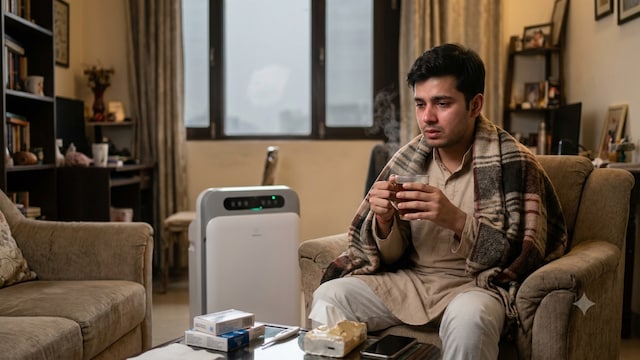
Recovering from a common cold or flu can be uncomfortable at the best of times. But when air quality deteriorates, particularly during the winter months in north India, the cough, throat irritation and breathing discomfort that accompany a respiratory infection may become harder to manage. For people already dealing with asthma, chronic obstructive pulmonary disease (COPD) or other underlying conditions, the combination can be especially challenging.
Air pollution does not cause a viral cold or influenza. However, exposure to pollutants such as fine particulate matter (PM2.5) can irritate an already inflamed respiratory tract, aggravate coughing and wheezing, and make existing breathing problems worse. In cities such as Delhi, where pollution can rise sharply because of traffic, construction dust, seasonal weather conditions, waste burning and festival-related emissions, people recovering from respiratory infections may need to take additional precautions.
Pulmonologists and internal medicine specialists say recovery involves more than managing the infection itself. Limiting exposure to polluted air, continuing prescribed treatment, resting adequately and recognising warning signs are important. Here is what doctors recommend to help you recover more comfortably when cold and flu season coincides with poor air quality.
How Air Pollution Can Make Cold And Flu Recovery More Difficult
A viral infection such as the common cold or influenza causes inflammation in the respiratory tract. The airways can become more sensitive, leaving the throat, nose and lungs vulnerable to additional irritation. When a person is exposed to polluted air during this period, the combined effect may aggravate symptoms and make recovery more uncomfortable.
Dr Rahul Sharma, Director - Pulmonology and Critical Care, Fortis Hospital, Noida, explains that pollutants, particularly PM2.5, can further irritate the airways and worsen cough, throat irritation, wheezing and breathlessness. "Pollution does not cause viral infections, but it can worsen existing respiratory symptoms and trigger exacerbations of asthma or COPD," he says.
PM2.5 refers to fine particulate matter measuring 2.5 micrometres or less in diameter. These particles can travel deep into the respiratory tract, and some may enter the bloodstream. Exposure has been associated with airway inflammation, respiratory symptoms and worsening of existing lung and cardiovascular conditions.
This is particularly relevant in Delhi-NCR, where air quality can deteriorate during the winter months. Traffic emissions, construction dust, industrial activity, waste burning and seasonal weather conditions can all contribute to the pollution burden.
READ | GRAP-1 Imposed In Delhi: What This Means, Especially For Your Lungs
Pollution Affects More Than Just The Lungs
While cough, wheezing and breathlessness are among the most noticeable effects of poor air quality, the health impact is not restricted to the respiratory system.
Dr R S Mishra, Principal Director and Head, Internal Medicine, and Co-Chair of Academics, Max Smart Hospital, Saket, says the sudden rise in air pollution is becoming a serious public health concern because it affects people across age groups and can aggravate several existing health conditions.
"The immediate impact is usually felt in the respiratory system. People are increasingly complaining of throat irritation, persistent cough, sneezing, burning eyes, breathlessness and worsening of existing respiratory problems," he says. He adds that people with asthma, COPD and other lung conditions are particularly vulnerable. Even those without a previous history of respiratory illness may experience symptoms during periods of very poor air quality.
Dr Mishra also highlights the cardiovascular implications of exposure to fine particulate matter. Since PM2.5 can penetrate deep into the lungs and enter the bloodstream, it can trigger inflammation and place additional stress on the heart and blood vessels.
"People with existing heart disease, high blood pressure and diabetes may be at greater risk," he says, adding that prolonged exposure to polluted air has been linked to a higher risk of heart attacks, strokes and other cardiovascular complications. WHO also identifies cardiovascular disease and respiratory illness among the major health consequences associated with ambient air pollution.
Children, whose lungs are still developing, older adults and pregnant women also need particular attention. People with underlying heart or lung conditions should be cautious about exposure, especially when they are already recovering from an infection.
How To Protect Yourself While Recovering From Cold Or Flu
Doctors recommend reducing exposure to outdoor pollution while the respiratory tract is recovering. These precautions do not cure a viral infection, but can help limit additional irritation.
1. Avoid outdoor exercise when AQI is high
If you have a cold, flu or persistent cough, avoid outdoor walks, jogging and strenuous exercise when air quality is poor. Shift your workout indoors and avoid unnecessary outdoor exposure, particularly during periods when pollution levels are high.
Dr Sharma advises people to reduce outdoor activity during high-pollution episodes. The National Capital Pollution Control Board's AQI categories also indicate increasing health concerns as air quality moves from poor to very poor and severe.
READ | Can Indoor Pollution Remain High Even With An Air Purifier? 6 Hidden Sources You're Missing
2. Wear a well-fitted N95 mask outdoors
If stepping outside is unavoidable, wear a properly fitted N95 mask. A close fit is important for reducing exposure to fine particles; loose-fitting masks and ordinary cloth coverings do not offer equivalent protection against PM2.5.
Dr Mishra says ordinary cloth masks and loose-fitting surgical masks do not provide the same level of protection as a well-fitted N95 mask. WHO's India air-pollution advisory also emphasises the importance of a proper seal when using particulate-filtering masks.
3. Improve indoor air quality
Keeping windows closed during periods of particularly high outdoor pollution and using an appropriately sized HEPA air purifier, if available, may help reduce indoor particulate exposure.
It is also important to avoid indoor sources of smoke and pollutants. Smoking, incense sticks, mosquito coils and room fresheners can add to indoor air pollution.
Dr Sharma recommends avoiding these sources while recovering. Dr Mishra similarly advises people to reduce indoor smoke exposure and use air purifiers where feasible.
4. Rest, hydrate and manage symptoms
Adequate rest and hydration support recovery. Warm fluids may soothe throat irritation, while saline nasal sprays can help relieve nasal congestion. Gargling with warm salt water may also provide temporary relief from a sore throat.
Dr Sharma recommends these measures as part of supportive care, while clarifying that they do not treat the underlying viral infection. Steam inhalation is not essential and can cause burns, particularly if hot water is handled carelessly.
Dr Sudhir Kr. Gupta, Senior Consultant (Chest Physician and Bronchoscopist), Kailash Hospital, Noida, also stresses the importance of rest, hydration and a balanced, nutritious diet during recovery. "Adequate rest, proper hydration and a balanced, nutritious diet play an important role in supporting the body's recovery," he says.
5. Do not stop prescribed medication or take antibiotics unnecessarily
People with asthma or COPD should continue their prescribed inhalers and follow their doctor's treatment plan, even if they feel better. They should not change doses or stop medication without medical advice.
Antibiotics do not treat viral infections such as the common cold or flu. Taking them without a doctor's recommendation will not speed up recovery and can contribute to antimicrobial resistance. They may be required if a doctor identifies a bacterial infection or complication.
Dr Gupta cautions against self-medication and unnecessary antibiotic use, noting that most common colds and flu are caused by viruses. The US Centers for Disease Control and Prevention also advises that antibiotics do not work against viruses and are not a treatment for the common cold.
READ | Recovery From High AQI Exposure: 7 Healthy Habits After Coming Home
When Should You See A Doctor?
A cold or flu should generally improve with time, but certain symptoms should not be dismissed as routine effects of pollution or infection.
Dr Sharma advises seeking medical assessment if there is persistent fever, worsening cough, chest pain, difficulty breathing or deterioration after an initial improvement. Dr Gupta similarly stresses that persistent fever, chest discomfort, worsening cough and breathing difficulties require prompt medical evaluation. Dr Mishra advises people experiencing persistent breathlessness, wheezing, chest discomfort or unusual fatigue not to dismiss these symptoms as a routine consequence of poor air quality.
Older adults, young children, pregnant women and people with existing heart or lung conditions should seek medical advice early, particularly if symptoms worsen. Breathing difficulty, rapid breathing, dehydration or symptoms that improve and then return or deteriorate warrant medical attention.
Recovering from a cold or flu while air quality is deteriorating can be challenging, particularly for people with underlying respiratory conditions. While pollution does not cause viral infections, it can aggravate airway irritation and make existing symptoms harder to manage. Doctors recommend reducing outdoor exposure, wearing a well-fitted N95 mask when necessary, improving indoor air quality, resting adequately and continuing prescribed medication. Most importantly, worsening symptoms or breathing difficulties should prompt medical assessment rather than self-treatment. Protecting respiratory health requires both individual precautions and sustained efforts to improve the air people breathe.
Disclaimer: This content including advice provides generic information only. It is in no way a substitute for a qualified medical opinion. Always consult a specialist or your own doctor for more information. NDTV does not claim responsibility for this information.