

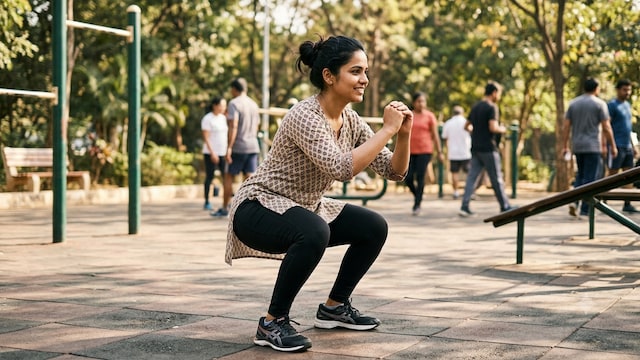
Exercise is usually associated with weight management, heart health and stronger muscles. However, staying physically active can also play a role in maintaining good gut health. The gut is home to several types of bacteria that support digestion and other important functions in the body. Their balance can be influenced by several lifestyle habits, including the food we eat and how much we move during the day. While a healthy diet is important for gut health, regular physical activity is another habit worth paying attention to.
Dr Saurabh Sethi, MD, MPH, a gastroenterologist trained at AIIMS, Harvard and Stanford University, has dropped a post on Instagram explaining how exercise can affect gut bacteria. He shares five things about the connection between physical activity and gut health.
Here is a breakdown of his post:
1. Exercise Can Help Keep Your Gut's Defences Strong
Dr Sethi explains that the intestinal barrier helps prevent harmful substances from passing into the bloodstream. Research suggests that regular, moderate exercise can support gut barrier health.
2. Movement Can Help With Constipation
Exercise may also help people dealing with constipation. According to Dr Sethi, a systematic review and meta-analysis found that physical activity improved constipation symptoms.
3. Exercise Can Boost Gut-Friendly Butyrate
Butyrate is a short-chain fatty acid that provides energy to the cells lining the colon. Dr Sethi shares that a six-week exercise study found an increase in participants' faecal butyrate levels.
4. Athletes Have More Diverse Gut Bacteria
A study comparing professional rugby players with non-athletes found that athletes had greater gut microbial diversity.
5. Gut Bacteria Can Change In Six Weeks
Dr Sethi also highlights a human study in which six weeks of exercise changed participants' gut microbial composition and increased faecal short-chain fatty acids. Interestingly, some of these changes reversed when participants stopped exercising.
What Is Dr Sethi's Exercise Advice For Gut Health?
He also shared a few simple suggestions:
- Walk: Try walking for 10-15 minutes after meals.
- Move: Aim for 150 minutes of moderate exercise every week.
- Build Muscle: Include strength training at least twice a week.
- Eat Fibre: Pair regular exercise with fibre-rich foods to support gut bacteria.
Exercise is not just about staying fit or managing weight. It can also be a useful part of maintaining gut health.
Disclaimer: This content including advice provides generic information only. It is in no way a substitute for a qualified medical opinion. Always consult a specialist or your own doctor for more information. NDTV does not claim responsibility for this information.