

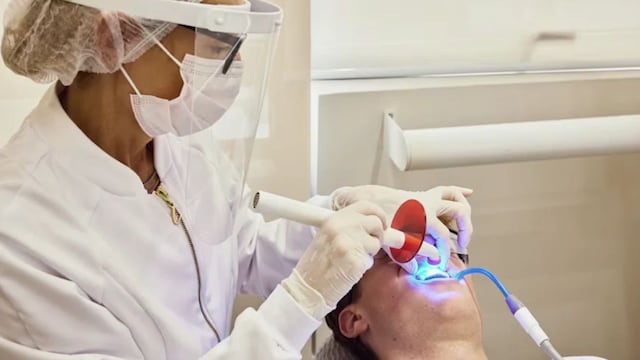
Scientists have developed a new protein-based gel that could help regrow lost tooth enamel. This gives a new approach to treat tooth damage and prevent decay. Researchers at the University of Nottingham designed a material that mimics the biological processes involved in enamel formation during early childhood. The findings of the study were published in Nature Communications. The gel is designed to rebuild the mineral structure of enamel rather than simply covering damaged areas.
Researchers found that the gel can help new mineral crystals to grow in an organised way, restoring the structure and mechanical properties of damaged enamel. The material may also be useful on exposed dentine, which can cause tooth sensitivity when enamel wears away. While the results are promising, the research is still at the laboratory stage and further testing is needed.
Why Is The Tooth Enamel Important?
Enamel is the hard outer layer of the tooth. It protects the inner parts of the tooth from chewing forces, acids, bacteria and temperature changes. However, unlike bone, enamel does not contain living cells that can rebuild it once it has been substantially lost.
Acid from foods and drinks, bacterial activity, tooth grinding and normal wear can gradually damage enamel. Once the enamel is gone, it cannot naturally grow back. Dentists can protect weakened enamel and repair damaged teeth with treatments such as fluoride products, fillings and crowns, but these treatments do not recreate the original enamel structure.
How Does The New Gel Regrow Enamel?
The new material is based on elastin-like recombinamers, or ELRs, which are protein-based materials that are designed to imitate some of the functions of the natural matrix involved in enamel development. When applied to a damaged tooth surface, the material forms a thin coating. It acts as a framework that helps calcium and phosphate minerals from saliva organise themselves into new crystals. This process is called epitaxial mineralisation.
In simple terms, the newly formed crystals grow in an organised pattern that follows the structure of the existing enamel. This is important because enamel's strength comes not only from its minerals but also from the highly organised arrangement of its crystals.
What Did The Scientists Find?
The researchers tested the material on enamel samples with different levels of damage. They found that the protein matrix could trigger organised growth of apatite nanocrystals, helping recreate important features of natural enamel.
Laboratory tests showed that the regenerated enamel recovered key mechanical properties. In one set of experiments, acid-damaged enamel had much lower stiffness and hardness, but these properties improved substantially after remineralisation. The researchers also tested the material under conditions designed to mimic everyday stresses such as brushing, chewing and exposure to acidic substances.
The team also exposed treated enamel samples to natural human saliva from three donors for two weeks. The results showed that the material could help enamel-like mineral growth even in the complex environment of natural saliva. The regenerated tissue recovered mechanical and chemical properties similar to natural enamel.
Could The Gel Help With Tooth Sensitivity?
The technology may have another important application and that is treating exposed dentine.
Dentine lies underneath the enamel. When enamel wears away or the gums recede, dentine can become exposed. Because dentine contains microscopic channels connected to the deeper parts of the tooth, exposure can lead to sensitivity to hot, cold, sweet or acidic foods and drinks. Researchers found that the protein matrix could also help in the formation of an enamel-like mineral layer over exposed dentine. This suggests that the gel can potentially help protect exposed areas and reduce problems linked to enamel loss and sensitivity.
Can The Gel Prevent Cavities?
The researchers believe the technology could eventually help prevent tooth decay by restoring enamel that has been weakened or lost.
Enamel erosion and mineral loss make teeth more vulnerable to decay. By rebuilding the protective surface, the gel could potentially strengthen teeth before damage progresses further.
However, it is important to note that the study does not mean that people can currently get lost enamel regrown at a dental clinic. The experiments were largely conducted on tooth samples under laboratory conditions. The researchers themselves say that the laboratory environment is not completely similar to the complexity of the human mouth, and further in vivo research is needed.
Disclaimer: This content including advice provides generic information only. It is in no way a substitute for a qualified medical opinion. Always consult a specialist or your own doctor for more information. NDTV does not claim responsibility for this information.