

)
For years, India's healthcare debate has centred on a familiar question: Do we have enough doctors? The answer is increasingly encouraging. The doctor-population ratio in the country is estimated at around 1:811, marginally better than the WHO benchmark of 1:1000. Medical colleges have expanded rapidly, from 387 in 2014 to 840+ today. MBBS seats have doubled. With more colleges and seats coming up, India should be able to maintain a healthy doctor-population ratio even if populace grows.
But healthcare outcomes are not determined by the number of doctors alone.
Patients still face fragmented records, repeated diagnostic tests, inconsistent follow-up, and difficulty accessing specialists outside major cities. The good news here is that startups, hospitals and other stakeholders are rapidly digitising consultations, diagnostics, prescriptions, and care management. Government initiatives such as ABHA have created an important foundation.
However, infrastructure also will not transform healthcare.
This brings us to an interesting question: what else can help alleviate the situation?
Digital Doctors. Not because doctors are unavailable. Not because technology is superior. But because healthcare is becoming more continuous, more data-driven, and more preventive. Citizens need useful applications and connected services that fit naturally into everyday life. The real opportunity lies in enabling a vibrant ecosystem of interoperable public and private solutions.
At TechCrafter, we use the term 'Healthizen', a blend of health and citizen, for this emerging model of healthcare participation.
A healthizen is not simply a patient who visits a doctor when something goes wrong. That person is active in staying healthy with the help of preventive screening, continuous monitoring, informed lifestyle choices, and early intervention.
Technology is making this possible.
Consider today's health wearables. Smart rings now use multiple sensors to track sleep, heart-rate variability, skin temperature, activity, and recovery. Advanced smartwatches combine ECG, blood oxygen, movement, and cardiovascular signals. Newer non-invasive technologies are also exploring ways to monitor physiological and biochemical markers without repeated blood tests.
The value comes from combining these signals. A pattern across several measurements can reveal meaningful changes much earlier than traditional healthcare interactions.
The preventive-health revolution extends beyond wearables. Genomic testing is becoming more accessible. It can reveal inherited risks linked to cardiovascular disease, metabolic conditions, and certain cancers. Combined with diagnostics, family history, lifestyle information, and physiological data, prevention becomes increasingly personalised.
For the healthizen, the question changes from "What disease do I have?" to "What risks can I reduce before disease develops?"
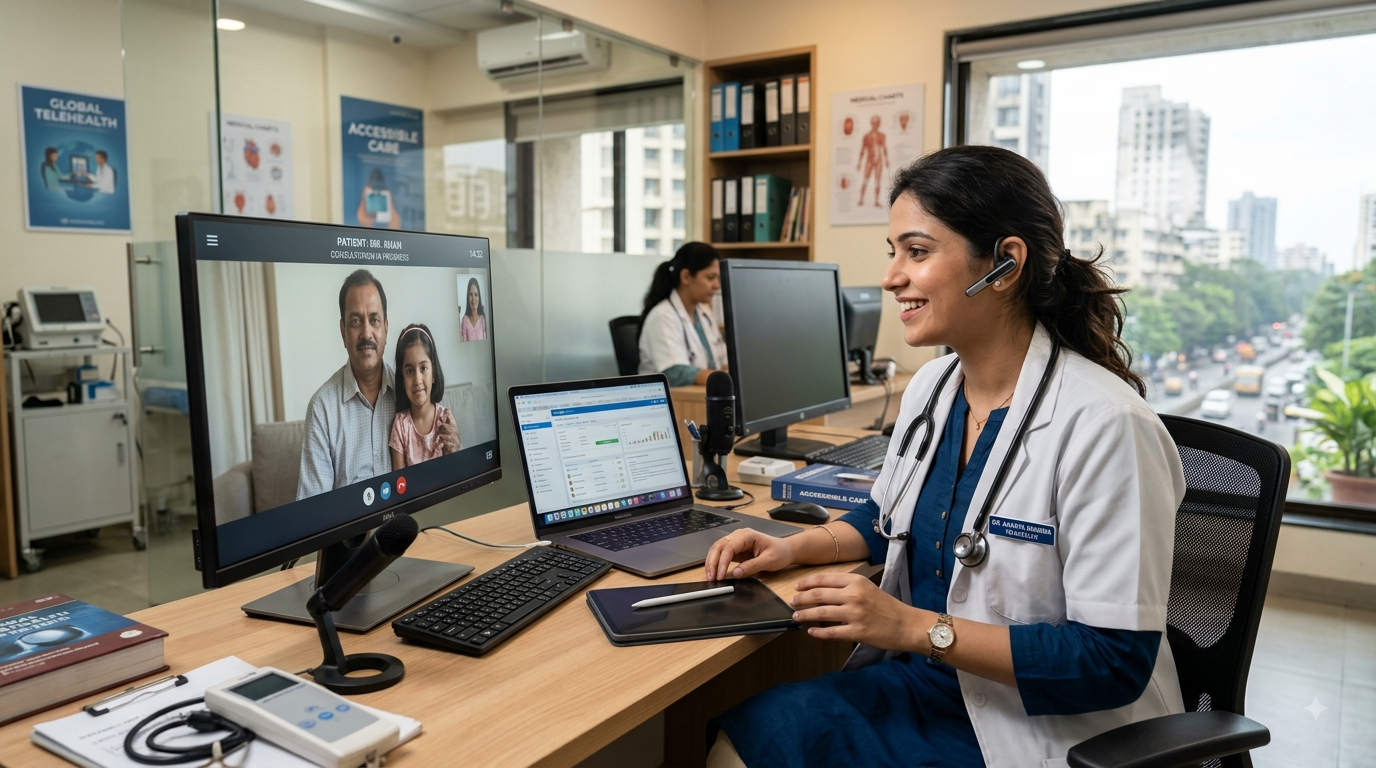
This is where digital doctors can become useful.
Let's understand how with an example. For instance, a young professional is experiencing fever, fatigue, and mild chest discomfort. Here, a digital doctor could provide first-level guidance. It could review symptoms and available health information and further suggest possible causes, identifying warning signs that require urgent care. The physician still makes the diagnosis, but the process to reach the right care pathway for the patient becomes faster.
Now consider a man in his sixties with fatigue, reduced energy, urinary discomfort, and changes in sleep. The first question that comes to his mind is should he see a urologist, endocrinologist, cardiologist, or general physician? Here, a digital doctor could review symptoms, medications, reports, and risk factors, then recommend the most appropriate starting point. This would help the patient find the right specialist faster.
Digital doctors are not only meant for patients or those who are not doctors. They can be a great support for healthcare professionals as well. Already, AI is being explored in several countries to assist medical imaging, rare-disease identification, and complex diagnosis. Such systems help in reviewing large volumes of medical information and highlight patterns that deserve attention.
The benefits could extend even after treatment. Imagine a patient living in a remote, hilly region after cardiac surgery at a distant tertiary hospital. Connected devices can monitor recovery indicators remotely. Digital systems can identify unusual changes and alert the medical team. In such a scenario the patient continues to get care without taking the pain to travel long distance.
Over time, digital twins and predictive health models may further enrich healthcare by helping clinicians anticipate risks and future health trajectories. For now, however, the immediate opportunity is more practical: helping citizens stay healthier, helping patients navigate care more effectively, and helping doctors make better-informed decisions.
Of course, safeguards matter. Health data must remain private. AI must be clinically validated. Systems must be interoperable. Doctors must remain central to medical decision-making. At the same time, we should recognise a simple reality. A doctor's time is limited. Healthcare interactions are often measured in minutes. However, questions arise before the consultation and continue long after it ends.
That is where digital doctors can add value. They can guide citizens before a consultation, help patients prepare better questions, reinforce treatment plans afterwards, and support recovery between appointments. In short, they can make healthcare more continuous between interactions with human doctors.
India has doctors, and it is producing more of them every year. The choice is not between doctors and digital doctors. It is to combine the strengths of both.
The future of healthcare will continue to be built on human expertise, trust and clinical judgment. Digital doctors can strengthen that future by making healthcare more accessible, personalised, and preventive. For healthizens, patients, and doctors alike, that partnership could become one of the most important healthcare advances of the coming decade.
(By Dr. Aloknath De, Founder & CEO - TechCrafter International Pvt Ltd. Formerly CTO & CVP - Samsung)
Disclaimer: The opinions expressed within this article are the personal opinions of the author. NDTV is not responsible for the accuracy, completeness, suitability, or validity of any information on this article. All information is provided on an as-is basis. The information, facts or opinions appearing in the article do not reflect the views of NDTV and NDTV does not assume any responsibility or liability for the same.