

)
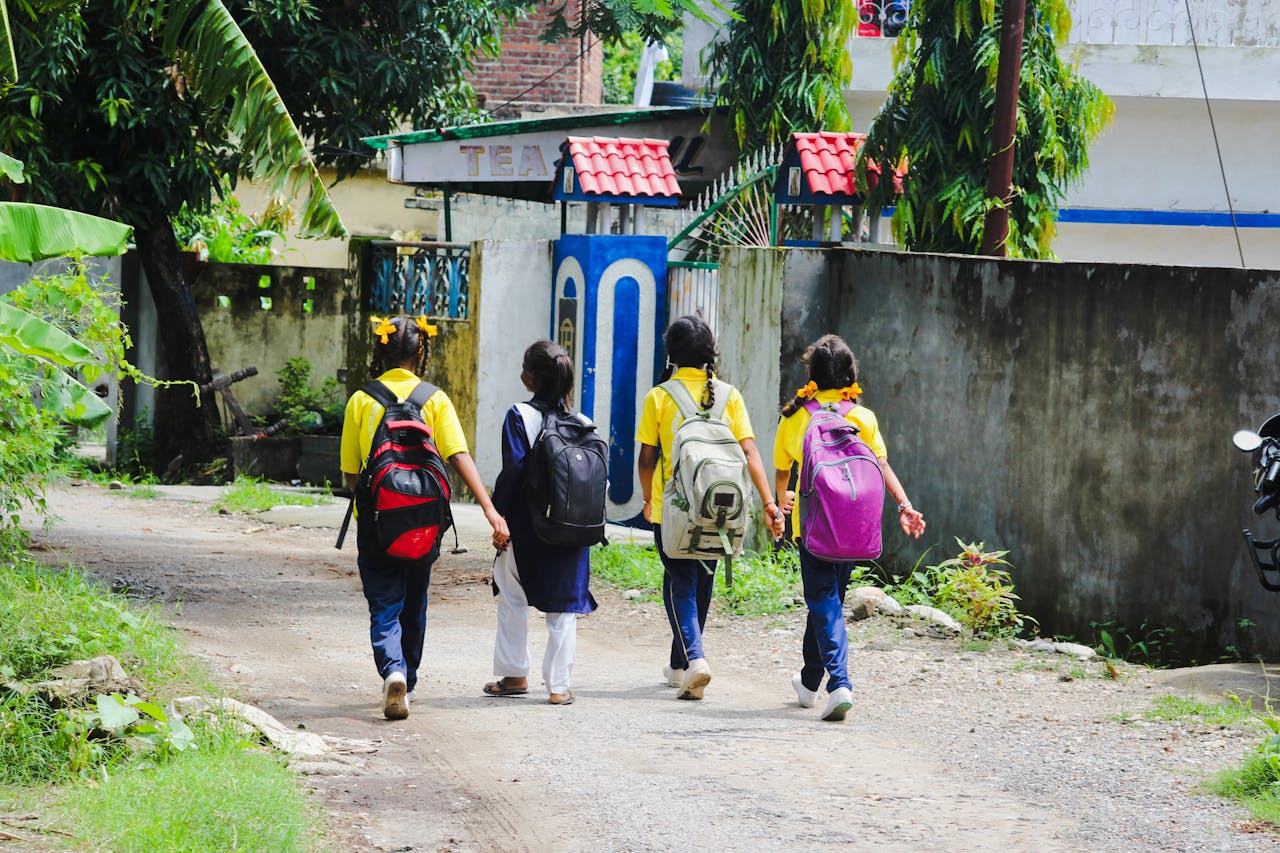
Every morning, millions of Indian children sling backpacks over their shoulders, often bags so heavy they struggle to stand upright. While parents may dismiss it as part of school life, doctors say the burden is reshaping young bodies in ways that can follow them into adulthood. Now, new government responses in Parliament and growing medical evidence point to the same alarming trend: India's school bag load is harming children's spinal health, posture and overall well-being. The need of the hour is to listen to what these experts have to say in terms of immediate remedial action that can be taken to improve the burden of school bags for children.
A recent Lok Sabha reply (December 2025) reveals that the Ministry of Education continues to push for the 10% body-weight limit for school bags and has introduced "bagless days" under National Education Policy 2020. Yet, the actual weight many children carry remains much higher. This is evident in the fact that orthopaedic experts are seeing earlier signs of spinal curvature abnormalities, chronic back pain and postural issues in teenagers.
Dr Rohit Lamba, Director of Orthopaedics at Fortis Hospital Manesar, notes that the problem has grown from a manageable inconvenience into a long-term musculoskeletal threat: "The heavy weight of school bags has become a lasting issue affecting how students stand and sit, as well as their mental and physical health, starting from the earliest years of school all the way through teenage years."
Here's a closer look at government data, medical science and clinical insights to understand whether school bags are literally deforming India's future by posing a huge hazard to child health and development.
What The Government Data Reveals
The Ministry of Education's written response confirms that the School Bag Policy (2020), created by NCERT, CBSE, Kendriya Vidyalayas and Navodaya Vidyalayas, prescribes that a child's school bag must not exceed 10% of their body weight.
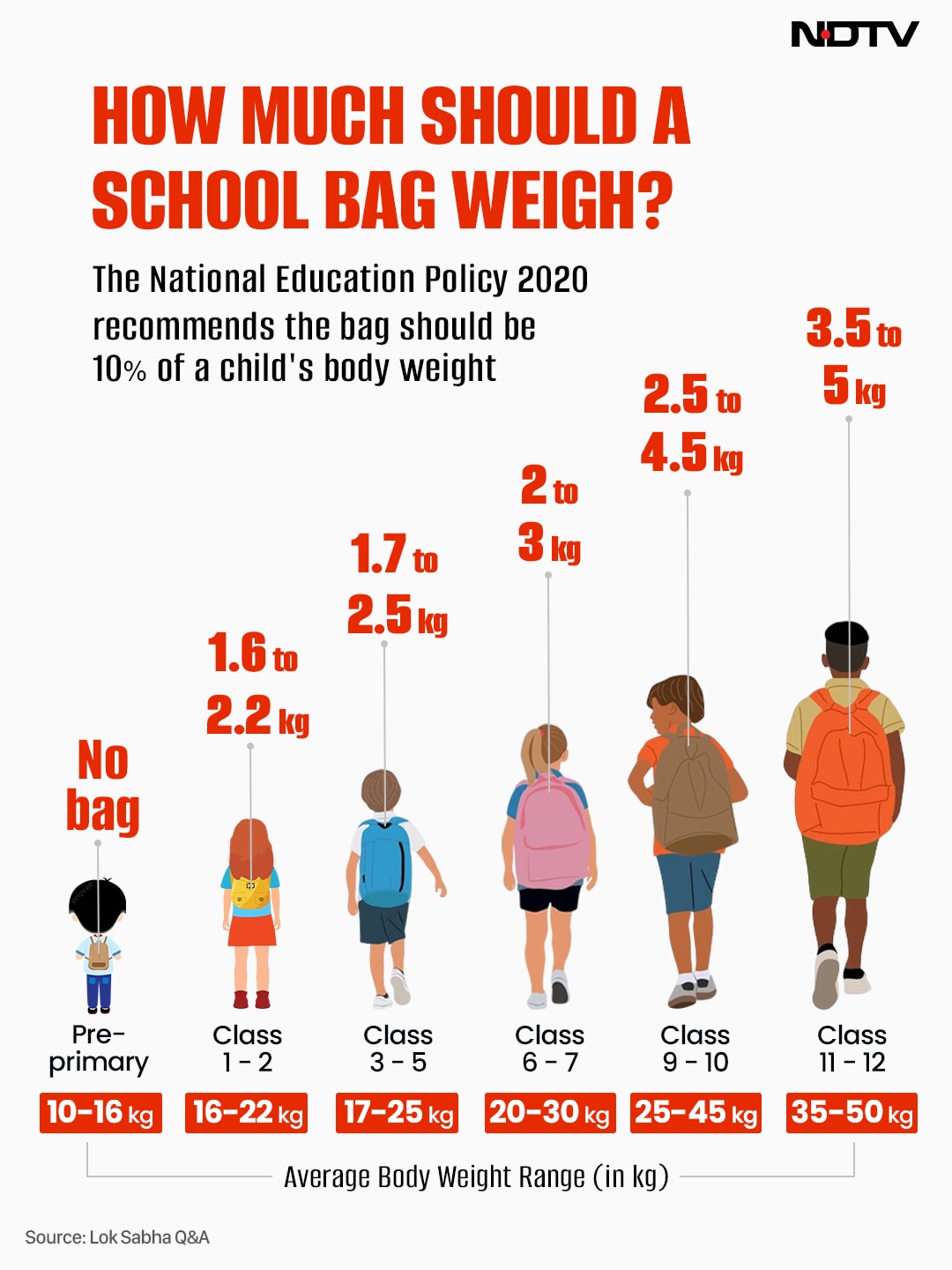
Recommended safe bag-weight ranges according to this data are as follows:
Classes I-II: 1.6-2.2 kg
Classes III-V: 1.7-2.5 kg
Classes VI-VII: 2-3 kg
Class VIII: 2.5-4 kg
Classes IX-X: 2.5-4.5 kg
Classes XI-XII: 3.5-5 kg
But real-world observations often show school bags weighing 15% to 20% of a child's body weight, nearly double the safe limit, as also highlighted by Dr Lamba, citing joint research from the Indian Journal of Paediatrics and Post-Graduate Institute of Medical Education and Research (PGIMER).
The government has also officially implemented the concept of 10 Bagless Days. Introduced on 29 July 2024, these guidelines encourage experiential learning, heritage walks, arts, sports, quizzes and reduced textbook dependency for classes 6-8.
What Heavy Bags Actually Do To Children's Bodies: Doctor Explain
1. Spinal Stress and Early Deformities
Dr Lamba warns: "More and more teenagers are showing early signs of spinal problems." Backpacks that exceed safe limits force children to lean forward, shift their center of gravity and strain their spine. The American Academy of Orthopaedic Surgeons (AAOS) notes that this can lead to:
- Abnormal spinal curves (kyphosis/lordosis)
- Rounded shoulders
- Forward head posture
- Chronic muscle fatigue
2. Damage to Growing Bones and Muscles
The Indian Journal of Paediatrics study cited by Dr Lamba found that carrying bags above 10% of body weight can cause long-term musculoskeletal damage, a risk amplified when weights reach 15-20%.
3. Invisible, Slowly Building Harm
Dr Lamba highlights a silent danger: "The stress from a heavy bag builds up slowly... kids don't say anything unless the pain gets really bad." This makes early detection difficult.
4. Sleep Disruption and Mental Fatigue
Muscle tension from overloaded backs can impair sleep quality, increasing daytime fatigue and reducing learning capacity, an under-recognised consequence.
5. Impact on Children With Pre-existing Conditions
According to Dr Lamba: "For children with sinus problems, scoliosis, or breathing difficulties, the extra weight can be very dangerous." Heavy bags can worsen:
- Asthma and respiratory limitations
- Pre-existing spinal curves
- Neck pain and headaches
6. Climbing Stairs Makes It Worse
Dr Lamba adds: "In many schools, kids have to climb three or four flights of stairs several times a day, an activity tough even for a healthy adult." Basically, more weight and vertical load means greater spinal compression.
Photo Credit: Pexels
Why Bags Are Still Heavy: Systemic Problems
Heavy school bags and their resultant impact on school children is not a new problem. The crisis persists due to a number of reasons:
- Excessive Books and Notebooks: The Indian education system recommends multiple textbooks per subject. Add classwork, homework and revision notebooks to this mix and it sums up to unnecessary load.
- Lack of Classroom Storage: Few schools offer lockers, forcing students to carry all materials daily. Even today, lockers are made available only in private schools, while public schools are overcrowded and lack this amenity too.
- Parent-Driven Overload: Performance pressure is already a burden on Indian students. Additional guides, reference books, and extra notebooks worsen the weight.
- Heavy Tiffins and Water Bottles: While children in India may be carrying traditional lunchboxes to school daily, these also add to the load they carry. One litre of water alone adds 1 kg.
What Has Worked In The Past, And Should Return
Dr Lamba points out that earlier reforms genuinely reduced load in some schools:
- Limiting subjects per day
- Classroom lockers
- Digital textbooks and materials
- Splitting thick textbooks into 3-4 smaller parts
- Using lighter, thinner notebooks
He notes: "These small changes made a big difference in reducing the overall workload."
Some Solutions Parents And School Children Should Try
- Follow the 10% Body-Weight Rule: Weigh your child's bag weekly.
- Two-Strap Backpacks Only: Only use bags with padded, wide straps and waist belts.
- Don't Let Bag Hang Below the Waist: Lower bags increase spinal load.
- Digital Submissions for Homework: Reduces paper notebooks and textbook dependency.
- Lockers or Shared Materials in Classrooms: Though less feasible as education level increases, sharing materials in classrooms also has community benefits.
- Teachers Should Share Weekly Timetables: This will help children bring only required books.
- Core Strengthening Exercises: Enhances spinal stability and reduces chronic pain risks.
India's school bag crisis is no longer a minor discomfort. It is a public health issue affecting posture, spinal development, sleep quality and long-term musculoskeletal health. Government initiatives like the 10% weight limit and bagless days are significant steps, but implementation remains inconsistent.
As Dr Rohit Lamba emphasises, the damage on child health is slow and often invisible, yet deeply harmful. If India wants healthy, strong and confident future generations, reducing school bag load must become a national priority shared by policymakers, schools and parents alike. The science is clear. The solutions exist. What's needed now is action.
Disclaimer: This content including advice provides generic information only. It is in no way a substitute for a qualified medical opinion. Always consult a specialist or your own doctor for more information. NDTV does not claim responsibility for this information.