

)
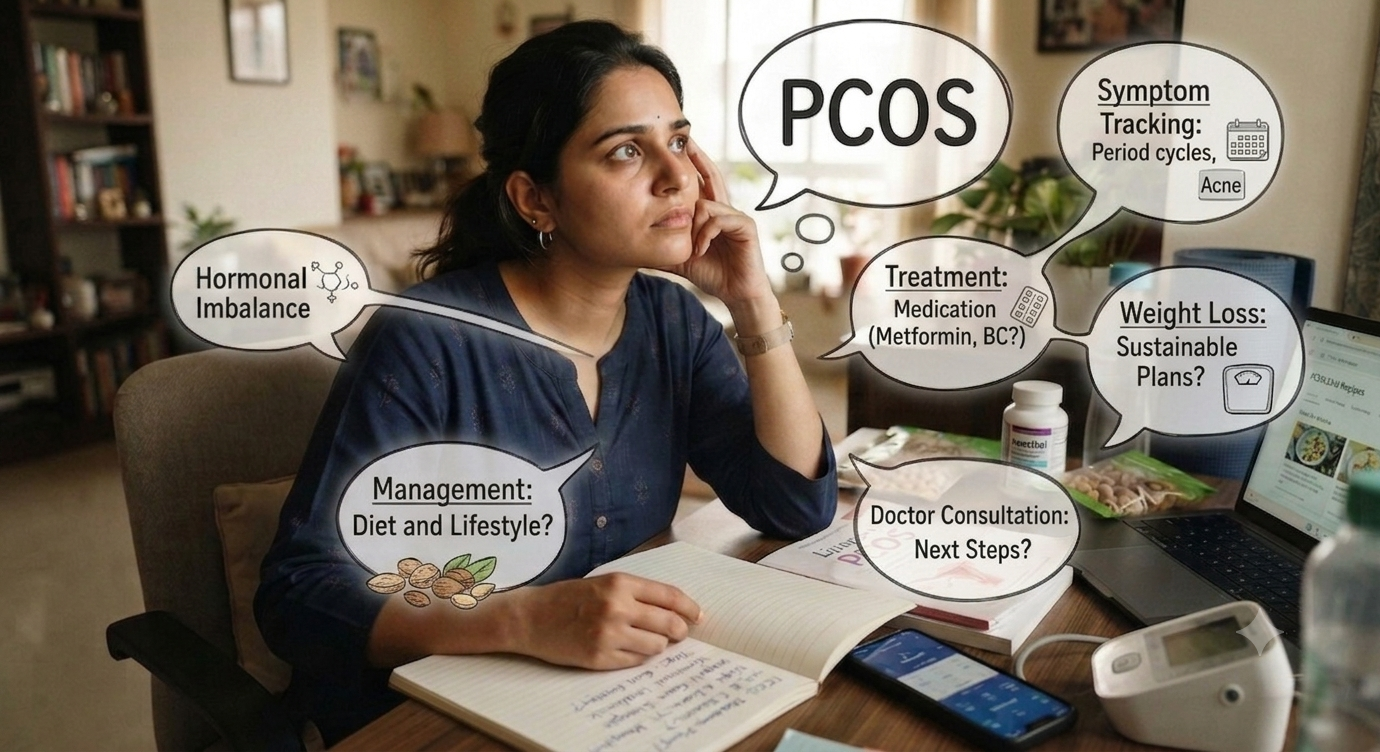
"I was 13 when a routine visit to the doctor turned overwhelming. A general physician examined my ultrasound reports and directed us to see a gynaecologist," said Tanisha Sharma (name changed), a 28-year-old working professional. She was diagnosed with PCOS (Polycystic Ovarian Syndrome) at a young age, at a time when not many people knew about the condition. PCOS, now known as PMOS (Polyendocrine Metabolic Ovarian Syndrome), affects an alarming number of women globally. Primarily driven by hormonal fluctuations, PCOS impacts fertility, mood, body weight, and more. It leads to irregular periods and is the leading cause of anovulation. Unfortunately, there is no cure for PCOS, but it can be managed through diet and lifestyle interventions along with medical assistance. However, it can also relapse, which is exactly what happened to Tanisha.
At the time of her diagnosis, Tanisha was too young to fully understand the condition. As she grew up, she noticed changes that her classmates couldn't relate to. A constant state of low energy levels, irritability, hair fall, weight gain and irregular periods are a few to name. As she grew up, she researched the disease and consulted various doctors. The final verdict was, "I have to maintain a healthy weight, eat well, and exercise regularly."
When she was 23, despite being a foodie, she managed to lose some weight, and her PCOS symptoms disappeared. Her menstrual cycles became regular, her acne cleared up, and she felt better overall. However, after starting her first desk job, she gained some weight, and once again, PCOS resurfaced, bringing back the cycles of mood swings, constant fatigue, and irregular menstruation.
"I wasn't very serious about the condition back then, and I just moved on. I was working and travelling, enjoying my favourite foods, and didn't care much about my weight or PCOS symptoms."
However, years later her symptoms became quite severe. A series of tests revealed "bulky PCOS ovaries." In 2024, she again decided to lose some weight and lost around 7 kgs. "Congratulations, there are no signs of PCOS and your periods are regular," her doctor told her post-examination.
But PCOS isn't that simple. It is a complex disease which wants you to calculate your every move. PCOS not only makes you gain weight but also makes it more challenging to lose weight. While you are trying to eat healthy, it will mess with your mental health and appetite, leading to cravings for unhealthy carbohydrates. The fatigue it induces can be so severe that exercising feels nearly impossible. Most women with PCOS often feel unwell for no apparent reason. Tanisha experienced this as well, and by mid-2026, she discovered that her PCOS had returned and was "worse than before."
Frustrated, she expressed, "It's a never-ending cycle. It keeps coming back. I've tried everything. With busy lifestyles, it's hard to stick to a strict diet or exercise regularly, but if I don't, PCOS simply destroys everything."
Now, let's explore the medical reasons why PCOS is so stubborn.
"PCOS is a long-term condition, so symptoms can improve and then become noticeable again over time. Weight changes, physical activity and metabolic health can influence symptoms such as irregular periods, difficulty with ovulation, acne and excess hair growth. However, there is no fixed pattern or single reason that explains why symptoms return in every woman," says Dr. Anjana Singh, Director, Obstetrics and Gynaecology at Fortis Hospital Noida.
It can be incredibly frustrating to see symptoms return after working hard to get them under control, but the reason symptoms relapse is because PCOS cannot be fully eliminated or cured permanently.
When your symptoms disappeared, your PCOS was not "gone"; rather, it was successfully managed into remission. "Improvement in symptoms does not necessarily mean that the underlying condition has disappeared. Long-term management therefore needs regular attention rather than treatment only when symptoms become troublesome. The focus should be on maintaining healthy lifestyle habits, monitoring menstrual and metabolic health and addressing individual symptoms when required. The international PCOS guideline also recognises relapse prevention as part of lifestyle management, which supports a long-term approach rather than short periods of strict intervention," Dr. Singh clarifies.
Why does body weight play such a significant role?
The gynaecologist explains that weight and PCOS have a complex relationship, and there is no specific amount of weight gain at which PCOS symptoms are expected to return. "In some women, weight changes may be accompanied by changes in menstrual regularity, ovulation or other symptoms, particularly when metabolic health is also affected. At the same time, women with PCOS can find weight management more difficult because of several underlying metabolic and hormonal factors."
"This is why the focus should not be on repeated cycles of losing and regaining weight. The international guideline recommends healthy lifestyle management and specifically recognises the value of preventing further weight gain. Importantly, benefits from healthy eating and physical activity can occur even without weight loss. PCOS management should therefore look beyond the weighing scale and consider menstrual health, metabolic risk and overall wellbeing," she adds.
How to break this cycle? How to keep the symptoms under control in the long run?
"PCOS management does not require a permanently restrictive diet or an exhausting exercise routine. The international guideline does not recommend one particular diet or one specific form of exercise as being best for PCOS," says Dr. Singh.
"Sustainable healthy eating, regular physical activity and behavioural support are the more important principles. The routine should be realistic enough to continue over the long term rather than followed strictly for a few weeks and then stopped."
"Goals can be adjusted according to individual circumstances, with attention to weight management, metabolic health and emotional wellbeing. Regular follow-up can also help identify changes early rather than waiting for symptoms to become difficult to manage. The aim is not to achieve perfect control every day, but to establish habits that can realistically continue over time," the expert advises.
Tanisha is actively working to understand how to manage her PCOS. She has stated that she "won't just live with the condition that is impairing my physical and mental health." She is constantly working with health experts to manage the condition efficiently and is trying to help others with the condition.
Disclaimer: This content including advice provides generic information only. It is in no way a substitute for a qualified medical opinion. Always consult a specialist or your own doctor for more information. NDTV does not claim responsibility for this information.