

)
Tennis player Novak Djokovic has recently spoken about a health issue that he has been dealing with while competing in hot and humid conditions. His personal experience has shed light on the role of environmental conditions in affecting the body during competitive sport. Alongside this revelation, the concern around dealing with extreme heat has become a recurring health issue as multiple countries in the world record abnormally hot and humid conditions. There are several studies that have found that the health risks associated with heat and humidity are significant. From heart strain to the lack of the body to make sweat evaporate, the Environmental Perspective Journal sheds light on the health issues that can occur when the body is exposed to heat and humidity repeatedly. This can further worsen if an individual is performing high-impact sports such as tennis that require high energy expenditure in hot weather.
Why Heat And Humidity Are Harder On The Body Than Heat Alone
The Experimental Physiology Journal has suggested that heat and humidity can be harder on the body than a rise in heat in the environment. Mainly due to the humidity reducing the body's ability to make the sweat evaporate, which happens to be excess as a response to heat. This makes the body struggle to cool itself, and the internal body temperature rises quickly, causing overheating and causing discomfort.
In order to cool the body, the heart must pump more blood towards the skin, as it is overheating due to exposure to heat and humidity. When this goes on for a prolonged period, the heart rate rises and causes stress on the circulatory system, exposing the body to risks such as:
- Rapid heartbeat
- Reduced exercise tolerance
- Increased fatigue
Even increases the risk of heart disease for those who are constantly exposed to high heat and humidity.
5 Key Takeaways On Heat, Humidity And The Body
The constant onslaught of heat and humidity on the body can turn severe if the body becomes stressed and the heart is unable to keep up with the demand. Even research published in the Scandinavian Journal of Medicine and Science in Sports suggests that high humidity could cause heat loss and reduced exercise performance while increasing thermal strain.
1. Humidity Can Prevent The Body From Cooling Down
The high level of moisture in the air can make the body unable to regulate its internal temperature. The way this happens is because sweat remains for a long time under stress, and increased risk of overheating pushes the body to its limits.
2. Heat Can Increase Heart Rate And Physical Stress
The heart becomes strained as it struggles to pump blood through the body that is trying to cool itself. Additionally, this can also affect daily exercise performance and make you fatigued faster.
3. Dehydration Happens Faster Than Many People Realise
This can also cause dehydration faster, as there is active fluid loss through excessive sweating. When dehydration happens faster, then the risk of electrolyte imbalance is far greater, and this can further push the body to need oral rehydration.
4. Heat Exhaustion Can Develop Gradually
The state of heat exhaustion happens gradually over an extended period of time and can be identified through symptoms such as:
- Heavy sweating
- Dizziness
- Weakness
- Nausea
- Headache
- Muscle cramps
5. Some People Are More Vulnerable To Heat Stress
Certain individuals who pose a greater vulnerability to developing heat stress can be:
- Athletes
- Older adults
- Children
- Individuals with chronic illnesses
- Those taking certain medications
Warning Signs That Your Body Is Overheating
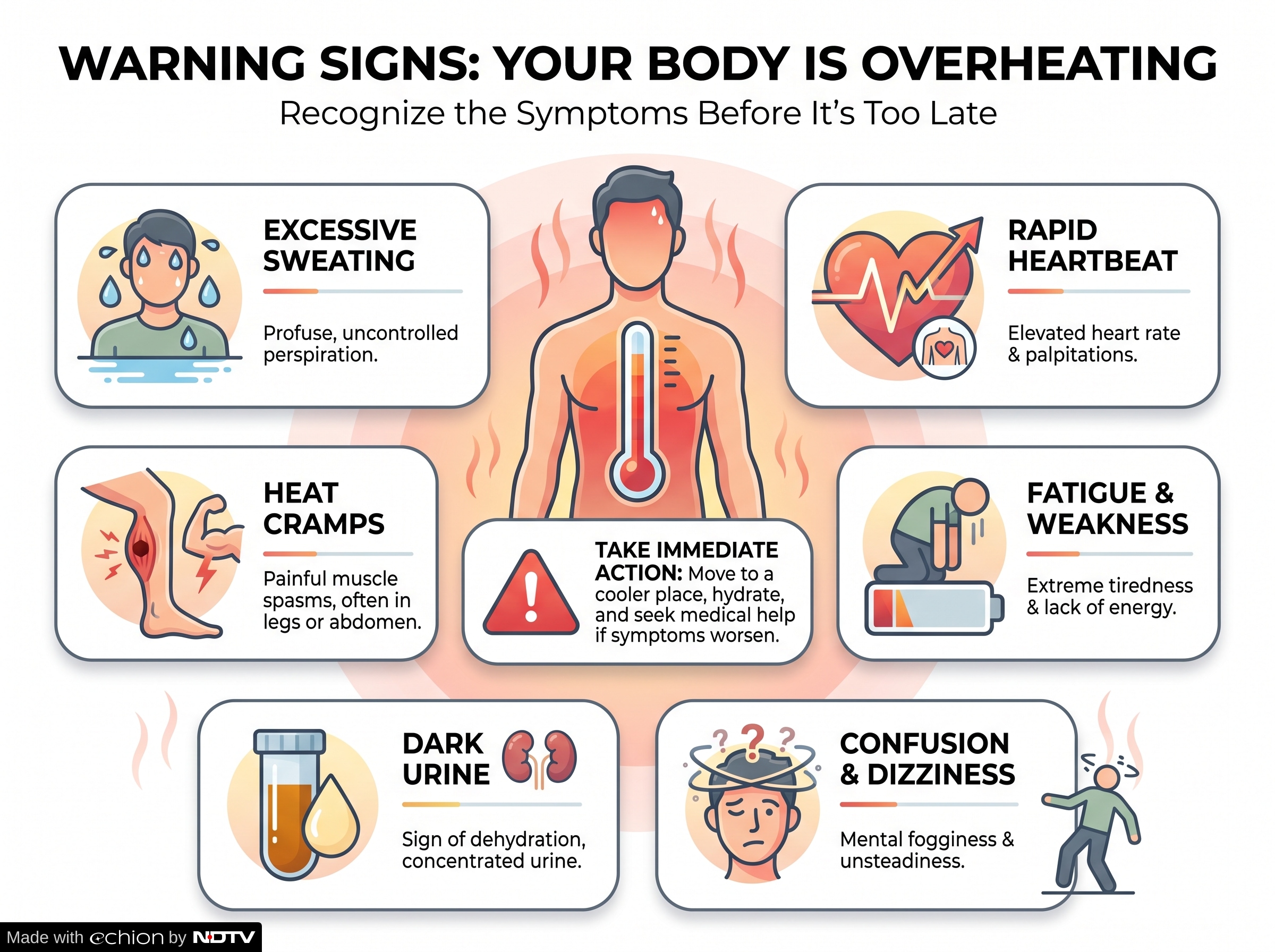
The warning signs that can present themselves when the body is overheating can be identified through:
- Excessive sweating
- Rapid heartbeat
- Fatigue
- Confusion
- Dizziness
- Dark urine
- Heat cramps
How To Stay Safe In Hot And Humid Weather
When you are playing a sport in hot and humid weather, you need to implement practical tips to stay safe. These tips can be:
- Hydrate before feeling thirsty.
- Replace lost electrolytes.
- Wear loose, breathable clothing.
- Avoid strenuous exercise during peak heat.
- Seek shade and cooling breaks.
- Use fans and air conditioning where possible.
When Heat Exhaustion Becomes A Medical Emergency
Heat exhaustion can turn into a medical emergency when the exposure to heat and humidity turns into a medical emergency. The signs that can indicate heat stroke and that should force you to seek medical help are:
- Body temperature above 40 degrees Celsius
- Confusion
- Loss of consciousness
- Absence of sweating in some cases
- Seizures
Heat-related illnesses can affect your body if you don't control the impact of heat and humidity. Knowing the signs and safety precautions to take can protect your body from suffering a heat stroke.
Also Read: Heatwave Alert Issued In Many Indian States: Doctor Explains Safety Tips, Do's And Don'ts
Disclaimer: This content including advice provides generic information only. It is in no way a substitute for a qualified medical opinion. Always consult a specialist or your own doctor for more information. NDTV does not claim responsibility for this information.