

)
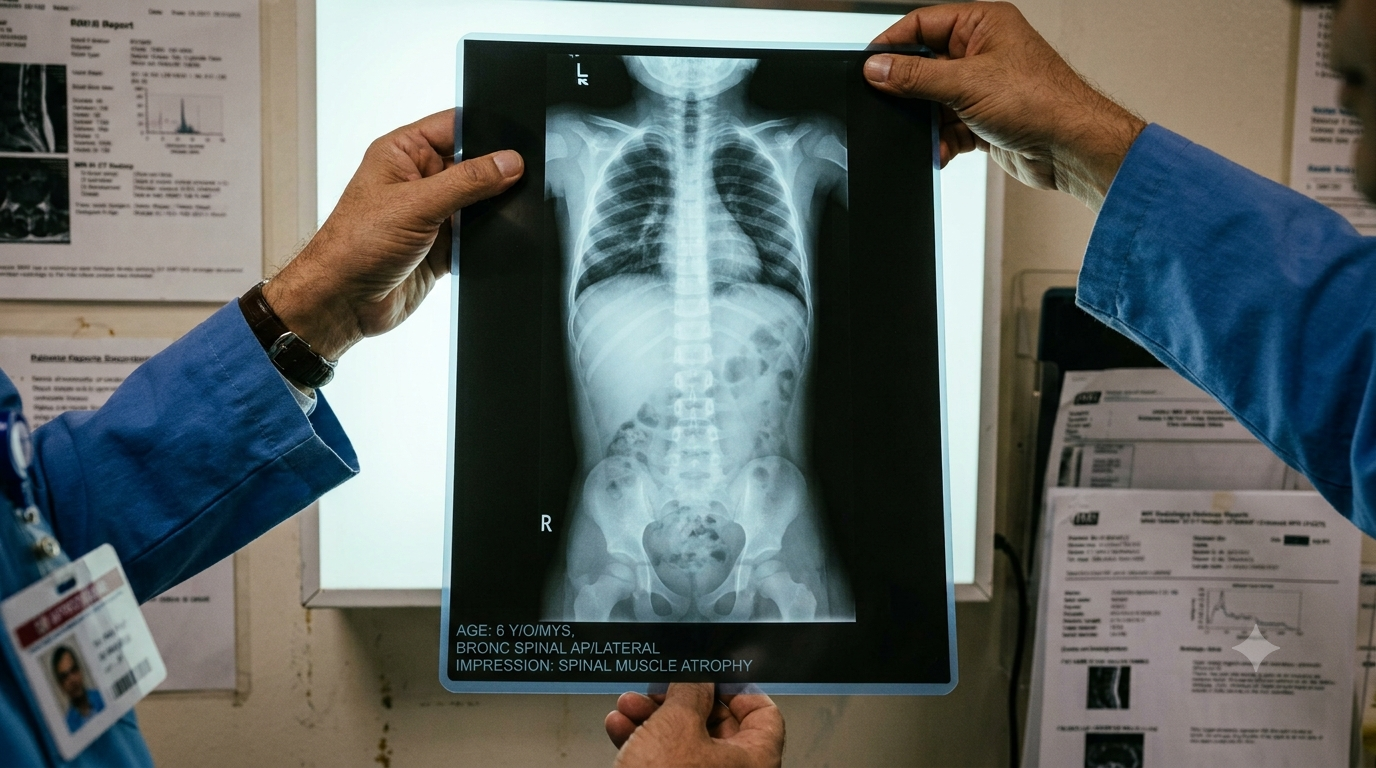
Baby Rishwanth has SMA Type 1, a rare genetic disease that progressively weakens muscles needed for movement, swallowing and breathing. His family is racing to access gene therapy as his condition continues to deteriorate
For baby Rishwanth, something as basic as breathing and eating has become a daily battle. Diagnosed with Spinal Muscular Atrophy (SMA) Type 1, the most severe form of the rare genetic disorder, the baby is now dependent on respiratory support and is being fed through a tube, according to his family.
His parents say doctors have recommended Zolgensma gene therapy, a one-time treatment that costs nearly Rs 9 crore. They are racing against time to raise the money they say is needed to access the treatment, while also seeking government assistance.
Recently, the family took their campaign to Chennai's Marina Beach, hoping to raise awareness and funds for their baby's treatment.
"We are giving him supportive medicines. But doctors have advised us to administer the Zolgensma gene therapy injection as soon as possible," Rishwanth's father, N Satish Kumar, told NDTV.
The family, which earns its livelihood by selling clothes, says it has managed to raise Rs 25 lakh so far.
"We are seeking help from everyone. We are trying to raise funds as quickly as possible to save our child," Satish Kumar said. The family says it has also approached the government for assistance but has not yet received a response.
For Rishwanth, however, the challenge is not simply about raising money. It is also about the progression of a disease that can affect some of the body's most essential muscles.
What is Spinal Muscular Atrophy?
Spinal Muscular Atrophy, or SMA, is a rare genetic disorder that damages motor neurons, nerve cells responsible for controlling voluntary muscle movement.
Most cases are caused by changes or deletion of the SMN1 gene, which is required to produce survival motor neuron (SMN) protein. Without enough functional SMN protein, motor neurons progressively degenerate, leading to muscle weakness and wasting.
The severity of SMA varies. SMA Type 1 is the most severe form that typically begins in infancy, with symptoms usually appearing within the first six months of life.
Unlike many conditions that primarily affect a particular organ, SMA can interfere with several basic functions because the muscles required for movement, swallowing and breathing become progressively weaker.
SMA Type 1: What symptoms should parents watch for?
Babies with SMA Type 1 may develop:
- Severe muscle weakness
- Poor head control
- Difficulty sitting independently
- Weakness in the arms and legs
- Difficulty sucking or swallowing
- A weak cry
- Breathing difficulties
- Recurrent respiratory infections
Feeding problems can become particularly serious because weakened muscles can make it difficult for a baby to suck and swallow safely.
Respiratory muscle weakness can also make it difficult to cough effectively and clear secretions, increasing the risk of respiratory complications.
In Rishwanth's case, his family says the disease has progressed to the point where he is unable to eat independently and requires tube feeding and respiratory support.
Why does treatment timing matter in SMA?
SMA is a progressive disease, meaning motor neuron loss can continue over time.
This is one reason early diagnosis and treatment have become central to SMA care.
Zolgensma, the brand name for onasemnogene abeparvovec, is a gene-replacement therapy designed to address the underlying genetic problem by delivering a functional copy of the SMN1 gene.
Clinical studies have shown that children with SMA can achieve significantly better motor outcomes when treated early, particularly before extensive motor neuron loss has occurred.
However, treatment is not a guarantee of recovery, and outcomes vary between patients.
For a baby who is already symptomatic, doctors must consider factors such as age, disease progression, motor function and respiratory status when determining the most appropriate treatment strategy.
That makes the family's concern about time medically significant.
A disease that can be inherited silently
SMA is generally inherited in an autosomal recessive pattern.
That means a child usually inherits a faulty copy of the relevant gene from both parents. Carriers typically do not have symptoms themselves.
When both parents are carriers, each pregnancy has:
- 25% chance of SMA
- 50% chance of being a carrier
- 25% chance of inheriting neither altered copy
This is why genetic counselling can be important for families affected by SMA.
From diagnosis to a race against time
For Rishwanth's parents, the medical terminology has translated into an intensely practical problem: how quickly can they access the treatment recommended by his doctors?
The family says they have raised Rs 25 lakh against the nearly Rs 9-crore cost they have been quoted for Zolgensma.
They have also sought government assistance and are continuing their fundraising efforts, including the recent campaign at Marina Beach in Chennai.
Meanwhile, Rishwanth remains dependent on supportive care.
His father's account captures the urgency the family is experiencing: doctors have advised that gene therapy be administered "as soon as possible".
For families dealing with SMA, the story is also a reminder of the importance of early diagnosis, genetic counselling, specialist care and timely access to disease-modifying treatment.
SMA is no longer a condition for which doctors can only provide supportive care. Advances in genetic medicine have changed what is possible.
But for families facing the disease, the next challenge can be just as formidable: making those advances accessible in time.
For Rishwanth, that clock is already ticking.
Disclaimer: This content including advice provides generic information only. It is in no way a substitute for a qualified medical opinion. Always consult a specialist or your own doctor for more information. NDTV does not claim responsibility for this information.