

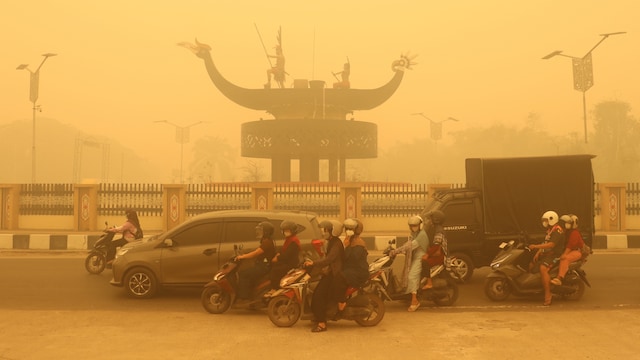
El Nino is no longer just a climate phenomenon to watch. The World Health Organization (WHO) has escalated its global preparedness and response to the weather event, classifying its response at Grade 3, the organisation's highest emergency response level. In its latest strategic preparedness and response plan, released on November 2, WHO warns that El Nino-related climate disruptions could trigger a wide range of public health emergencies across the world.
India is among the countries identified as facing high or very high health risks in WHO's September 2026 global assessment. With much of South Asia expected to experience above-normal temperatures and drier-than-usual conditions, the potential consequences extend beyond heatwaves and water shortages to infectious diseases, malnutrition and disruptions to healthcare services.
WHO's assessment highlights how changing weather patterns can amplify existing health vulnerabilities, particularly among children, pregnant women, older adults and people with chronic illnesses. The organisation's warning is particularly significant for India, where climate-sensitive diseases, uneven access to healthcare and dependence on monsoon rainfall make preparedness critical.
Here is what WHO's latest report says, the health risks India needs to watch and why early action matters.
Why Has WHO Escalated Its El Nino Response?
El Nino is a naturally occurring climate phenomenon characterised by the periodic warming of surface waters in the central and eastern tropical Pacific Ocean. This warming influences atmospheric circulation and can alter temperature and rainfall patterns across different parts of the world.
Its effects are not uniform. Some regions experience prolonged droughts and extreme heat, while others may face excessive rainfall, flooding and associated health emergencies.
According to WHO's November 2 strategic preparedness and response plan, the organisation has initiated a Grade 3 response covering October 2026 to September 2027. This is its highest internal emergency response classification and signals the need for coordinated action across its headquarters, regional offices and country offices.
The plan outlines four strategic priorities: detection and monitoring, protection and prevention, care and support, and health leadership and coordination.
WHO has identified an initial resource requirement of approximately $35 million for the first six months of operations, covering October 2026 to March 2027.
Importantly, WHO clarifies that El Nino does not directly cause diseases. Instead, it acts as a risk multiplier, altering environmental conditions that can increase the likelihood of disease transmission, heat-related illnesses and disruption of essential health services.
READ | El Nino Threatens Health, Too - Early Warnings Done Right Can Save Lives
India Among Countries Facing High Or Very High Health Risks
WHO's Global Public Health Situation Analysis - El Nino 2026, published on September 5, identifies India among countries facing high or very high public health risks. The assessment places India within a South Asian region expected to experience drier-than-normal conditions and above-normal heat during August-October 2026. Other countries identified in the regional risk assessment include Bangladesh, Bhutan, Nepal, Sri Lanka and the Maldives.
For India, the concerns extend across several areas:
- Extreme heat and heat-related illnesses: Prolonged exposure to high temperatures can cause dehydration, heat exhaustion and potentially life-threatening heatstroke. WHO also warns that extreme heat can worsen existing cardiovascular, respiratory, kidney and metabolic conditions. Outdoor workers, older adults, children and people with chronic illnesses are particularly vulnerable.
- Dengue and other vector-borne diseases: Changing temperature and rainfall patterns can influence mosquito breeding and disease transmission. WHO identifies dengue as a high or very high risk for India, alongside other climate-sensitive infections. Drought can also create unexpected breeding sites. When water becomes scarce, households may store it in containers, which can become mosquito breeding grounds if not properly covered. The assessment also identifies malaria as a concern in parts of northeast India.
- Leptospirosis and water-related infections: Changes in rainfall, flooding and inadequate sanitation can increase exposure to contaminated water. WHO identifies leptospirosis as a high or very high risk for India. Flooding can also contaminate drinking-water sources and disrupt sanitation infrastructure, increasing the potential for waterborne infections.
- Food insecurity and malnutrition: Reduced rainfall and prolonged dry conditions can affect agricultural production, livelihoods and food availability. This can increase nutritional vulnerability, particularly among children under five and pregnant and breastfeeding women.
- Disruption of healthcare services: Extreme weather events can damage healthcare infrastructure, interrupt medical supply chains and restrict access to essential services. People requiring regular treatment for diabetes, cardiovascular disease, kidney disorders and other chronic conditions may face additional challenges.
How Could El Nino Affect India's Monsoon And Public Health?
India's dependence on monsoon rainfall makes changes in precipitation particularly important.
The Ministry of Earth Sciences informed Parliament in August 2026 that the India Meteorological Department (IMD) had forecast below-normal rainfall for the 2026 southwest monsoon season. Its revised long-range forecast estimated seasonal rainfall at 90% of the Long Period Average, with a model error of plus or minus 4%.
The government also noted that El Nino conditions were likely to develop during the southwest monsoon season.
However, El Nino does not automatically mean a failed monsoon. Its impact depends on its intensity, timing and interaction with other climate patterns, including the Indian Ocean Dipole.
READ | WHO Calls For Urgent Heat Plans As El Nino Threatens To Intensify Extreme Weather
The public health consequences can be significant even when rainfall deficits are localised. Water scarcity can affect drinking-water availability, sanitation and agricultural productivity, while extreme heat can increase the burden on hospitals and vulnerable communities.
Conversely, episodes of intense rainfall and flooding can create conditions favourable for mosquito breeding and waterborne infections.
This means India needs to prepare for multiple, potentially overlapping health threats rather than focus exclusively on drought or heat.
Who Is Most Vulnerable To El Nino-Related Health Risks?
WHO highlights that the health burden will not be distributed equally. Children, pregnant women, older adults, people with disabilities, individuals with pre-existing medical conditions and economically vulnerable communities face greater risks.
Urban slum populations and remote communities may also be disproportionately affected because of limited access to safe drinking water, sanitation, cooling facilities and healthcare.
Outdoor workers, including agricultural labourers, construction workers and street vendors, are particularly exposed to extreme heat.
The impact could also extend to mental health. Loss of livelihoods, displacement, food insecurity and prolonged exposure to climate-related disasters can contribute to psychological distress and worsen existing mental health conditions.
READ | El Nino Could Cause A Surge In Dengue Cases, Heat Illnesses In India: WHO Warns
What Is WHO Recommending To Prevent A Health Crisis?
WHO's strategic response follows an Anticipate-Mitigate-Respond approach, emphasising the importance of acting before climate-related risks escalate into emergencies.
Its recommendations include strengthening disease surveillance and early warning systems, monitoring climate-sensitive infections, improving access to essential medicines and ensuring healthcare facilities can continue functioning during extreme weather events. The organisation also calls for better coordination between meteorological services, health authorities and disaster management agencies.
For India, this means integrating weather forecasts with public health surveillance, strengthening dengue and malaria prevention programmes, ensuring safe drinking-water supplies and preparing hospitals for heat-related emergencies.
Communities also need timely information about heat exposure, food and water safety, mosquito control and symptoms that require medical attention.
WHO's Grade 3 emergency response to El Nino is a reminder that climate events can have consequences far beyond weather conditions. For India, the risks involve a combination of extreme heat, water stress, infectious diseases, food insecurity and pressure on healthcare infrastructure.
The warning should not be interpreted as a prediction that every region will experience a health emergency. El Nino's effects vary geographically and depend on local vulnerabilities and preparedness.
However, with India already identified among high-risk countries, strengthening climate-informed public health preparedness is essential. Early surveillance, resilient healthcare systems and community-level prevention could make a significant difference in reducing the health consequences of this climate event.
Disclaimer: This content including advice provides generic information only. It is in no way a substitute for a qualified medical opinion. Always consult a specialist or your own doctor for more information. NDTV does not claim responsibility for this information.