

)
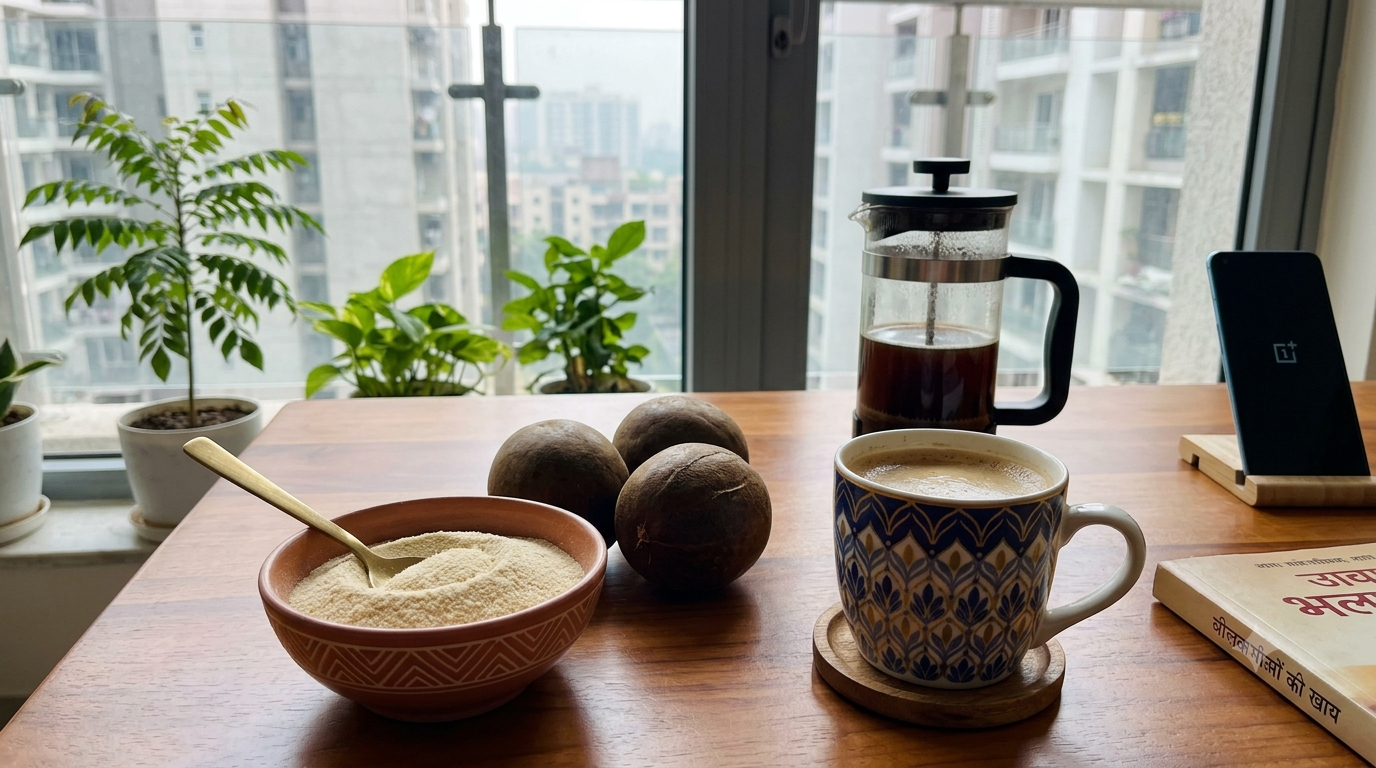
For many people, coffee isn't complete without something sweet. While some still stir in a spoonful of sugar, others reach for artificial sweeteners to cut calories or manage blood sugar. Increasingly, however, another option is making its way into mugs: monk fruit sweetener.
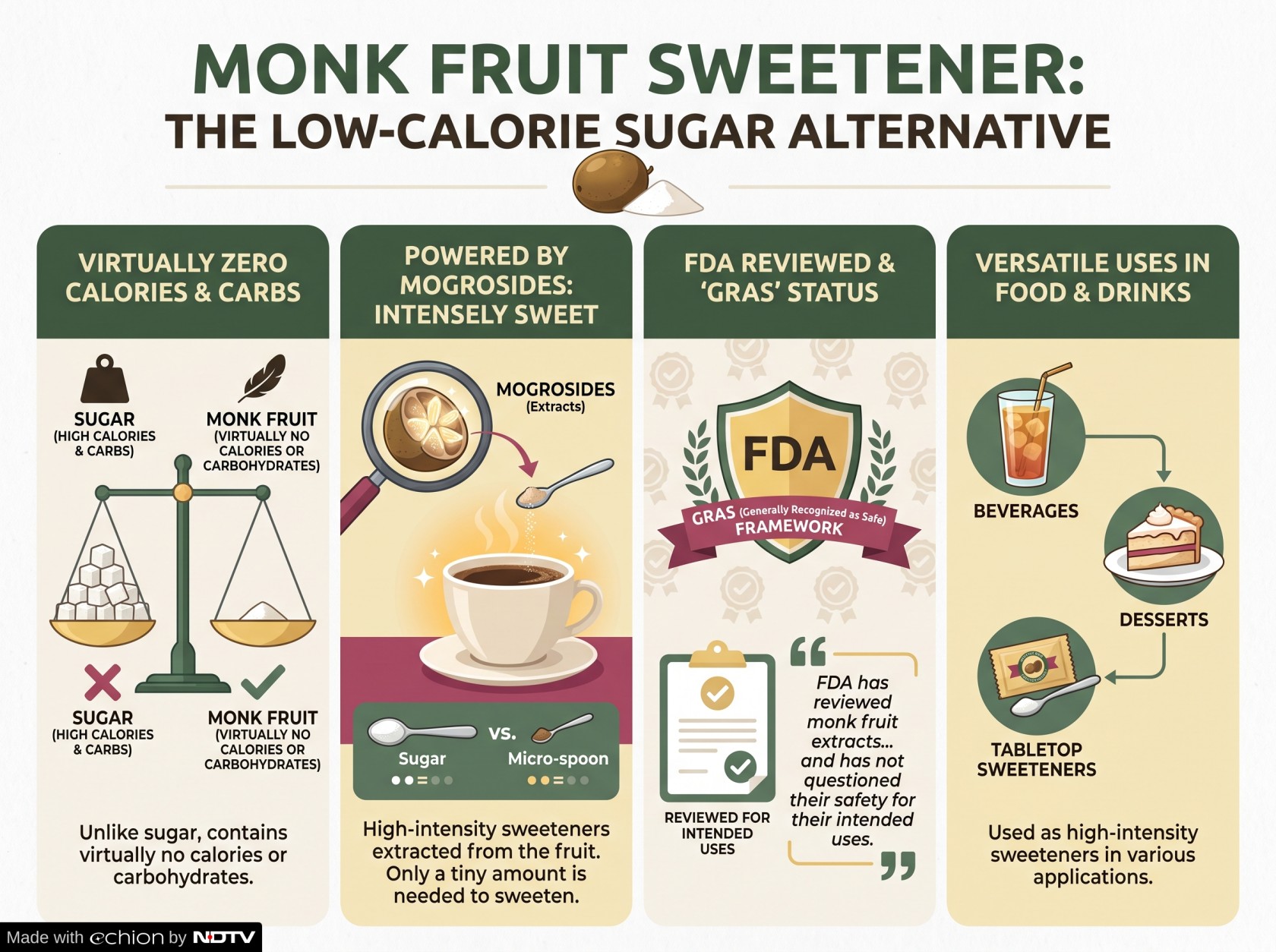
Derived from the monk fruit (Siraitia grosvenorii), a small melon native to southern China, monk fruit sweetener is promoted as a natural, zero-calorie alternative to sugar. Its sweetness comes from compounds called mogrosides, which are estimated to be 100-250 times sweeter than table sugar.
But is monk fruit actually healthier than artificial sweeteners? Can it safely replace them in your morning coffee? The answer is nuanced. While monk fruit appears to be a safe option for most healthy adults and does not raise blood sugar levels, experts caution that no sweetener, natural or artificial, is a magic bullet for weight loss or better health.
What Is Monk Fruit Sweetener?
Unlike sugar, monk fruit sweetener contains virtually no calories or carbohydrates. Manufacturers extract mogrosides from the fruit and use them as high-intensity sweeteners in beverages, desserts and tabletop sweeteners.
The U.S. Food and Drug Administration (FDA) has reviewed monk fruit extracts submitted under the "Generally Recognized as Safe" (GRAS) framework and has not questioned their safety for their intended uses.
Because monk fruit is intensely sweet, only a tiny amount is needed to sweeten a cup of coffee.
How Does It Compare With Artificial Sweeteners?
Artificial sweeteners such as aspartame, sucralose and saccharin have been extensively studied and are considered safe when consumed within established acceptable daily intake (ADI) limits.
Monk fruit differs in two important ways:
- It is plant-derived rather than synthetic
- It contains mogrosides, not artificial chemical compounds, as its sweetening agents
However, "natural" does not automatically mean healthier. Nutrition experts say the best choice depends on why you're using a sweetener. For someone trying to reduce added sugar without affecting blood glucose, monk fruit may be an attractive alternative because it contributes negligible calories and has minimal effect on blood sugar.
Will It Spike Blood Sugar?
Current evidence suggests monk fruit extract does not significantly raise blood glucose or insulin levels, making it suitable for many people with diabetes or prediabetes as part of an overall healthy eating pattern.
That said, consumers should read labels carefully.
Many products marketed as "monk fruit sweetener" are actually blends containing erythritol, dextrose or other bulking agents because pure monk fruit extract is extremely concentrated. The nutritional profile therefore depends on the complete ingredient list, not just the front-of-pack claim.
Does Monk Fruit Taste Better In Coffee?
Taste is subjective, but many people find monk fruit has a milder aftertaste than some artificial sweeteners. Because it is heat-stable, it retains its sweetness in hot beverages, making it suitable for coffee and tea. Unlike sugar, it does not caramelise or add body to drinks, so the flavour profile may be slightly different.
If you're switching from sugar, you may notice the sweetness feels more intense initially because monk fruit is far sweeter than sucrose.
Can It Help You Lose Weight?
Replacing sugar in coffee with monk fruit can reduce calorie intake, if you don't compensate by eating more calories elsewhere.
However, the World Health Organization (WHO) advises against relying on non-sugar sweeteners alone for long-term weight control. Its 2023 guideline concluded that available evidence does not show sustained weight-loss benefits from using non-sugar sweeteners over time.
In other words, swapping sugar for monk fruit in your coffee may be one helpful change, but it won't replace a balanced diet, regular exercise and good sleep.
Is Monk Fruit Safer Than Artificial Sweeteners?
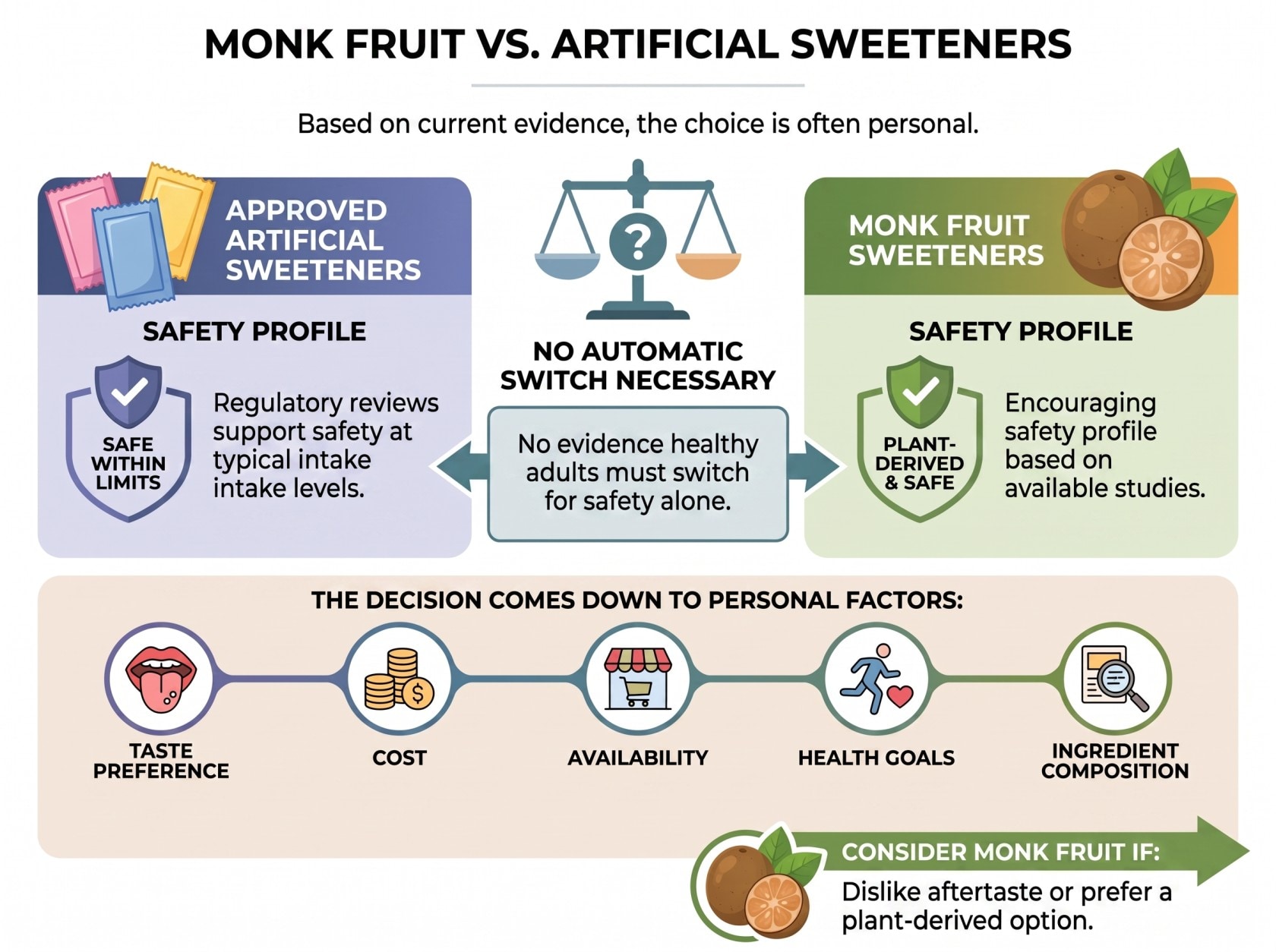
Current evidence does not show that approved artificial sweeteners are unsafe when consumed within recommended limits. Likewise, monk fruit has an encouraging safety profile based on available studies and regulatory reviews. There is also no evidence that healthy adults should automatically replace artificial sweeteners with monk fruit for safety reasons alone.
Instead, the decision often comes down to:
- Personal taste preference
- Cost
- Availability
- Individual health goals
- Ingredient composition
If you dislike the aftertaste of artificial sweeteners or prefer a plant-derived option, monk fruit may be worth considering.
Who Might Benefit Most?
Monk fruit may be useful for:
- People trying to reduce added sugar intake
- Individuals with diabetes or prediabetes who want a sweetener with minimal impact on blood glucose
- Those following calorie-controlled diets
- People who prefer plant-derived sweeteners
However, people should avoid assuming that "sugar-free" automatically means healthy. Coffee drinks loaded with cream, flavoured syrups or whipped toppings remain high in calories regardless of the sweetener used.
Monk fruit can be a suitable substitute for artificial sweeteners in coffee for many people. It offers intense sweetness without calories and appears to have little effect on blood sugar, making it a practical option for those reducing sugar intake.
But whether you choose monk fruit, stevia, sucralose or no sweetener at all, the bigger picture matters more. Health experts agree that reducing your overall preference for intensely sweet foods and beverages is likely to have a greater long-term impact than simply switching from one sweetener to another. Your morning coffee doesn't need to become bitter, but your health decisions should always be based on evidence, not marketing.
- Natural Sugar Substitute: Monk fruit sweetener is emerging as a popular, zero-calorie, plant-derived alternative to sugar and artificial sweeteners for coffee.
- Intense Sweetness: Derived from a small melon native to southern China, its sweetness comes from compounds called mogrosides, making it 100 to 250 times sweeter than table sugar.
- Safety Recognition: The U.S. Food and Drug Administration (FDA) has reviewed monk fruit extracts under the "Generally Recognized as Safe" (GRAS) framework and has not questioned their safety.
- Blood Sugar Friendly: Current evidence shows that pure monk fruit extract does not significantly raise blood glucose or insulin levels, making it a suitable option for people with diabetes or prediabetes.
- Check the Ingredients: Many commercial products marketed as "monk fruit sweetener" are actually blends containing erythritol, dextrose, or other bulking agents, so consumers must read the labels carefully.
- Taste and Heat Stability: Monk fruit is heat-stable, meaning it retains its sweetness in hot coffee, and many people find it has a milder aftertaste compared to some artificial sweeteners.
- Not a Weight-Loss Guarantee: While it can reduce initial calorie intake, the World Health Organization (WHO) advises against relying on non-sugar sweeteners for long-term weight control, as evidence does not show sustained weight-loss benefits.
- Safety vs. Artificial Sweeteners: Current evidence does not show that approved artificial sweeteners are unsafe within recommended limits, meaning healthy adults do not need to switch to monk fruit for safety reasons alone.
- Personal Preference Dictates Choice: The choice between monk fruit and artificial options ultimately comes down to factors like personal taste, cost, availability, individual health goals, and ingredient composition.
- The Bigger Health Picture: While monk fruit is a practical option for reducing sugar, health experts emphasize that reducing an overall preference for intensely sweet flavours is more impactful for long-term health than simply switching sweeteners.
Disclaimer: This content including advice provides generic information only. It is in no way a substitute for a qualified medical opinion. Always consult a specialist or your own doctor for more information. NDTV does not claim responsibility for this information.