





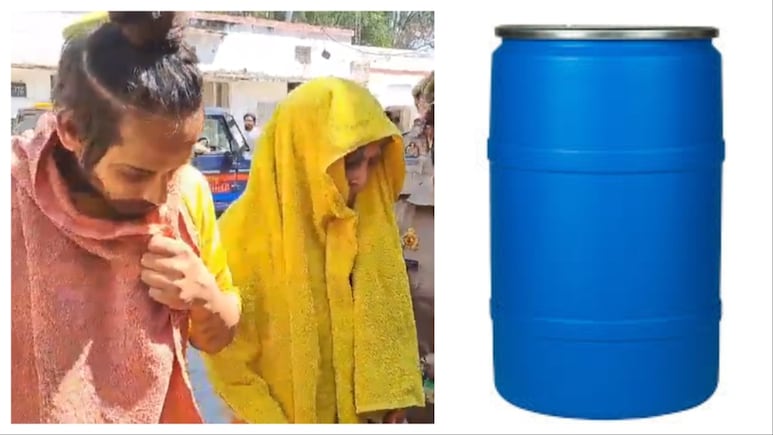
Once just a storage container, the blue plastic drum is now a chilling reminder of the Meerut murder case. On Wednesday, Muskan Rastogi and Sahil Shukla were sentenced to death for killing Muskan's husband, ex-Merchant Navy officer Saurabh Rajput. The sentence is now pending confirmation from the Allahabad High Court. The case drew widespread attention after Rajput's body was allegedly cut into pieces, placed inside a blue plastic drum and concealed with cement. Since then, the term 'blue drum' has sparked considerable discussion on social media, with many users curious about the everyday object at the centre of the case.
However, beyond the dramatic headlines and true-crime reels, blue plastic drums are a common sight in factories, warehouses and industrial facilities. Long before its association with a gruesome murder case, the drum was simply a symbol of utility - a staple in construction sites and industrial yards across the world. For decades, it has been a workhorse for storing water, chemicals, grains and industrial waste. Its popularity is simply rooted in practicality, durability and low cost.
Why Are Plastic Drums Usually Blue?
Blue plastic drums are usually blue because blue is a practical, economical and widely recognised colour for storing and transporting liquids.
Most industrial plastic drums are made from high-density polyethylene (HDPE), a durable material widely used for storing and transporting liquids and other materials. Blue has become a common colour for these containers because it is widely available, practical and easily recognisable. The pigment can reduce the amount of light passing through the plastic, depending on its circulation and formulation. This can help protect certain contents from light exposure. However, the colour alone does not guarantee UV protection or make a container safe for drinking water or food storage.
The colour also provides a useful contrast against many liquids, labels and industrial surroundings. It can also make certain types of dirt or residue easier to notice.
The drums are used to store and transport a range of products, including water, oils, chemicals, hazardous waste and certain food ingredients. Their sturdy construction, secure lids and stackable design make them convenient for warehouses and industrial operations. Manufacturers and businesses often stick to familiar colours for consistency and easy identication.
While their association with the Meerut case has brought renewed public attention, their real identity is far more ordinary.
Track Latest News Live on NDTV.com and get news updates from India and around the world

