




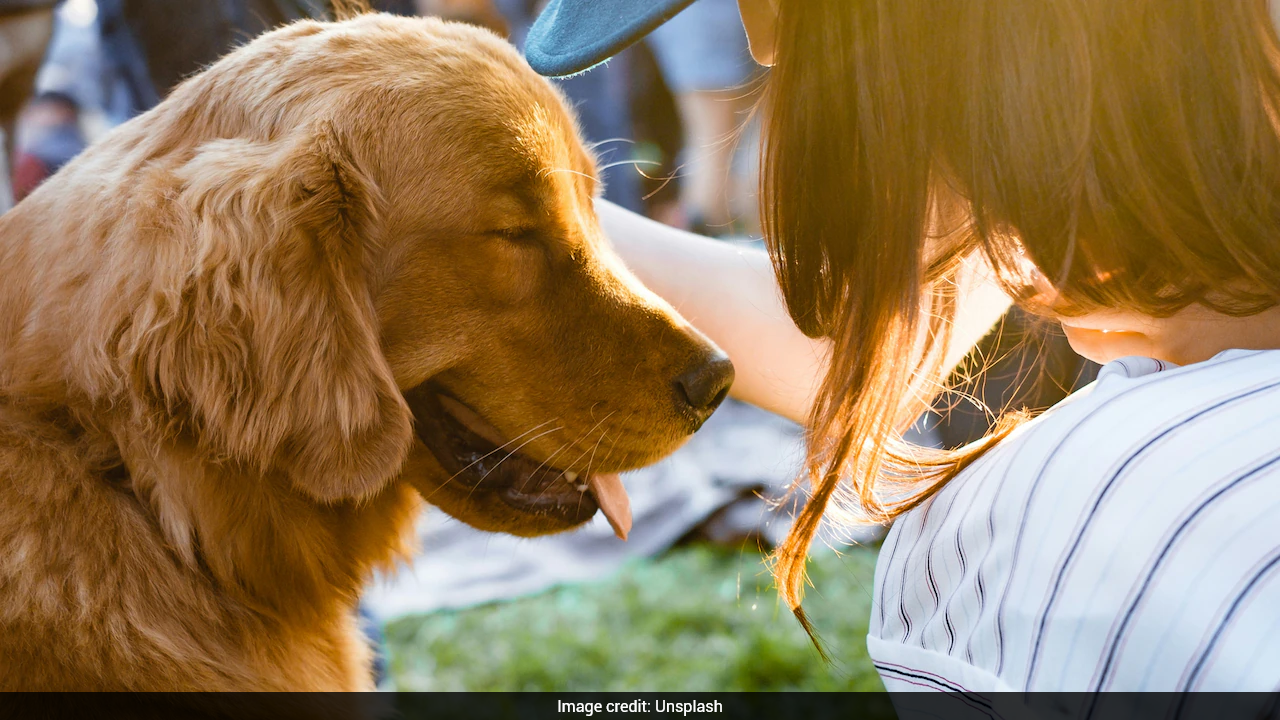
Petting a dog is often seen as a stress buster, but a recent scientific study reveals that the physical comfort of stroking a pet works differently than experts previously thought. In a study published in Biological Psychology, researchers from the University of Innsbruck in Austria analysed how physical touch affects us during tough moments.
"Pets enhance their owners' affect and well-being, providing tangible benefits that extend beyond their original utilitarian roles," the research explained.
"Building on these insights, we sought to elucidate the psychobiological mechanisms through which such benefits arise."
Also read | Gurugram Trump Towers Resident Alleges Lift Service To 36th-Floor Home Blocked By Builder
Vanessa Kaufmann, the first author and psychology researcher, and her team carried out the experiment with 64 adult dog owners and their dogs, who were all healthy and at least two years old. The group included 51 women and 13 men, with an average age of 34.1.
They looked at participants going through stressful tasks, dividing them into groups where some were allowed to pet a dog during a break, while others were kept from touching the animal.
The study found that petting the dog did not instantly erase the tension or speed up immediate recovery from the first round of stress. People did not necessarily report feeling magically relaxed right away.
Also read | Chinese Working Mothers Book Hotel Rooms To Escape Stress, Catch Up On Sleep
Instead, researchers discovered a hidden benefit. They found that physical touch acts as a protective shield for the future. Participants who were able to pet their dogs were calm when they faced a second stressful situation.
On the other hand, those who weren't allowed to touch a dog missed out on this biological armour.
Speaking to Newsweek, Dr Monica Berntsen, consultant psychologist and neuropsychologist, revealed what could be the reason behind such behaviours.
"Human brains are constantly scanning for one question: am I safe? Stroking a dog you know answers 'yes' through the body rather than through thinking. Slow, rhythmic touch, warmth and a calm, familiar animal all tell the nervous system to stand down," she said as quoted. Notably, she was not involved in the study.
Track Latest News Live on NDTV.com and get news updates from India and around the world

