





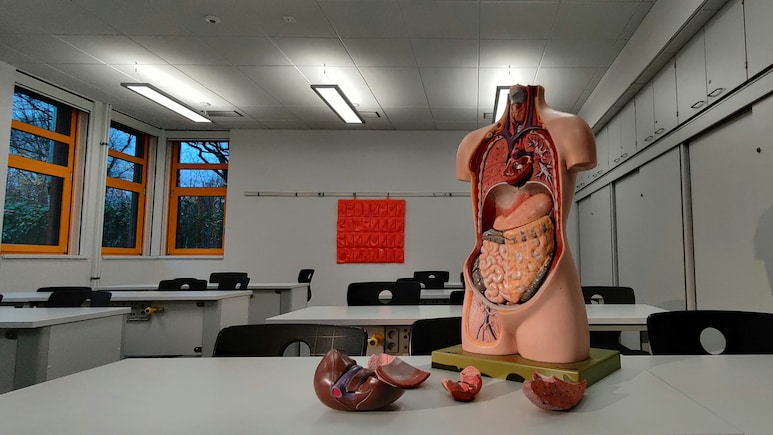
- R3 Bio aims to grow headless human bodies without brains for organ testing models
- The company seeks to replace animal testing with scalable, brain-free organ platforms
- Technology tested in mice, with plans to expand to monkeys and human cell models
Blurring the lines between science fiction and reality, a Silicon Valley-based startup called R3 Bio is working to grow headless human bodies. Backed by high-profile investors like billionaire Tim Draper and Singapore's Immortal Dragons fund, the Bay Area biotech firm is working to develop nonsentient "organ sacks." These brainless constructs contain all typical human organs bar the brain, which renders it unable to think or feel pain.
While the concept sounds dystopian, the company's public pitch is simple: create brain-free organ platforms to replace animal testing. The company argues that organ-only models could make testing more scalable and serve as a foundation for abandoning animal testing.
"R3 Bio develops cell-based research platforms using cellular reprogramming, human stem-cell-derived systems, and advanced analytical methods," reads the company's website.
"Our near-term focus is narrow and executable: experimental cell-culture systems and rigorous model validation that serve as New Approach Methodologies (NAMs) to advance the 3Rs: Replacement, Reduction, and Refinement of animal testing."
As per Alice Gilman, R3 Bio's co-founder and CEO, the company has developed the technology to create organ sacks in mice but has not yet implemented it. R3 Bio plans to expand to monkeys and then human cells
"If we can create a non-sentient, headless bodyoid for a human being, that will be a great source of organs," Gilman told New York Post.
"The benefit of using models that are more ethical and are exclusively organ systems would be that testing can be meaningfully more scalable."
Those backing R3's concept argue that a nonsentient body would be ethically acceptable to harvest organs from. Swapping in fresh, young body parts could be the likeliest path to life extension, since no drug can reverse ageing, at least at this stage.
"We think replacement is probably better than repair when it comes to treating diseases or regulating the ageing process in the human body," said CEO Boyang Wang of Immortal Dragons.
However, not everyone is impressed with R3 Bio's vision. Jose Cibelli, a researcher at Michigan State University, questioned the safety aspect of the research.
“It sounds crazy, in my opinion. How do you demonstrate safety? What is safety when you're trying to create an abnormal human?" Cibelli told MIT Technology Review.
Even the science is contested. Harvard's George Church, who agreed to advise a related startup, said growing an entire brainless body is "not very useful, in addition to being repulsive," noting that nearly all transplant patients need just one organ, not a full body.
Track Latest News Live on NDTV.com and get news updates from India and around the world

