




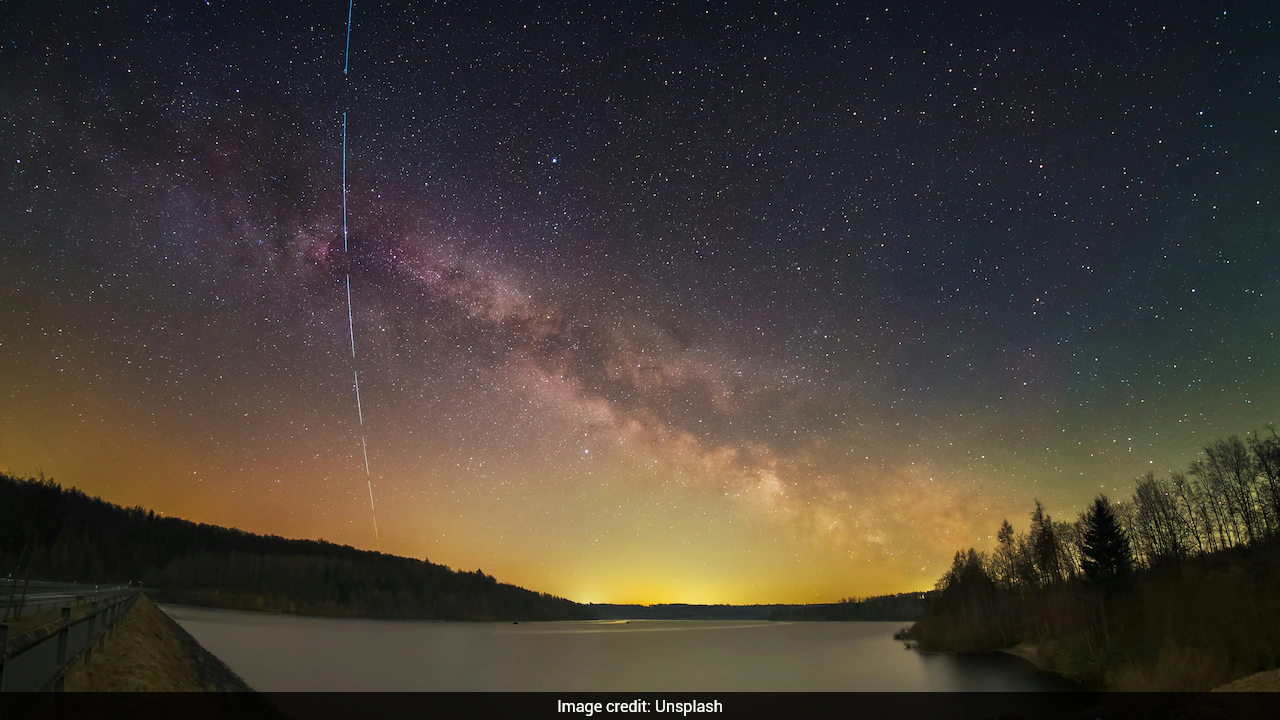
More than 31,000 man-made objects are currently tracked orbiting Earth. As the numbers continue to grow, some scientists have raised concerns over the growing number, suggesting that the consequences could be serious. When we go away from city lights, stars can be seen shining brightly in the sky on a clear night. But look a bit closer, and you will likely spot a fast-moving streak of light gliding across the sky. That bright dot isn't a shooting star; it's an artificial satellite.
And according to a recent global space environment report, those moving points of light are multiplying at a rate that is starting to worry astronomers and scientists. ESA's Space Debris Office published its annual Space Environment Report in September 2026, suggesting that the low Earth orbit is getting more crowded.
Also read | 'She Only Had Hours': Man Uses AI To Solve Mother's Mysterious Illness
As per the fresh data, there are now more than 31,000 tracked objects orbiting around us, with over 18,000 individual payloads including both active hardware and dead equipment.
Out of all those, a massive portion, roughly 10,000, belong to SpaceX's Starlink network alone.
In a separate report by The Sunday Times, Dr Cassandra Steer, CEO of the Australasian Centre for Space Governance, said that SpaceX is effectively privatising space.
"Under the current US administration, as with everything else, it's kind of gone to crazy land. It's just not a responsible regulator," Dr Steer said as quoted.
Also read | Indian Teen Is The Only Known Patient With Tooth Growing Inside His Eye Socket
Why are the scientists worried?
The major issue isn't just that the sky looks busier. Experts worry about what could happen when thousands of fast-moving objects share a narrow corridor.
Previously, the experts have warned about a scenario called the Kessler syndrome, which is a chain reaction where two satellites accidentally crash into each other, shattering into thousands of tiny, high-speed shrapnel pieces.
Those flying shards then smash into other satellites, creating even more debris until the entire orbital zone becomes an orbit of metal shrapnel that makes space travel and satellite communication nearly impossible.
Expressing concerns over space debris, Dr Steer said, "It's kind of like just this crazy cloud of movement. And they're also moving at seven kilometres per second, ten times faster than a bullet. Even a really tiny piece of fragmentation debris can be lethally damaging to an operational satellite at that velocity."
Track Latest News Live on NDTV.com and get news updates from India and around the world

