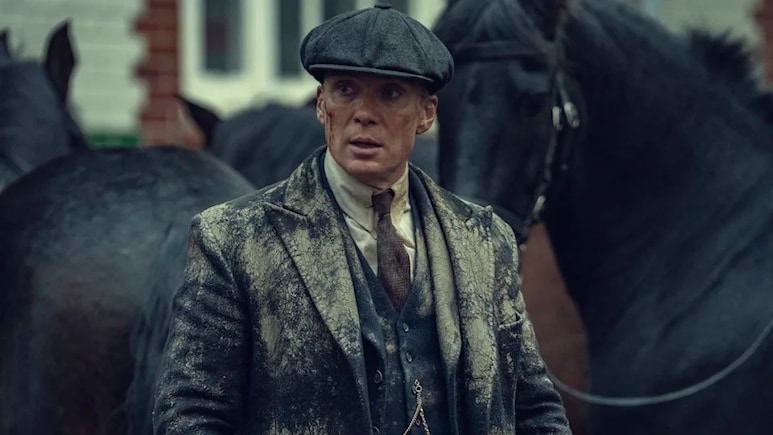
- Tommy Shelby is older and wearier in Peaky Blinders: The Immortal Man set in 1940
- The film focuses on Tommy's son Duke, who endangers the Shelby legacy through chaos
- Cillian Murphy portrays a restrained, tired Tommy distinct from earlier seasons
There are characters you remember, and then there's Tommy Shelby, who people, for better or worse, have tried to become. The walk, the suits, the cigarettes held like punctuation.
Peaky Blinders wasn't just a show, it was a full-blown aesthetic takeover. So when Peaky Blinders: The Immortal Man rolls in, it doesn't just carry expectations, it drags behind it six seasons' worth of myth, mood, and men convinced they could pull off a newsboy cap.
The film picks up in 1940, but Tommy Shelby hasn't really moved forward. He's just... paused. Older, wearier, tucked away from the world he once ruled, he spends his days writing, remembering, and being haunted - sometimes literally, sometimes by the far more stubborn ghosts of regret.
It's a quieter Tommy, but not a softer one. Peace doesn't sit easily on him, it never has.
Of course, peace doesn't last. It never does in this universe. What pulls him back isn't ambition or power this time, it's family.
Specifically, his son Duke (Barry Keoghan), who has taken the Shelby name and run it straight into chaos. Duke is reckless, erratic, and just self-destructive enough to be dangerous, not just to himself but to everything Tommy once built. Watching him feels like watching a distorted echo-familiar, but off-key in a way that makes you uneasy.
Keoghan leans fully into that discomfort. There's something feral about his Duke, like he's constantly teetering between wanting approval and wanting to burn everything down.
It's compelling, even when the writing doesn't always give him the depth he deserves. His dynamic with Tommy is messy, tense, and, at its best, emotionally raw without trying too hard.
Cillian Murphy, meanwhile, doesn't "return" as Tommy Shelby so much as he slips back into him like muscle memory. But this isn't the same man we've seen striding through Birmingham with quiet dominance. This version feels heavier, like every decision has finally caught up with him.
Murphy plays him with restraint - less fire, more ash -and it works. Tommy has always been dangerous, but here, he's something else too: tired.
The film leans into a familiar structure: the classic "one last job" arc, and doesn't pretend otherwise. There's a sense of inevitability to everything that unfolds, like the story knows exactly where it's heading and isn't too concerned with surprising you along the way.
But oddly, that doesn't always work against it. Sometimes, it's the familiarity that makes it land. You're not here for twists, you're here to watch how it all plays out.
Visually, though, it's still a knockout. The film looks incredible: grimy, textured, soaked in that signature Peaky Blinders mood where everything feels cold to the touch. The smoke, the rubble, the dim light cutting across faces, it's all doing a lot of heavy lifting, and doing it well. Even when the story slows, the world itself keeps you hooked.
And then there are those moments, the ones that remind you why this show became what it did. The sudden bursts of violence that are equal parts shocking and weirdly theatrical. The kind of scenes that sit right on that thin line between menace and absurdity.
But it doesn't always stay there. At times, The Immortal Man takes itself a little too seriously, leaning into its own mythology without quite earning the weight of it.
The dialogue, especially, can feel overcooked, spelling things out when silence would've done a better job. And for a film dealing with big themes: legacy, war, identity, it sometimes skims the surface instead of digging in.
There's also the sense that this isn't entirely its own thing. It often feels like an extended farewell rather than a fully realised film, more interested in tying threads and revisiting familiar spaces than building something new. It works as a continuation, less so as a standalone.
Still, there's something undeniably satisfying about being back in this world. The Garrison, the slow-burn tension, the sheer attitude of it all-it's fan service, yes, but not in a lazy way. It knows what people came for, and it delivers just enough of it.
What The Immortal Man ultimately does is remind you why Tommy Shelby became what he did, a figure larger than the story itself. But that's also where the film struggles. Because when a character becomes a monument, you have to smash them down. And this film doesn't quite go far enough to do that.
So what you're left with is something in between. Not quite a grand cinematic reinvention, not just a throwaway epilogue either. It's a bridge. A solid one, but maybe not the kind you stop and admire.
Still, for all its flaws, it lingers. Like the echo of boots on wet cobblestone. Like a cigarette burning a little longer than it should. Like Tommy Shelby himself, impossible to ignore, even when he's standing very still.
-
Cillian Murphy, Rebecca Ferguson, Barry Keoghan, Sophie Rundle, Tim Roth
