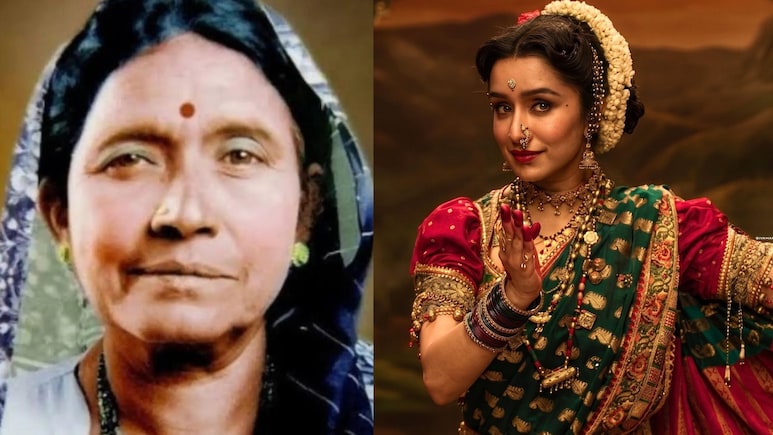
Imagine being in the middle of a packed performance when labour pains begin. Most people would rush to a hospital. Vithabai Bhau Mang Narayangaonkar did something almost unbelievable.
She quietly walked backstage, gave birth, cut the umbilical cord with a stone and was reportedly ready to step back on stage before the stunned audience stopped her. It sounds like something straight out of a dramatic film script, yet this extraordinary moment belongs to one of Maharashtra's greatest folk legends.
Now, Vithabai's remarkable journey is reaching a new generation through Eetha, with Shraddha Kapoor stepping into the role of the iconic lavani and tamasha performer.
But long before the cameras rolled, Vithabai lived a life that was far more dramatic than fiction.
From Real Vitha to #EETHA
— Vaibhav ✶ (@shraddhasfanboy) June 20, 2026
Rare footage of Vithabai Narayangaonkar!#Shraddhakapoor pic.twitter.com/wB2DfRpwot
Born Into The World Of Tamasha
Vithabai was born on July 1, 1935, in Pandharpur in Maharashtra's Solapur district. Performing wasn't just a profession in her family; it was a way of life.
Her grandfather, Narayan Khude, founded a travelling tamasha troupe, while her father, Bhau Bapu Narayangaonkar, carried the tradition forward.
Growing up amid colourful costumes, travelling stages and live audiences, Vithabai naturally embraced lavani, gavlan and other traditional folk performance forms from a young age.
She never attended acting school. Instead, the road became her classroom as she travelled from village to village.
One Performance Changed Everything
Celebrated Marathi playwright Mama Varerkar watched Vithabai perform and was immediately impressed by her stage presence. He invited her to join his troupe, giving her an opportunity to explore theatrical techniques beyond traditional tamasha.
The Birth That Became Folklore
Among the countless stories about Vithabai, one continues to define her legacy.
According to accounts of her life, she was nine months pregnant when she went into labour during a tamasha performance. Rather than bringing the show to a complete halt, she reportedly went backstage, delivered her baby, cut the umbilical cord and prepared to return to the stage.
When the audience discovered what had happened, they refused to let her continue and insisted she rest.
Why She Turned Down Films
As Vithabai's popularity soared, film offers naturally followed.
Among those reportedly interested in casting her was legendary filmmaker Raj Kapoor. But while many performers dreamt of entering cinema, Vithabai made a surprising decision.
According to theatre director Shantanu Ghule's Marathi play Vitha, she believed leaving tamasha would put the livelihoods of dozens of artistes working with her troupe at risk. Rather than choosing film stardom, she stayed loyal to the folk tradition that had shaped her life.
Struggles At Home
While audiences adored her, Vithabai's personal life was far from glamorous.
As per The Indian Express, accounts portrayed in Shantanu Ghule's acclaimed Marathi play also suggest that her marriage to Maruti Sawant was deeply troubled. He allegedly controlled her earnings and subjected her to abuse, leaving her to battle emotional and financial hardships despite her enormous success on stage.
Achievements
She was honoured by the President of India for her work in tamasha in 1957 and again in 1990. Her performances took her beyond Maharashtra, introducing audiences across India to the rich tradition of lavani and tamasha.
Her Final Chapter
Despite entertaining thousands throughout her career, Vithabai faced severe financial hardship in her later years.
After suffering a paralytic attack, she died on January 15, 2002. Reports revealed that her family struggled to clear hospital bills and even arrange transportation for her final journey. Admirers, cultural organisations and well-wishers eventually came forward to help.
It was a painful reminder of how even the biggest cultural icons can be forgotten when the spotlight fades.
In 2006, the Maharashtra government instituted the Vithabai Narayangaonkar Lifetime Achievement Award, honouring senior tamasha artistes who dedicate their lives to preserving the traditional art form she loved so deeply.
ALSO READ: Shraddha Kapoor's Eetha Controversy Explained: Why The Film's Title Is Under Fire
