NEET PG 2026: The National Board of Examinations in Medical Sciences (NBEMS) is set to conduct the National Eligibility cum Entrance Test (NEET) Postgraduate (PG) 2026 on August 30. As per official information, a total of 2,73,183 candidates have successfully registered for the NEET PG 2026, representing an increase of over 12.5 per cent compared to the previous year.
The NEET examination will be conducted in a single shift across approximately 340 cities and over 1,300 examination centres, as per official record. The medical board has advised candidates not to panic in case of any technical disruption during the examination. Appropriate measures are in place to address such contingencies and ensure that there is no loss of the allotted examination time, the NBEMS stated.
What To Do In Case Of Power Failure
According to the national medical board, no action is needed if any disruption, that is, power failure occurs during the exam time after the candidates have logged in. The NBEMS stated that the timer will stop when the failure occurs and will resume when the failure is rectified. There will be no loss of time due to the disruption, it added.
Candidate Machine Locked
If a candidate machine is locked during the exam due to loss of connectivity with the primary server, the IT manager in each exam room will verify and unlock the candidate's account and the timer will start from the same point where the candidate had left.
Issues In Your System
According to NBEMS, if a candidate complains of any specific issues in the machine, such as screen flickering, mouse issue, system getting locked or hanged repeatedly, etc., he or she must report the issue to an invigilator. The medical board further stated that on reporting of the issue, the IT manager or the invigilator will verify and lock the candidate machine. The candidate may be shifted from their allotted seat to a buffer seat in the same or another lab during the examination, if required.
READ MORE | 12.5% More Candidates Than Last Year, Check Multi-Layered Security Plan
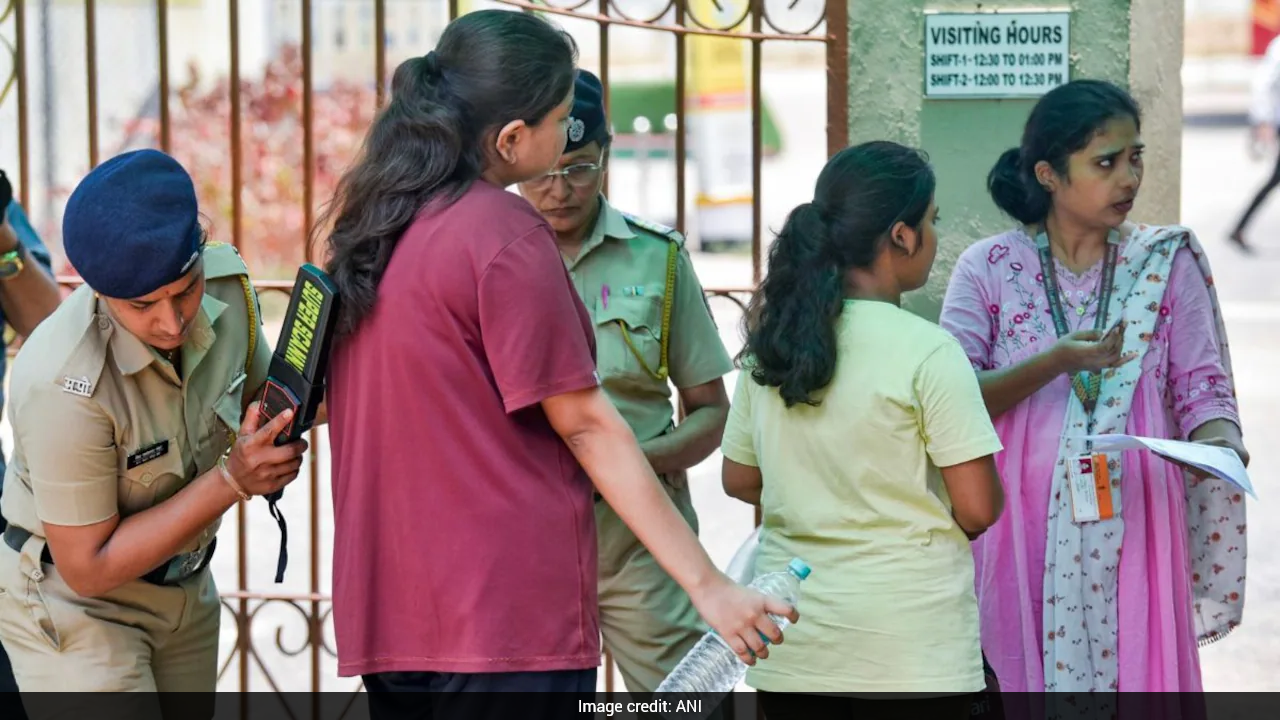
According to official information, comprehensive security arrangements are put in place for the examination, including advance sealing and verification of examination centres, CCTV surveillance, biometric authentication, candidate frisking, deployment of signal jammers, dynamic compute, live monitoring through central and regional command centres, and real-time supervision by independent observers and appraisers.
