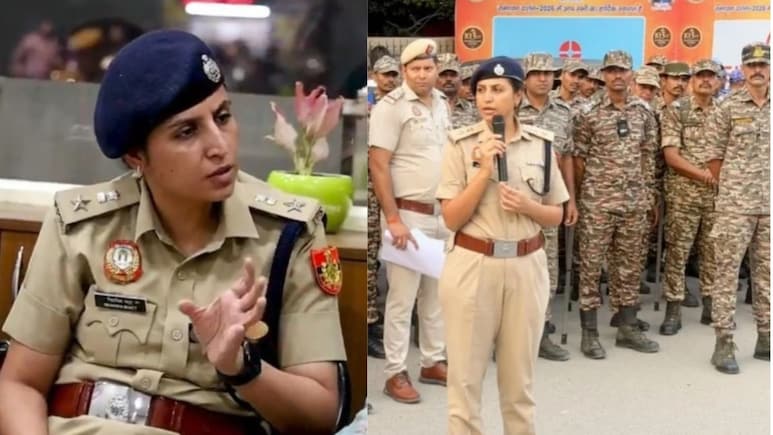

UPSC Journey: She left her job in America, decided to return to India, and, on her very first attempt, succeeded in the Union Public Service Commission (UPSC) examination, becoming an Indian Police Service (IPS) officer. Today, Niharika Bhatt serves as the Deputy Commissioner of Police (DCP) of the North District in Delhi.
In an exclusive interview with NDTV, Bhatt shared that she was born in Moradabad, pursued her engineering studies in Lucknow, earned an MTech from the University of Michigan in the US, and worked as a researcher in Washington DC. She further noted that her life had reached a point where a secure and brilliant international career awaited her. But perhaps fate had something else in store.
She began her policing career as an SHO in Rishikesh. In a candid conversation with NDTV, she shared her decision to return to India, her UPSC preparation, the keys to her success, the challenges faced by female aspirants, and the responsibilities of a DCP.
Leaving A Career In America To Return To India
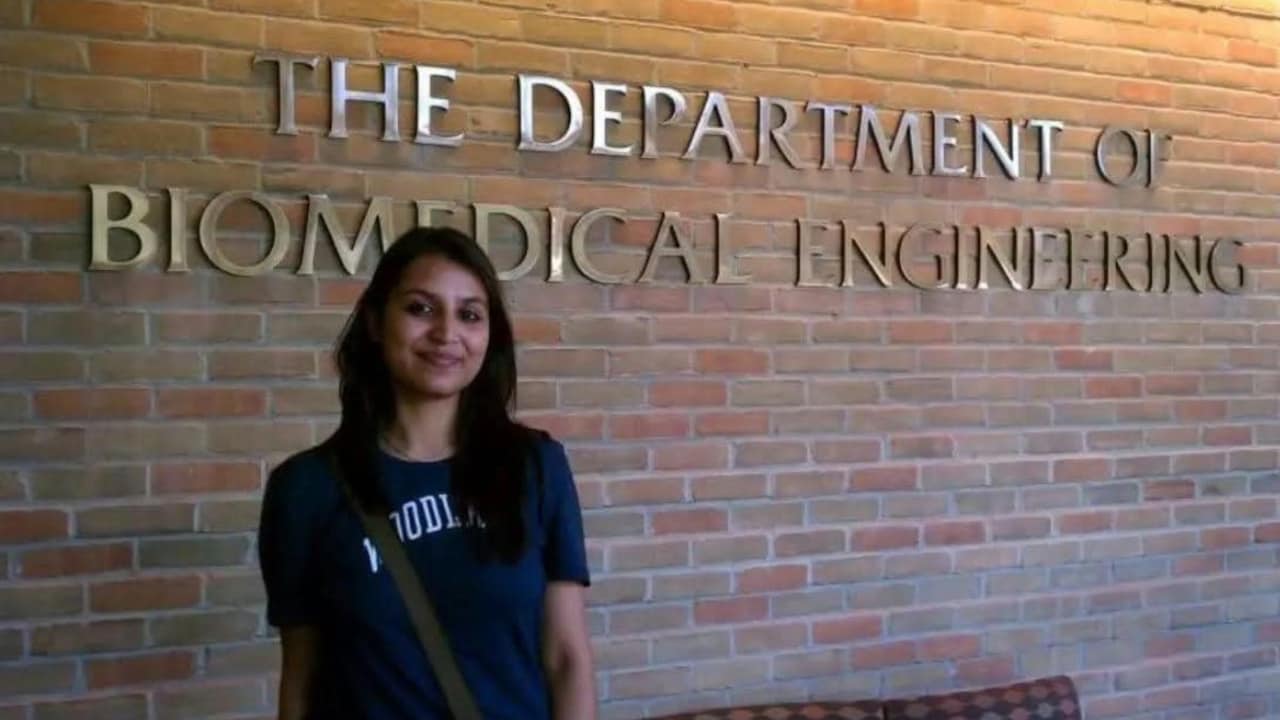
Niharika Bhatt stated that her return to India from the US was not driven by necessity. After completing her MTech in Biochemical Engineering from the University of Michigan, she worked as a researcher in Washington DC. She had a degree from a prestigious institution, international experience, and a secure career path ahead of her.
Yet, the desire to contribute to her own country remained constant, she added. She realised that the Civil Services offered a unique platform: one where, at a young age, she could impact the lives of a large segment of society and work directly towards resolving people's problems. With this vision, she chose to leave her job in America and return to India. Upon her return, she began preparing for the UPSC examination, which she cleared on her first attempt, becoming an IPS officer.
The Mantra For Success: Read One Book Repeatedly
For young people preparing for the UPSC, Bhatt's most important piece of advice is: consistency. In a conversation with NDTV, she noted that accumulating a large number of books during one's preparation is no guarantee of success. Instead, it is essential to select one high-quality book for a given subject and read it repeatedly.
According to her, a firm grasp of any subject is only achieved by studying it multiple times and developing a thorough understanding. Repeatedly studying a single book deepens one's comprehension of the subject, which in turn helps in crafting better answers for the examination.
Bhatt herself cleared the UPSC without any formal coaching. She emphasised that reading newspapers, keeping track of current affairs, and developing a foundational understanding of various subjects are crucial components of the preparation process.
'It Is Determination, Not Resources, That Defines Destination'
When asked about girls preparing for the UPSC from remote areas, Bhatt highlighted the 'Digital India' initiative and the growing reach of the internet as a significant opportunity.
She noted that the internet has made studying much more accessible today. Compared to the time when she was preparing, students now have access to a far greater range of resources.
Aspirants who lack access to offline coaching can easily pursue their studies through online platforms, she noted. According to Bhatt, living in a small town or a village does not mean that students there cannot dream big.
Engineering Background And The Challenge Of Answer Writing
When asked about any mistakes made during her preparation, Bhatt shared an interesting experience with a smile. She explained that although she came from an engineering background, she chose Sociology as her optional subject for the UPSC.
Because of her science background, it initially took her some time to grasp the concepts of humanities subjects and learn how to structure her answers accordingly. As she pointed out, having knowledge of a subject and being able to write effective answers on that subject for an examination are two entirely different things.
Students, especially those in the science field, should understand that writing answers in humanities subjects requires a specific style. To grasp this, one should consult individuals who have a sound understanding of the subject. Bhatt admitted that it took her some time to master this style as well.
A Day In The Life Of A DCP
When asked about the daily routine and responsibilities of a district police chief, Bhatt explained that the scope of a DCP's work is quite extensive. From the start of the day until it ends, one has to manage a wide range of responsibilities.
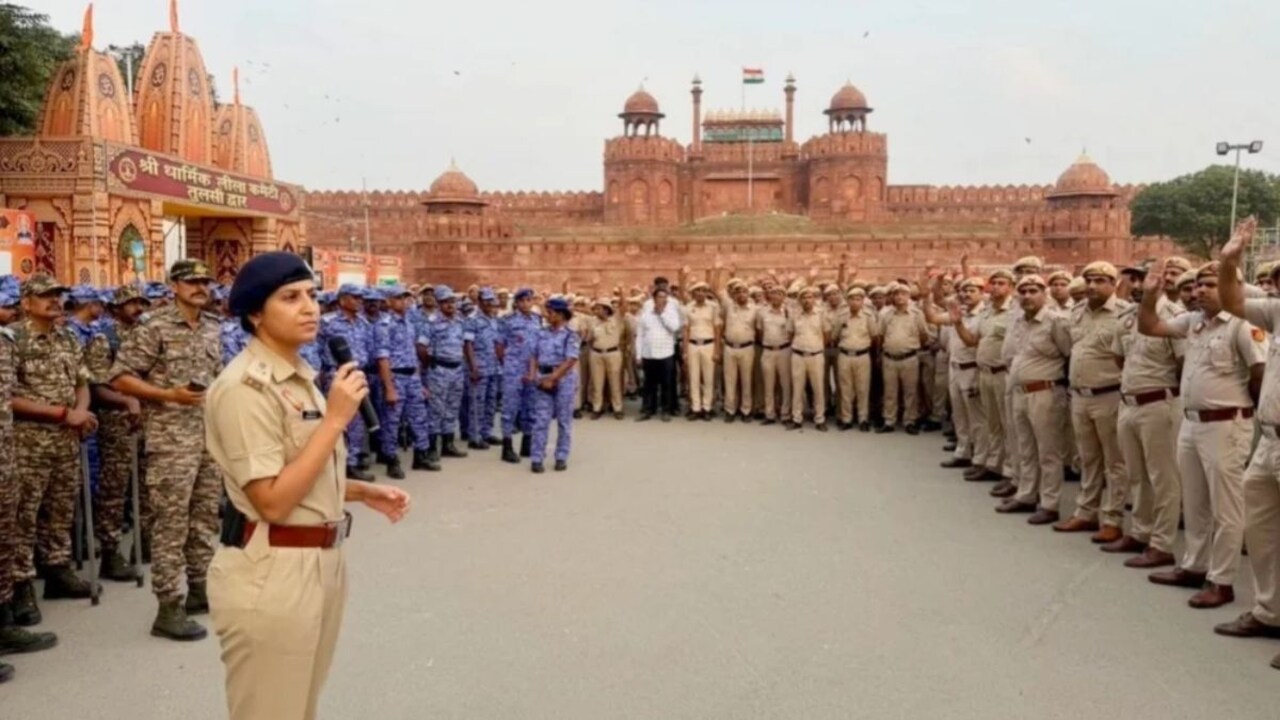
She noted that while crime prevention and the maintenance of law and order are the primary duties of the police, a DCP's role is not limited to these alone. Engaging with the public, listening to their concerns, understanding their perspectives, and striving to resolve their grievances are equally important.
Policing brings new challenges every single day, she said, adding further that at times, the focus may be on managing law and order, while at other times, addressing the complaints and hardships of a victim becomes the priority. It is this diversity that makes the job both challenging and fulfilling, she noted.
Common People's Trust
A central tenet of Niharika Bhatt's approach to policing is the trust of the common citizen. For her, commanding a district is not merely about controlling crime; it is also about fostering an environment where citizens feel safe and secure.
Bhatt believes that people should have the confidence that they can walk on the road without any fear and can go to the police and express their concerns if they face any problem. It is not possible to find a solution to every problem immediately, but it is the responsibility of the police to listen to the people and make honest efforts to find a solution.
From SHO Of Rishikesh To DCP Of Delhi
After becoming IPS, Bhatt's initial training took place in Dehradun. After this, during probation, she got the responsibility of SHO in Rishikesh Kotwali for three months. Her direct encounter with the real challenges of policing began from there. This was her first major experience in understanding law and order, crime investigation and complaints of common people, she said.
After this Bhatt took charge as Additional Deputy Commissioner of Police in Dwarka, Delhi. Later, she worked as Additional DCP-1 in North District and then got the responsibility of DCP North.
Qualities Of An Ideal IPS Officer.
Talking about the qualities of an ideal IPS officer, Bhatt said that the most important thing is the ability to understand complex situations and implement them with clarity. Police jobs are very stressful, she noted. In such a situation, it is important for the officer to have a calm and balanced nature, she added.
According to her, in a crisis situation, an officer should take decisions with a cool head and lead their team effectively. Leadership does not just mean giving instructions, but also showing the right direction to the team by being at the forefront in difficult times.
On the issue of corruption, she said that there is a policy of zero tolerance towards corruption in the North District.
Identity Of IPS Officer Over Gender Identities
Recalling her training days, Bhatt said that during the training, she was taught that an IPS officer is not male or female, but she is an IPS officer. She made this thinking a part of her working style. She never treated her subordinates differently on the basis of male or female nor did she expect any special concession for herself.
Family Support And 24/7 Responsibility
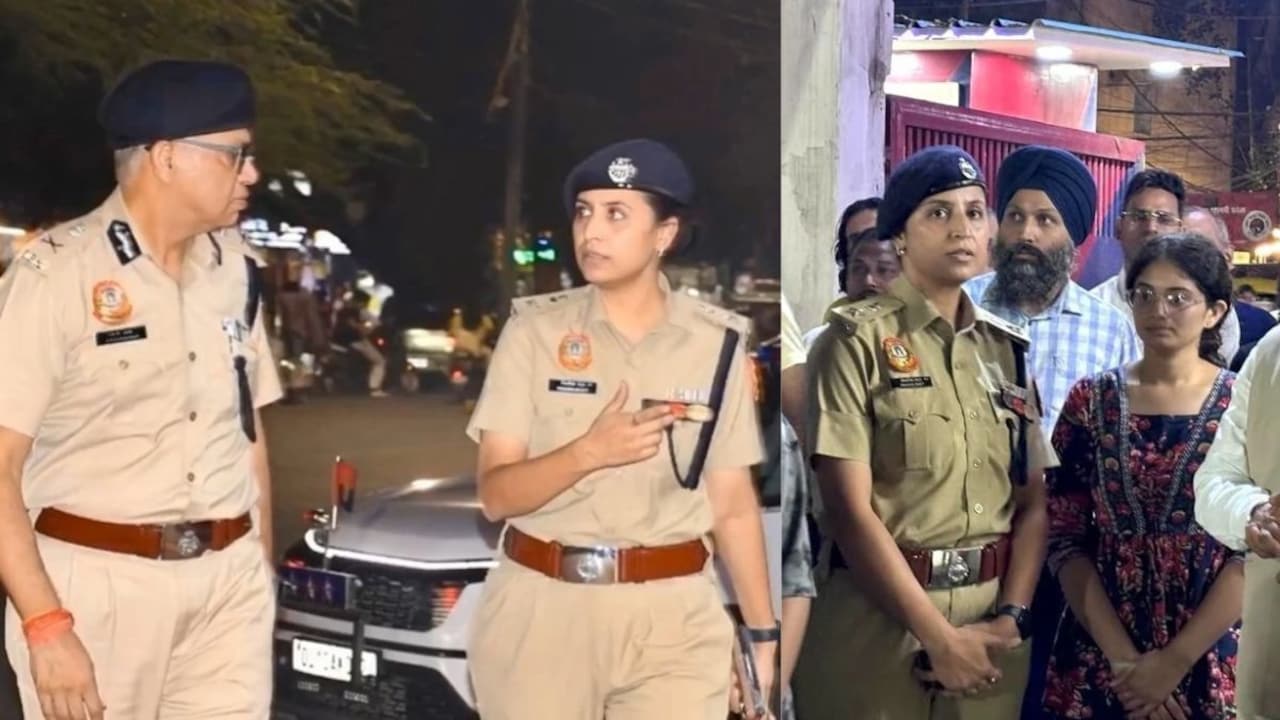
Bhatt noted that a career in the police force comes with no fixed hours. At times, news of an incident arrives late at night, or one might have to leave home suddenly to manage a law-and-order situation, she said.
Under such circumstances, maintaining a balance between personal and professional life, often referred to as 'work-life balance', is no easy task. Bhatt's husband is also an IAS officer, currently serving in the Delhi government. Despite their demanding professional lives, their mutual understanding of each other's responsibilities and the support of their family play a crucial role in maintaining this balance. Both make a concerted effort to ensure they dedicate quality time to their family.
From A Doctor's Household To Engineering, And Finally IPS
Born in Moradabad, Bhatt grew up in Lucknow and Aligarh. Her father is a doctor, and her mother is a homemaker; the family fostered an environment that valued education. While there were doctors and lawyers in the family, no one had any prior connection to the Civil Services.
Although her father was a doctor, Bhatt chose engineering over medicine, as she lacked a keen interest in biology, she said. Her family never pressured her to pursue a specific career path, granting her the freedom to chart her own course, she noted.
Niharika Bhatt's story is not merely about leaving a job in the United States to join the IPS; it is a story about defining one's own purpose. After a successful journey that took her from Moradabad to Lucknow, and eventually to Michigan and Washington, she chose to listen to her inner voice and return to India.
Clearing the UPSC examination on her very first attempt, she now holds a position of significant responsibility within the Delhi Police. Reflecting on the journey of IPS Niharika Bhatt, one is reminded of a famous couplet by the poet Daagh Dehlvi: "A traveller discovers the true nature of their destination only upon reaching it." Perhaps this line best encapsulates her life's journey.
Inputs from HariKisan Sharma
