





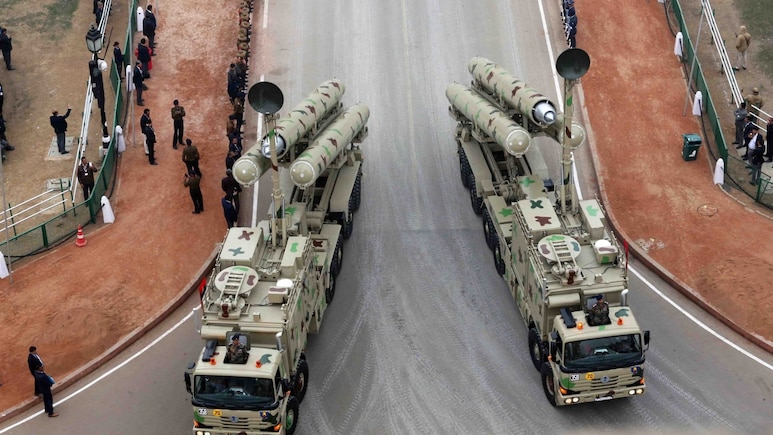
For years, the story of India's defence exports has had one star attraction: BrahMos.
The supersonic cruise missile has become a symbol of what India can build and sell to the world. But the next phase of the export story may be far less about one big-ticket weapon and far more about a new generation of drones, precision munitions, electronics and autonomous systems.
The shift is already underway.
Also Read | Layoffs Are Rising In Tech, But These Skills Are Helping People Unlock Better Pay
India's defence exports touched a record Rs 38,424 crore in FY26, jumping 62.66 per cent from Rs 23,622 crore a year earlier. The country now exports defence equipment to more than 80 countries, while the number of exporters has risen to 145 from 128.
The numbers are impressive. But what may matter more is what India is increasingly selling. And that is where the changing nature of warfare comes in.
Wars Are Changing The Weapons Market
The battlefield is no longer dominated only by fighter jets, tanks and expensive missiles.
The wars of recent years have pushed drones, loitering munitions, precision weapons, electronic warfare and air-defence systems to the centre of military planning. Countries are looking for weapons that can travel farther, strike accurately, work autonomously and, crucially, cost less than traditional systems.
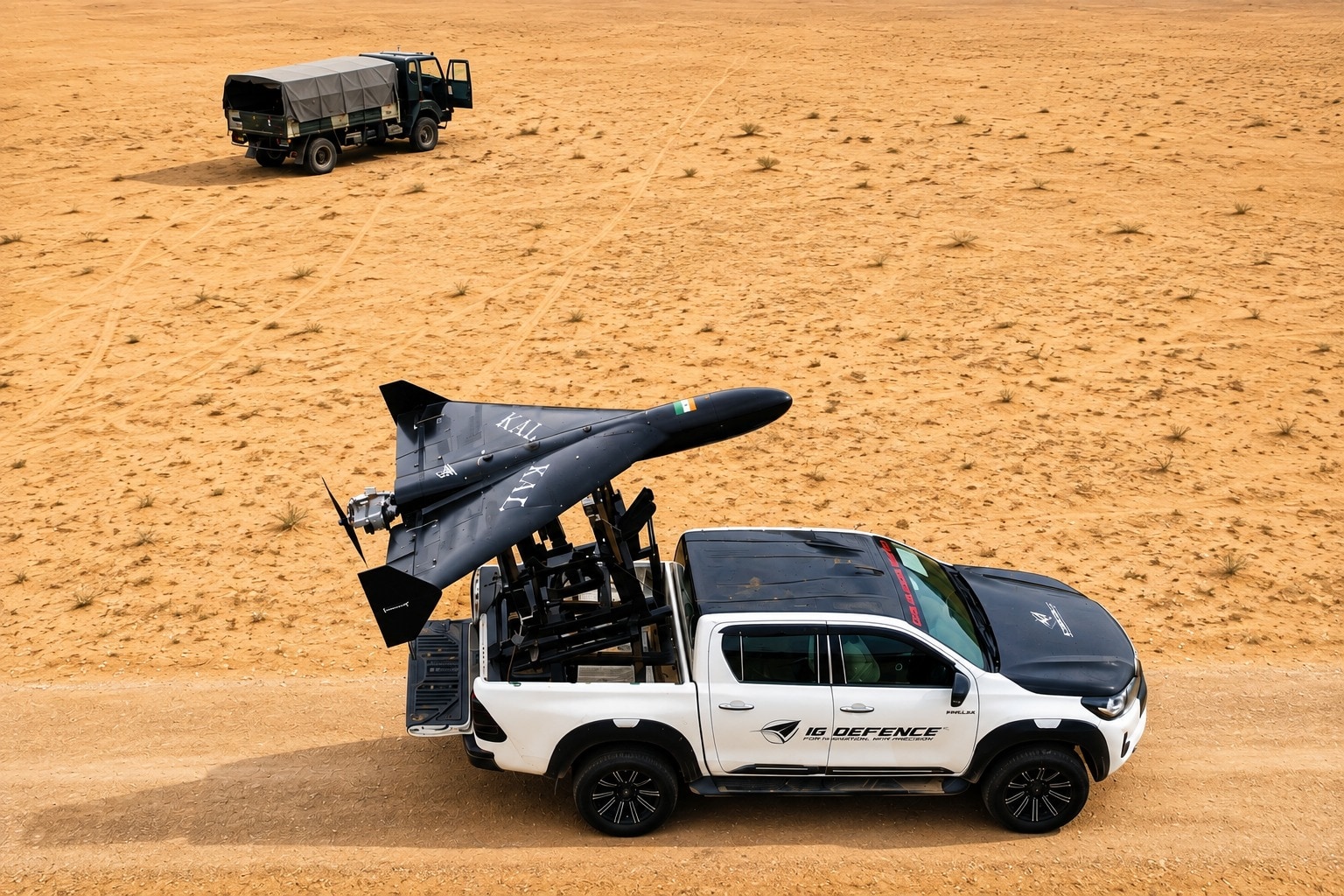
India's defence industry is moving in that direction too. Take KAL, the long-range one-way attack drone developed by Noida-based IG Defence.
The company says the system can travel up to 1,000 km, stay airborne for 7-8 hours and carry a 50-kg payload. IG Defence is now positioning KAL for international export opportunities, subject to the required government approvals.
This is significant because the global market for long-range autonomous strike systems has changed dramatically. Cheap drones have shown that a military does not always need a multi-million-dollar missile to threaten a target hundreds of kilometres away. The economics of warfare are changing.
Bodhisattwa Sanghapriya, Founder and CEO of IG Defence, believes that shift will create room for Indian manufacturers. "The future battlefield will increasingly be defined by autonomous, long-range precision strike capabilities," Sanghapriya said.
His company is betting that friendly countries looking to modernise their forces will want systems that are indigenous, affordable and capable of being deployed quickly.
KAL is only one example. India's emerging export basket includes drones, counter-UAS systems, radars, artillery, air-defence systems, ammunition, protective equipment and aircraft components. Pinaka and ATAGS have found overseas buyers. Akash and Swathi are also part of the export push.
The point is simple: BrahMos may have opened the door. A much wider range of Indian technologies could now walk through it.
Weapons Are Getting Smarter
There is another part of this story that is even easier to miss. It is the technology inside the weapon.
A shell or missile may get the attention. But its fuze, guidance system, sensors and electronics can determine how accurately and effectively it performs.
That is where Ammunic Systems sees an opportunity. Priyanka Singhal, CEO of Ammunic Systems, argues that India's defence export story should not be viewed only through finished platforms.
"BrahMos gets the headlines, but a large share of India's defence export potential lies in the electronics that make munitions smarter," Singhal said.
Her argument is that India has already built considerable expertise in the physical side of weapons. The next step is developing the "brain" that controls how those weapons work. That includes fuzing and precision electronics.
Ammunic has worked with India's armed forces and DRDO, developing technologies around munitions and electronic fuzes. DRDO has also been working with IIT Madras and Munitions India on converting conventional artillery shells into precision-guided munitions.
This matters because the future export opportunity may not always involve selling an entire missile or artillery system. India could also sell the critical technology sitting inside it. And that is potentially a much bigger market. "India is no longer just assembling defence hardware, it is building the intelligence layer inside it."
India's Export Ambitions
The country has already set its sights on Rs 50,000 crore in defence exports by 2029-30. The Defence Secretary recently said that the target should be easily achievable.
But getting there will require more than selling a few headline platforms. It will require a much broader ecosystem of Indian companies capable of supplying missiles, rockets, guns, drones, electronics, sensors, ammunition, components and subsystems.
As per government data, private companies alone accounted for Rs 17,353 crore of exports in FY26, while defence PSUs contributed Rs 21,071 crore. Armenia has bought Pinaka rocket launchers and Indian artillery systems. The Philippines has bought the BrahMos system. India is also exporting Akash air-defence systems and Swathi weapon-locating radars. Besides, dornier aircraft, helicopters, fast interceptor boats, torpedoes and aircraft components are also part of the broader export basket.
Track Latest News Live on NDTV.com and get news updates from India and around the world

