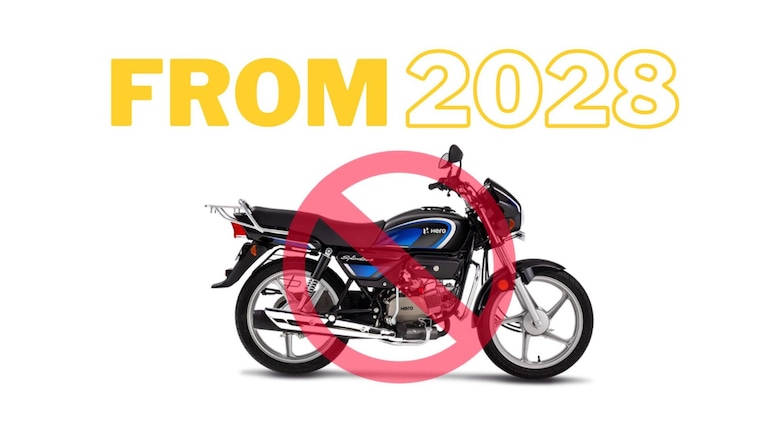
- Delhi will ban petrol two-wheeler registrations from April 1, 2028
- Two-wheelers make up 70 to 75 percent of Delhi's registered vehicles
- Challenges include charging infrastructure and affordable electric models
The headline is jarring: By April 1, 2028, you will not be able to register a petrol motorcycle or scooter in Delhi. For a city that relies on two-wheelers as its economic circulatory system, this is not just a policy update - it is a seismic structural shift. Why has the Delhi Government made such a massive, uncompromising statement? Let's analyze the hard data, the economic realities, and the massive hurdles standing in the way of this 2028 deadline.
1. Math of Pollution: Are Two-Wheelers The Quiet Culprits?
To understand why the government is targeting two-wheelers, we have to look at the sheer volume.
The Scale: Two-wheelers make up nearly 70-75% of Delhi's total registered vehicular population.
The Pollution Share: While a single modern car emits more than a single scooter, the sheer volume of two-wheelers means they contribute disproportionately to PM2.5 emissions, carbon monoxide, and hydrocarbons in urban stop-and-go traffic.
By forcing a 100% transition in this segment by 2028, Delhi is targeting the largest chunk of its mobile emission source. If you fix the two-wheeler segment, you instantly clean up a massive percentage of the city's tailpipe emissions.
Also Read - Delhi EV Policy 2026: Subsidies, Zero Road Tax, End Of Petrol Two-Wheelers By 2028
2. Market Readiness: The Only Segment Ripe For 100% Electrification
The government has chosen two-wheelers because, unlike passenger cars or heavy commercial trucks, the technology and price parity for electric two-wheelers are already incredibly close to ICE vehicles.
Cost of Ownership: With petrol hovering near Rs 100/liter, the running cost of an electric scooter (roughly 15-25 paise per km) compared to a petrol scooter (Rs 2.00-2.50 per km) makes EV adoption a financial no-brainer for daily commuters and delivery fleets.
Viable Players: Brands like Ather, TVS, Hero Vida, and Bajaj have scaled up manufacturing. The products are no longer experimental prototypes; they are reliable, high-speed, daily commuters.
3. The Delivery Fleet Leverage
The silent driver behind this mandate is the gig economy. E-commerce, food delivery, and quick-commerce riders clock massive daily mileages (often 80-120 km a day). Electrifying this specific subset yields massive, immediate environmental dividends. By setting a hard stop on ICE registrations, the government is forcing major fleet aggregators to transition to 100% electric operations much faster than they would have voluntarily.
Why 2028 Could Be A Battle?
While the logic is sound, executing a total ban on petrol two-wheeler registrations in less than two years is a monumental challenge.
The Charging & Swapping Deficit: While the policy aims for 30,000 charging points, millions of two-wheeler owners in Delhi live in congested, multi-story apartments with no access to private parking or dedicated charging sockets. Without a massive, ubiquitous battery-swapping network, daily charging will remain a logistical nightmare for the masses.
The Price Gap at the Entry Level: While premium electric scooters are competitive, the entry-level 100cc petrol commuter motorcycle (the lifeline of lower-income workers) costs around Rs 65,000-75,000. Reliable, high-speed electric equivalents still sit comfortably above Rs 1 Lakh. Subsidies must bridge this specific gap to prevent low-income workers from being priced out of personal mobility.
Track Latest News Live on NDTV.com and get news updates from India and around the world
