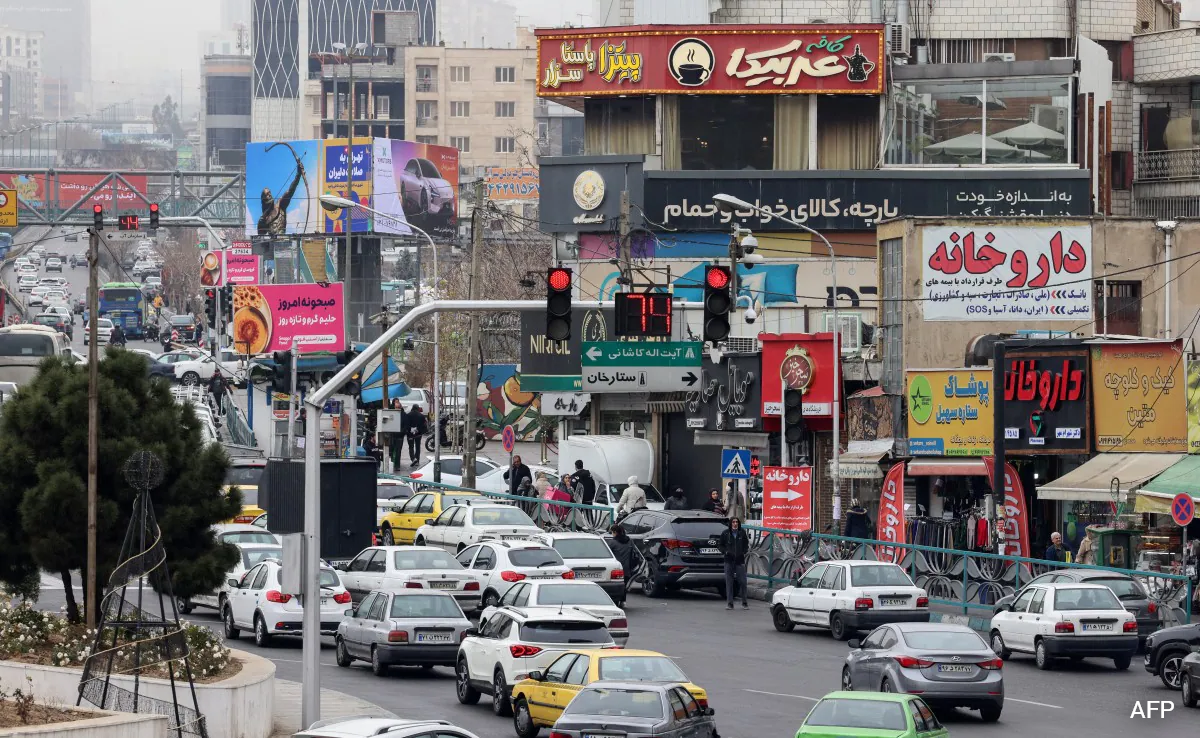
The United States on Thursday announced a far-reaching new round of sanctions against Iran, targeting senior security officials, a notorious prison accused of abusing detainees, and a sprawling network of front companies used to launder billions of dollars from oil and petrochemical sales, as protests continue to roil the country.
The coordinated action by the State Department and the Treasury Department's Office of Foreign Assets Control (OFAC) is aimed at what US officials called the "architects" of the Iranian regime's violent crackdown on peaceful demonstrators and the financial machinery that sustains the government's repression.
"This is about standing with the Iranian people," Treasury Secretary Scott Bessent said in a statement. "At the direction of President Trump, the Treasury Department is sanctioning key Iranian leaders involved in the brutal crackdown against the Iranian people. Treasury will use every tool to target those behind the regime's tyrannical oppression of human rights."
At the center of Thursday's announcement is the designation of Fardis Prison, which the State Department described as an institution where women and other detainees have been subjected to "cruel, inhuman, and degrading treatment." The move places the prison under US sanctions, effectively freezing any assets under US jurisdiction and barring Americans from conducting transactions involving it.
Simultaneously, OFAC sanctioned several senior Iranian security officials, including Ali Larijani, the secretary of Iran's Supreme Council for National Security, who US officials say played a central role in coordinating the response to protests that erupted in December 2025. According to Treasury, Larijani was among the first leaders to publicly call for the use of force against demonstrators.
The protests, driven by anger over economic hardship, inflation and political repression, have spread across multiple provinces. US officials say Iran's security forces have fired live ammunition at crowds and even attacked wounded protesters in hospitals. In one incident in Ilam Province, elements of the Islamic Revolutionary Guard Corps (IRGC) allegedly fired tear gas and metal pellets into hospital grounds and assaulted patients, family members and medical workers.
In addition to Larijani, OFAC designated provincial commanders blamed for overseeing violent crackdowns, including Mohammad Reza Hashemifar and Nematollah Bagheri in Lorestan Province, and Azizollah Maleki and Yadollah Buali in Fars Province, home to the major city of Shiraz. Treasury said security forces in those areas have killed numerous demonstrators and, in some cases, held bodies to coerce families into giving false testimony on state television.
But the sanctions go far beyond individuals. In what officials described as a major blow to Iran's financial lifelines, OFAC also designated 18 individuals and entities tied to Iran's so-called "shadow banking" networks — clandestine systems that use front companies and foreign exchange houses to move money through the international financial system despite existing sanctions.
"These networks are the primary means through which Iran facilitates tens of billions of dollars' worth of annual trade," Treasury said, adding that the funds are routinely diverted away from the Iranian public and toward repression at home and militant activities abroad.
Two major state-linked banks, Bank Melli and Shahr Bank, were singled out as hubs of this activity. According to Treasury, Bank Melli operates a complex web of "rahbar" companies — entrusted firms that manage international transactions using cover companies in multiple jurisdictions. At the center of that network is Iran-based Nikan Pezhvak Aria Kish Company, along with UAE-based Empire International Trading FZE and Singapore-based Golden Mist PTE. Ltd., which allegedly helped route millions of dollars in oil revenue.
Treasury said that since 2024, Bank Melli's network processed billions of dollars in transactions for entities including the National Iranian Oil Company, the IRGC and the Central Bank of Iran, sometimes using falsified invoices and multi-jurisdictional transfers to conceal the money's origins.
Shahr Bank, officials said, runs a similar operation through UAE-based HMS Trading FZE and Iran-based Tejarat Hermes Energy Qeshm, supported by a constellation of front companies in the Gulf and Europe. Several of those firms were allegedly used to move tens of millions of dollars in payments for Iranian oil shipments to Asia.
Under US law, the designations mean that any property or interests in property of the sanctioned individuals and entities that fall under US jurisdiction are frozen, and US persons are generally prohibited from doing business with them. Foreign companies and banks that continue to deal with the listed parties could also face penalties.
State Department spokesman Tommy Pigott said the measures are intended to "deny the regime access to financial networks and the global banking system while it continues to oppress the Iranian people."
"The United States stands with the Iranian people, who are protesting for their natural rights," Pigott said. "The regime continues to fund destabilizing and malign activities around the world, rather than investing in the welfare of its people at home."
The sanctions were imposed under a series of executive orders and US laws targeting human rights abuses, Iran's leadership and its energy and financial sectors, and they further implement the administration's National Security Presidential Memorandum-2, part of what Treasury describes as a campaign of "maximum economic pressure."
US officials stressed that the ultimate goal is not punishment for its own sake, but a change in behavior. Still, with protests ongoing and Tehran showing little sign of relenting, Thursday's sweeping action signals that Washington is prepared to escalate economic and diplomatic pressure in tandem with events on the streets of Iran.
Track Latest News Live on NDTV.com and get news updates from India and around the world


