The Donald Trump administration reportedly burnt through weapons worth $5.6 billion (approximately Rs 51,400 crore) during the first two days of US military strikes on Iran. The figure covers only the cost of munitions used in the opening phase of the operation and does not include the wider expenses of deploying troops, aircraft, or naval forces in the region, according to a report by the Washington Post.
The estimate, with members of the US Congress, has triggered fresh concern in Washington that the Iran war is quickly eroding the US military's readiness. Lawmakers worry over how long the Pentagon can sustain such a war, whose outcome is turning out quite differently from what both sides predicted.
Team Trump's Stand
The Trump administration has, however, dismissed concerns that the Iran operation is quickly eating into the scarce supply of America's most advanced weaponry.
Sean Parnell, the Pentagon's chief spokesman, told The Post that the Defence Department has "everything it needs to execute any mission at the time and place of the President's choosing and on any timeline".
The US military has burnt through hundreds of expensive weapons since the start of hostilities on February 28, including advanced air defence interceptors and Tomahawk cruise missiles. According to the US Central Command, which oversees military operations throughout the Middle East, more than 5,000 targets have been hit in Iran using more than 2,000 munitions.
The Trump administration is also planning to send a supplemental defence budget to Congress this week—potentially totaling tens of billions of dollars—to help sustain its campaign in Iran, according to US officials.
But the budget is likely to face opposition from many Democrats who are trying to restrain Trump from further military action in Iran.
No End In Sight
It's unclear how long the war in Iran could last. President Trump, who last week said the operation could take more than a month, on Monday told CBS News that it is "very complete, pretty much".
US officials told The Wall Street Journal that the US commander-in-chief hoped that the February 28 attack on the Iranian leadership—including the killing of the country's supreme leader, Ayatollah Ali Khamenei—would trigger either a collapse of the Iranian regime or the repeat of the Venezuela scenario, in which more pragmatic officials chose to cooperate with Washington.
However, neither of these scenarios has materialised. Instead, Tehran has appointed Khamenei's hard-line son, Mojtaba Khamenei, as his successor, vowing vengeance. Domestic insurgency has not risen so far to challenge the Islamic Republic.
Despite damaging assaults, Tehran has also retained the ability to attack US bases across the Middle East, at Israel, and—critically—at the main cities of America's Gulf partners, including Saudi Arabia and Qatar. It has also blocked the Strait of Hormuz, the chokepoint through which some one-fifth of the world's oil and liquefied natural gas passes.
Iran's plan of going all-out on attacks on airports, energy facilities, hotels, ports and data centres in the United Arab Emirates, Bahrain, Kuwait, Qatar and Saudi Arabia to collapse the Gulf economies and force these monarchies to pressure Trump to cease fire on Iran's terms also didn't happen.
So far, Gulf nations have showcased unexpected resilience and warned of retaliation, with their air defences shooting down most Iranian drones and missiles, preventing catastrophic damage.
Change in Strategy
The US has not specified how many and what kinds of munitions were expended in the war's opening days. But the $5.6 billion figure highlights how costly the strikes were before that transition began.
US Defence Secretary Pete Hegseth said last week that the campaign was transitioning away from its reliance on precision munitions and instead would use the more plentiful stores of laser-guided bombs as US and Israeli forces push inland after establishing air superiority over Iran.
Mark Cancian, who closely monitors US inventories at the Centre for Strategic and International Studies, told The Washington Post that the shift away from these longer-range munitions will dramatically lower the price of each strike, from millions of dollars spent on each round fired to less than $100,000 in some cases.
Trump Rerouting Resources
As the Pentagon burns through its inventories, the Trump administration is also rerouting US military assets from other parts of the world, including the Indo-Pacific region, where lawmakers have long feared that any US conflict with China would be challenged by the Pentagon's limited stocks of high-end weapons.
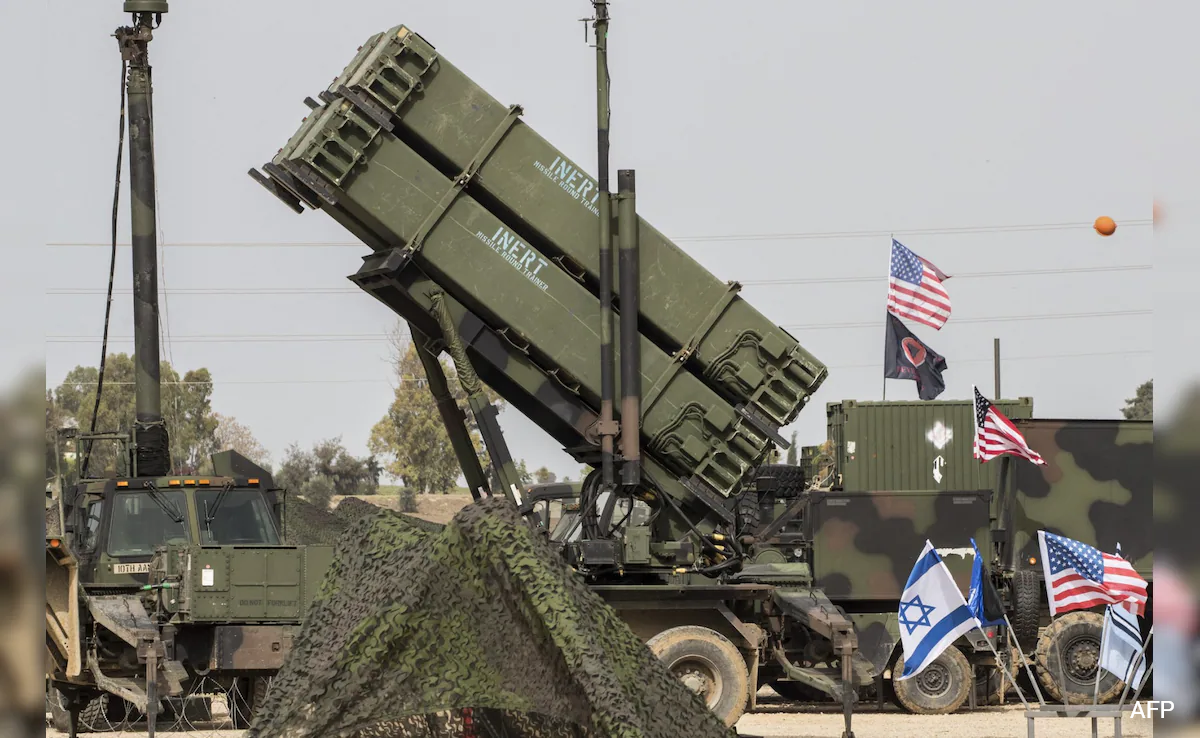
According to The Post report, the Pentagon is moving parts of a Terminal High Altitude Area Defence (THAAD) system from South Korea to the Middle East. The military is also drawing from its supply of sophisticated Patriot interceptors in the Indo-Pacific and elsewhere to bolster its defence against Iran.
The moves were reportedly not due to an immediate shortage of weaponry in the Middle East but were rather a precautionary measure in case Iran drastically increased its rate of retaliatory attacks.
Track Latest News Live on NDTV.com and get news updates from India and around the world


