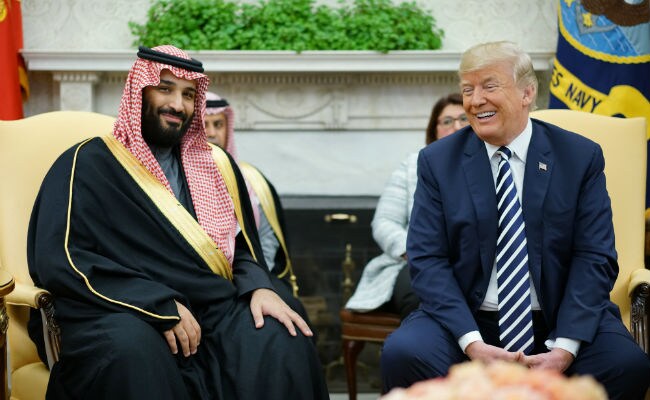
- The Trump administration plans a nuclear deal allowing Saudi uranium enrichment and fuel reprocessing
- The agreement omits traditional US safeguards like enrichment bans and tougher inspections
- Saudi could turn to China, Russia, South Korea, or France if the US deal fails
The Trump administration is preparing to move ahead with a civil nuclear agreement with Saudi Arabia that would allow the kingdom to enrich uranium and process spent nuclear fuel. This major policy shift could trigger fresh concerns over nuclear weapons proliferation in the Middle East.
According to Reuters, the proposed agreement is expected to be sent to the US Congress soon. However, it reportedly leaves out two safeguards Washington has traditionally insisted on. First, a ban on uranium enrichment and spent fuel reprocessing, along with an "additional protocol" that provides tougher international inspections.
The omissions are likely to invite scrutiny from lawmakers and alarm US allies, particularly Israel, which has long opposed Saudi Arabia developing sensitive nuclear capabilities.
A Deal Years In The Making
The United States and Saudi Arabia have spent years negotiating a civil nuclear cooperation agreement that would give Riyadh access to American nuclear technology while opening the door for US companies to build Saudi nuclear power plants.
While the agreement is aimed at peaceful energy production, nuclear cooperation has always been politically sensitive because technologies used for civilian purposes can also be adapted to produce material for nuclear weapons.
Saudi Arabia is already a signatory to the Nuclear Non-Proliferation Treaty (NPT), committing not to build nuclear weapons and accepting international inspections. But previous US administrations had sought stricter safeguards before sharing sensitive technology.
Why Saudi Arabia Wants Nuclear Power
For the world's biggest oil exporter, nuclear energy may seem unnecessary. But Riyadh says the move is central to Crown Prince Mohammed bin Salman's Vision 2030 plan to diversify the economy and reduce carbon emissions.
Saudi Arabia still relies heavily on fossil fuels to generate electricity. Large amounts of crude oil are burned to power homes, industries, desalination plants and air conditioning systems, especially during the scorching summer months.
Expanding nuclear power would allow the kingdom to use less oil for domestic electricity and instead sell more crude on international markets.
At the same time, Saudi Arabia has repeatedly warned that if regional rival Iran ever acquires a nuclear weapon, it would seek one too, a statement that has fuelled concerns over its long-term nuclear ambitions.
Earlier this year, the kingdom also announced plans to enrich uranium into "yellowcake" fuel for nuclear power generation that it could sell commercially.
The Missing Safeguards
The biggest point of contention is uranium enrichment.
Most countries operating nuclear power plants import enriched uranium rather than producing it themselves. Enrichment technology, however, can also produce weapons-grade material if taken to higher levels.
According to Reuters, the proposed agreement creates a legal framework for cooperation on the nuclear fuel cycle, including uranium enrichment, but does not require the United States to transfer enrichment technology to Saudi Arabia.
The deal also reportedly does not include the so-called "gold standard" clause that would permanently bar Saudi Arabia from enriching uranium or reprocessing spent nuclear fuel.
Questions also remain over whether any future enrichment facility in Saudi Arabia would be operated entirely by American personnel under a secure "black box" arrangement or eventually involve Saudi operators.
A Balancing Act for Washington
For the United States, the agreement offers both strategic and commercial benefits.
American firms would be well-positioned to secure lucrative contracts to build Saudi nuclear reactors, while Washington would gain greater visibility into the kingdom's civilian nuclear programme.
Civil nuclear cooperation had previously been part of broader US efforts to encourage Saudi Arabia to normalise ties with Israel. Those negotiations have since been separated, particularly after Riyadh insisted it would not recognise Israel without progress toward Palestinian statehood.
Even so, a nuclear agreement could strengthen broader US-Saudi ties.
Congress May Not Be Convinced
The proposal is expected to face close scrutiny on Capitol Hill.
Under Section 123 of the US Atomic Energy Act of 1954, civil nuclear agreements must satisfy strict non-proliferation standards and undergo congressional review before taking effect.
Lawmakers have previously argued that any deal with Saudi Arabia should include stronger safeguards to prevent sensitive nuclear technology from being used for military purposes.
The proposal could also face criticism over consistency. One of the Trump administration's justifications for military action against Iran this year was Tehran's refusal to abandon its uranium enrichment programme.
Saudi Arabia Has Other Options
Even if the US agreement stalls, Riyadh has no shortage of potential partners.
China's state-owned China National Nuclear Corp (CNNC) has already bid to build reactors in Saudi Arabia, while Russia's Rosatom has signed preliminary cooperation agreements with the kingdom.
South Korea, which built nuclear reactors in the neighbouring United Arab Emirates, and France are also seen as strong contenders.
Ultimately, Saudi Arabia's choice may depend not only on technology and financing but also on how much freedom each partner is willing to offer over uranium enrichment and nuclear fuel handling.
Track Latest News Live on NDTV.com and get news updates from India and around the world


