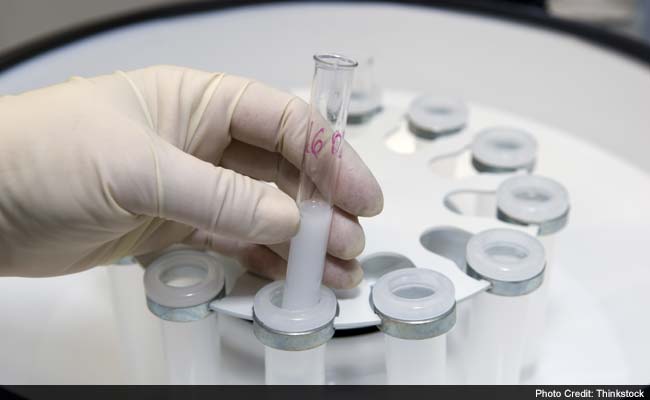
Scientists have developed a human embryo "blueprint" using human stem cells, in a breakthrough that could provide vital insight into the early stages of infant development, new research showed Thursday.
Teams from the University of Cambridge and the Netherlands-based Hubrecht Institute said their model will allow them to observe never-before-seen processes underlying the formation of the human body.
-

-
 'Needs Very Rapid New Concept Of Warfare': Ex-CIA Chief's Advice To India
-
 Nepal Minister On Lessons India Can Learn From Its Gen Z Movement
-
 'US Never Apologised': Iran Diplomat On Primary School Bombing
-
 AI Divine, AI Gods And Phantoms: BAPS Monk's Warning At NDTV World Summit
-
 'India Was The First Responder': Nepal Minister On Times Of Crisis
-
 What Should India Learn From Pakistan And The Ukraine War? Ex-CIA Chief Answers
-
 If Pakistan Attacks Again, Will The US Back India? | Gen. David Petraeus At NDTV World Summit
-
 'Human Pulled The Trigger, Machine Helped': Ex-CIA Chief On Iran School Bombing
-
 "Hundred Million Buddhas Better Than Millions Of Einsteins": BAPS Monk On AI
-
 'Human Pulled The Trigger, Machine Helped': Ex-CIA Chief On Iran School Bombing
The layout of humans -- known as the body plan -- happens through a process known as gastrulation, where three distinct layers of cells are formed in the embryo that will later give rise to the body's three main systems: nervous, musculoskeletal and digestive.
Gastrulation is known as the "black box" period of human development as legal restrictions prevent scientists from developing embryos in the lab beyond 14 days.
The team behind the study, published in Nature, said their model resembles an embryo between 18 and 21 days old, around the same time as gastrulation occurs.
Many birth defects happen during this period, and a better understanding of gastrulation could aid our understanding of issues such as infertility, miscarriage and genetic disorders, the researchers said.
"Our model produces part of the blueprint of a human," said lead author Alfonso Martinez-Arias, from Cambridge's Department of Genetics.
"It's exciting to witness the developmental processes that until now have been hidden from view -- and from study."
To create the three-dimensional models, known as gastruloids, the team collected tight bundles of human cells and treated them with chemicals that acted as signals to activate certain genes.
It is the first time, the researchers said, that human stem cells have been used to create a 3D model human embryo, after some trials using stem cells from mice and zebra fish.
The scientists stressed that gastruloids never develop into fully formed embryos because they have no brain cells and lack any of the tissues for implantation in the womb.
Nevertheless they were able to observe around 72 hours of the models' development and identify clear signs of the events that lead to the formation of muscles, bone and cartilage.
Jeremy Green, a professor of developmental biology at King's College London, said the study was a "fantastic window" into the early formation of the human body.
"(It) highlights the amazing power of self-organisation of cells and tissues given the right conditions," added Green, who was not involved in the research.
(This story has not been edited by NDTV staff and is auto-generated from a syndicated feed.)Track Latest News Live on NDTV.com and get news updates from India and around the world


