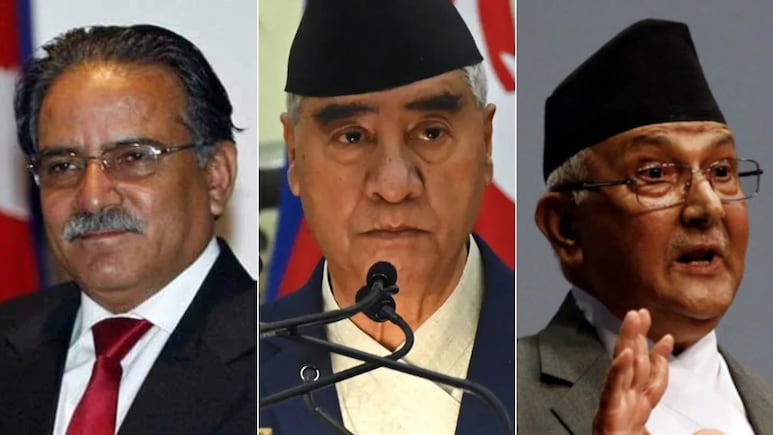
Nepal votes today, months after Gen Z-led protests over corruption and political failures forced Prime Minister KP Sharma Oli to resign. Since Nepal became a federal democratic republic in 2008, it has had 14 governments in 17 years. None has completed a full five-year term.
Nepal: From Monarchy To Republic
For centuries, Nepal has been ruled by kings. In 1960, King Mahendra dissolved the parliament and imposed the partyless Panchayat system. Multi-party democracy was restored only in 1990 after a mass movement forced King Birendra to lift the ban on political parties.
In 1996, the Communist Party of Nepal (Maoist) launched an armed insurgency to overthrow the monarchy. The conflict lasted 10 years and reportedly killed 13,000 people.
The monarchy suffered a blow after the 2001 royal massacre that killed King Birendra. In 2005, King Gyanendra seized direct power. Massive protests in 2006 forced him to step back. In 2008, Nepal formally abolished its 240-year-old monarchy and became a republic.
The country then faced the difficult task of writing a new constitution and restructuring the state.
The 2015 Constitution Of Nepal
Nepal adopted a new constitution in 2015. It created a federal system and introduced a mixed electoral model:
- 165 lawmakers are elected directly (first-past-the-post).
- 110 are chosen through proportional representation (PR).
The PR system was designed to ensure the inclusion of women, Dalits, Madhesis, Janajatis, and other marginalised groups. Parties must ensure that at least one-third of lawmakers are women.
While this improved representation, it also produced hung parliaments. No single party has secured a clear majority since 2008. Governments are formed through coalitions that often rest on power-sharing deals rather than common policy agendas. When alliances break down, governments fall.
All Of Nepal's 14 Governments Since 2008
Here is the sequence of governments since Nepal became a republic:
- Pushpa Kamal Dahal (Prachanda) - 2008-2009 - Resigned after a dispute over the army chief.
- Madhav Kumar Nepal - 2009-2011
- Jhala Nath Khanal - 2011
- Baburam Bhattarai - 2011-2013
- Sushil Koirala - 2014-2015 - Oversaw adoption of the 2015 Constitution.
- KP Sharma Oli - 2015-2016 (First term)
- Pushpa Kamal Dahal - 2016-2017 (Second term)
- Sher Bahadur Deuba - 2017-2018
- KP Sharma Oli - 2018-2021 (Second term) - Led a strong left alliance but later faced internal party splits.
- Sher Bahadur Deuba - 2021–2022 - Appointed after the Supreme Court reinstated parliament.
- Pushpa Kamal Dahal - 2022 - 2024 - Switched alliances multiple times to retain majority.
- KP Sharma Oli - 2024 (Fourth term begins under rotation deal)
- Coalition reshuffle under Oli - 2024-2025
- The government collapsed after Oli's 2025 resignation. Nepal is now being led by Sushila Karki, a former chief justice who was appointed interim prime minister on Discord.
Why Nepal Hasn't Had Stable Governments
Coalition politics without stability - No party commands a majority. Governments depend on fragile alliances that collapse when partners withdraw support.
- Power-sharing over policy - Many coalitions are built around who becomes prime minister, not around long-term reforms.
- Party fragmentation - Splits within communist factions and the rise of newer groups such as the Rastriya Swatantra Party have divided the vote further.
- Leadership struggles - Nepali politics is dominated by a small group of senior leaders who rotate power. Internal rivalries often lead to breakdowns.
- Weak institutions - Frequent court interventions, dissolutions of parliament, and constitutional disputes have deepened uncertainty.
- Public frustration - Corruption allegations and slow economic growth have fuelled youth protests. Nearly half the population is under 18, and many young voters feel disconnected from traditional parties.
Track Latest News Live on NDTV.com and get news updates from India and around the world


