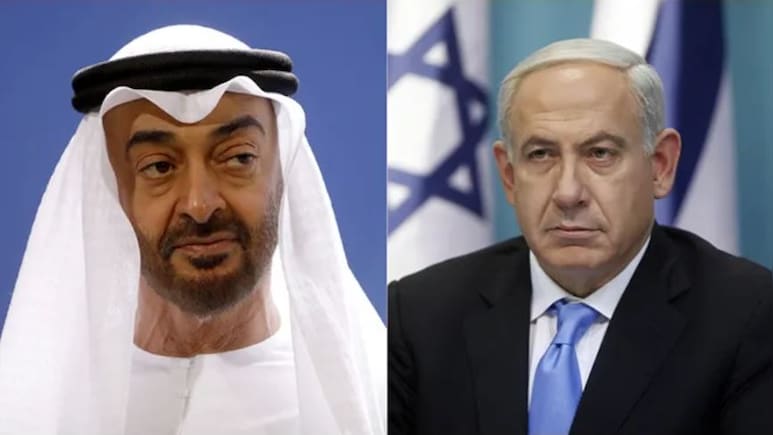
Was United Arab Emirates (UAE)'s involvement in the United States-Israel war on Iran much deeper than estimated?
The UAE carried out dozens of airstrikes against Iran, a report in The Wall Street Journal has claimed. The strikes, according to the report, began in the early days of the war and continued till the April ceasefire.
The report, quoting people in the know, points to a deeper involvement than was previously known in the air campaign led by the US and Israel.
The UAE had come under heavy Iran attacks since the start of the war as Tehran targeted the Gulf neighbours accusing them to aiding the US-Israel efforts. But Iran's attacks on the UAE were fiercer than on the others. It targeted the Emirates with more than 2,800 missiles and drones, far more than it fired at any other country, including Israel.
UAE Struck Iran's Energy Infra?
The UAE's strikes, the report stated, were conducted in coordination with the US and Israel, both of which provided intelligence. "They included targets on Qeshm and Abu Musa islands in the Strait of Hormuz; Bandar Abbas; the oil refinery on Lavan island in the Persian Gulf; and the Asaluyeh petrochemical complex, report said.
The report further stated that some of those strikes "targeted Iranian energy facilities in response to Tehran's attacks on UAE oil and gas infrastructure".
The Asaluyeh strike, where Israel targeted Iran's petro-chemical strike, led to severe international backlash. It also led the US to ask Israel to stop striking energy facilities.
Before the start of the war, the Gulf countries had stated that they will not allow their bases to be used for attacks. But, their position was altered as Iran launched a barrage of attacks on them in response to the US-Israel strikes.
UAE-Saudi Differences On Strikes
In response to the Iran attacks, UAE maintained a tough posture and was reportedly in favour of a joint Gulf military action on Iran, a proposal that was not met with enthusiasm by Saudi Arabia that opposed attacks. Saudi also reportedly urged US President Donald Trump to pressure UAE to halt strikes.
"The UAE holds Iran fully responsible for these terrorist attacks and their repercussions," the WSJ report quoted the Gulf state's Ministry of Foreign Affairs. Saudi Arabia and the Israeli prime minister's office didn't respond to requests for comment from the newspaper. The White House declined to comment.
Saudi Arabia, which has faced fewer and less damaging strikes from Iran, has publicly condemned the attacks on the Gulf, but has taken a less confrontational approach and has worked to resolve the conflict through diplomacy.
Growing UAE-Israeli Cooperation
A number of reports in recent weeks have highlighted growing UAE-Israel coordination during the war. Israel reportedly sent Iron Dome batteries and Israeli troops to defend the UAE from the Iranian attacks.
Top Israeli officials-including Israeli Prime Minister Benjamin Netanyahu, the head of the Mossad spy agency, the head of the Shin Bet, and the Israeli chief of staff-secretly visited the UAE during the war to coordinate on Iran.
Track Latest News Live on NDTV.com and get news updates from India and around the world


