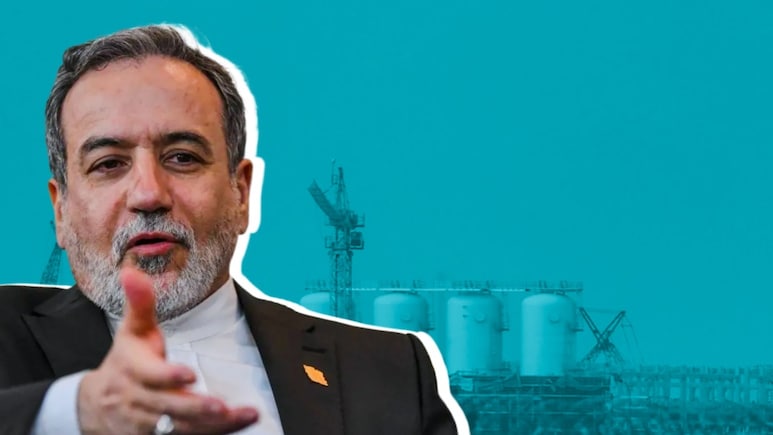
- Iran confirmed Strait of Hormuz remains open for India amid Middle East conflict
- Iran allows safe passage to friendly countries like China, Russia, India, and Bangladesh
- Ships from adversary countries like the US and Israel are denied passage through the strait
In a major diplomatic victory, Iran has said the strategically critical Strait of Hormuz will remain open for India amid the escalating conflict in the Middle East. The waterway, the narrow mouth of the Persian Gulf through which a fifth of the world's oil is normally shipped, has been under an Iranian chokehold since the United States and Israel launched a war against Iran last month.
Talking to Iranian State TV, Foreign Minister Abbas Araghchi clarified that the Strait, contrary to the Western media claims, is not completely closed.
"Many of the shipowners, or the countries that own these vessels, have contacted us and requested that we ensure their safe passage through the strait. For some of these countries that we consider friendly, or in cases where we have decided to do so for other reasons, our armed forces have provided safe passage," Araghchi said, according to a report by Reuters.
"You have seen on the news: China, Russia, Pakistan, Iraq, and India. Two of its ships passed through a few nights ago, and some other countries, and even Bangladesh, I believe. These are countries that spoke with us and coordinated with us, and this will continue in the future as well, even after the war," he added.
'No Entry For Enemies'
Araghchi also indicated that vessels linked to countries seen as adversaries or those involved in the ongoing conflict would not be allowed passage. He said ships from the United States, Israel and certain Gulf nations playing a role in the current crisis would not be given clearance to transit through the strait.
"We are in a state of war. The region is a war zone, and there is no reason to allow the ships of our enemies and their allies to pass through. But it remains open to others," he said on Wednesday.
Notably, earlier this week, Iran stopped a Pakistan-bound container ship from crossing the Strait of Hormuz. The vessel, SELEN, sailing from the United Arab Emirates' Sharjah anchorage toward Karachi, was forced to reverse course at the entrance to the crucial waterways due to the absence of transit authorisation, according to the Islamic Revolutionary Guard Corps (IRGC).
Iran maintains its chokehold on the Strait through drone and missile attacks on shipping. With the conduit for a fifth of the world's oil and liquefied natural gas effectively closed, fuel shortages are occurring around the globe, and businesses from airlines to supermarkets and used car dealers are grappling with challenges including rising costs, weakening demand and disrupted supply chains. Some governments are weighing support measures last used during the COVID pandemic.
Shipping Dropped
The war, which started with the United States and Israel's bombing of Iran, prompted Tehran to retaliate with strikes across the region and sharply restrict access to the strait. This led to a 95 per cent drop in daily shipping of energy through the critical waterways.
The channel typically sees around 120 daily transits, according to shipping industry intelligence site Lloyd's List. However, from March 1 to 25, commodities carriers made just 155 crossings, according to analytics firm Kpler -- a decrease of 95 per cent.
Of these, 99 were by oil tankers and gas carriers, and most were travelling east out of the strait. Just two vessels were detected crossing the strait on Wednesday, both heading west.
Track Latest News Live on NDTV.com and get news updates from India and around the world


