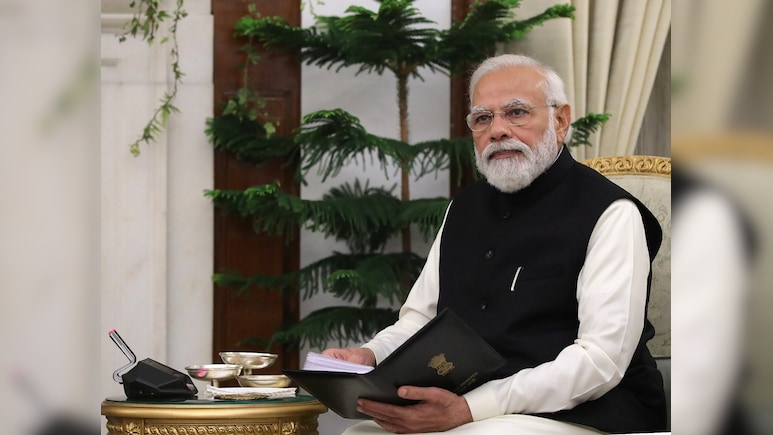
Prime Minister Narendra Modi has urged citizens to curb fuel use, revive working from home, pause gold purchases and reduce overseas travel to deal with a surge in global energy prices amid the continued crisis in the Middle East due to the Iran war. Addressing a rally in Hyderabad, PM Modi noted that the austerity measures -- a reminder of the Covid-19 pandemic -- would reduce India's fuel consumption and help protect the country's foreign exchange reserves.
"Patriotism is not only about the willingness to sacrifice one's life on the border. In these times, it is about living responsibly and fulfilling our duties to the nation in our daily lives," the prime minister said.
He said reducing gold imports and foreign travel would help conserve foreign currency reserves as higher oil prices increase pressure on India's import bill.
"In the current situation, we must place great emphasis on saving foreign exchange."
ALSO READ: China Is Mining The Iran War For Lessons On US Military Power
Why PM Modi Called For Covid-Era Like Measures
New Delhi is the latest among a growing number of Asian economies calling for lower energy consumption amid skyrocketing fuel prices due to Iran tensions. India imports nearly 85 per cent of its oil, and there has been a multi-billion-dollar uptick in its crude bill since the war started and Iran closed traffic through the Strait of Hormuz, a narrow Gulf chokepoint, through which a fifth of global oil supply passes in peacetime.
India's 50 per cent of crude imports, 60 per cent of liquefied natural gas (LNG), and almost all of liquefied petroleum gas (LPG) supplies pass through Hormuz. Brent crude futures climbed $4.04 or 3.99 per cent to $105.33 a barrel on Monday, while US West Texas Intermediate was at $99.85 a barrel, up $4.43, or 4.64 per cent.
Spiking fuel prices are threatening to widen India's trade deficit and current account deficit. The rupee is also facing a blow, trading near an all-time low against the dollar.
ALSO READ: Impact Of PM Modi's Speech Out: Jewellery Stocks Take The First Hit
Other Nations Calling For Similar Measures
Pakistan
Neighbouring Pakistan was one of the first nations to call for austerity measures to reduce fuel consumption, with Prime Minister Shehbaz Sharif announcing cuts in government spending and work-from-home guidelines. Addressing the country in early March, Sharif said the government departments will face a 50 per cent cut in fuel allowances for two months. Additionally, half of the government staff, except those in essential services, will work from offices.
Pakistan has been among the most vulnerable nations to the fuel shock because of the country's economic fragility and dependence on imported energy.
ALSO READ: WFH, No Foreign Travel: Deja vu In PM Modi's 7 Appeals Amid US-Iran War
Sri Lanka
India's southern neighbour, Sri Lanka, has announced a shorter work week to conserve its fuel reserves, according to an AFP report.
Commissioner-General of Essential Services Prabath Chandrakeerthi in March said the new austerity measures would also apply to schools and universities and would remain in place indefinitely.
Thailand
The Thai government has ordered civil servants to conserve energy amid the energy squeeze. The country's Prime Minister Anutin Charnvirakul ordered civil servants to work from home, adding that exceptions would be made for officials who must serve the public, according to a Reuters report.
Energy-saving measures include suspending overseas trips, wearing short-sleeve shirts to work and using stairs instead of lifts, which have also been introduced.
Philippines
The Philippine government employees have been working four days a week since March 9 to cut fuel consumption, Reuters reported.
The shorter schedule is a temporary measure and does not include emergency and frontline workers.
Vietnam
The Vietnamese government has also asked people to work from home and use public transport to reduce fuel consumption.
Myanmar
In March, the Myanmar government imposed driving restrictions for private vehicles to preserve petrol. In the country, people are being allowed to buy fuel once or twice a week as the government steps up fuel rationing, fearing shortages.
Track Latest News Live on NDTV.com and get news updates from India and around the world


