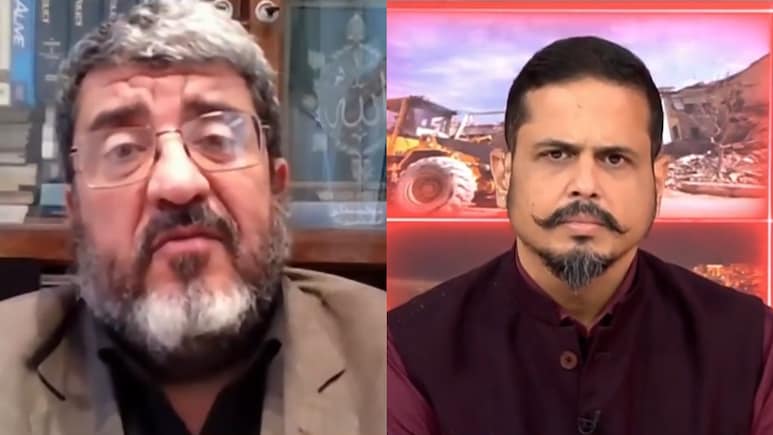
Reports that the United States is preparing to deploy thousands of troops to the Middle East have drawn a sharp response from Iranian scholar Foad Izadi, who warned that such a move would be welcomed by Tehran's military commanders.
"Iranian generals will actually welcome that because it's easier to hit soldiers on the ground than hitting F-35s. So you will see many Americans dead," he told NDTV. He added that staying far away and launching missile strikes at civilian areas "is not very difficult to do", but "actually fighting on the ground, I don't think Americans can manage to do that."
His comments came as two officials told Reuters that the Pentagon plans to send thousands of soldiers from the elite 82nd Airborne Division from Fort Bragg, North Carolina, to the Middle East, further escalating the US military presence even as Washington publicly signals interest in negotiations.
#NDTVExclusive | "You cannot make a nation like you by bombing it. Even people who dislike their government do not want their hospitals attacked. Expecting Iranians to support Trump after being bombed was a foolish assumption": Iranian scholar Prof. Foad Izadi to NDTV on West… pic.twitter.com/KFVu6CyXl3
— NDTV (@ndtv) March 24, 2026
Diplomatic efforts appeared to accelerate this week, with growing speculation that Pakistan could act as a mediator after its prime minister offered to help facilitate talks. That came a day after US President Donald Trump unexpectedly announced that the US and Iran had engaged in "productive" discussions, a claim Tehran swiftly dismissed as "fake news".
Izadi argued that Iran remains sceptical of Washington's overtures because past offers of dialogue have been followed by violence. "He attacked several times after the talk that he had yesterday. So, no one is going to fall for that type of rhetoric," he said, adding, "Iran was attacked in the middle of negotiations two times."
He outlined three core demands that Iran expects from any resolution to the conflict. First, the United States must stop striking civilians and infrastructure. Second, Iran must receive credible assurance that such attacks will not recur. "You cannot run a country with two nuclear regimes attacking you every few months," he said. Third, Iran insists the US and Israel compensate for the damages caused.
Izadi suggested Tehran could implement a transit fee for ships passing through the Strait of Hormuz to recoup losses. "People who don't like the transit fee, they can maybe get reimbursed by the US government," he said.
On Iran's military capabilities, Izadi stressed that the systems used in the war were domestically developed. "We didn't buy these things from other countries. Since the 1979 revolution, Iran has invested in sciences and engineering," he said.
Casting doubt on Washington's intentions, he described Trump as erratic and "under the influence of Netanyahu". Calling the conflict a "failed war", Izadi predicted that once the US recognises its failures, Trump will declare victory and then "go off to take over Greenland or Canada".
Iran's death count has surpassed 1,500, its Health Ministry has said. In Israel, 16 people have been killed. At least 13 US military members have been killed, along with more than a dozen civilians in the occupied West Bank and Gulf Arab states.
Trump said he would hold off on a threat to bomb Iran's power stations while talks unfold -- a delay that could be aimed at buying time for the Marines to arrive, the New York-based think tank the Soufan Center wrote in an analysis.
Trump has said he has no plans to send ground forces into Iran but has not ruled it out. Israel has suggested its ground forces could participate in the war.
Track Latest News Live on NDTV.com and get news updates from India and around the world


