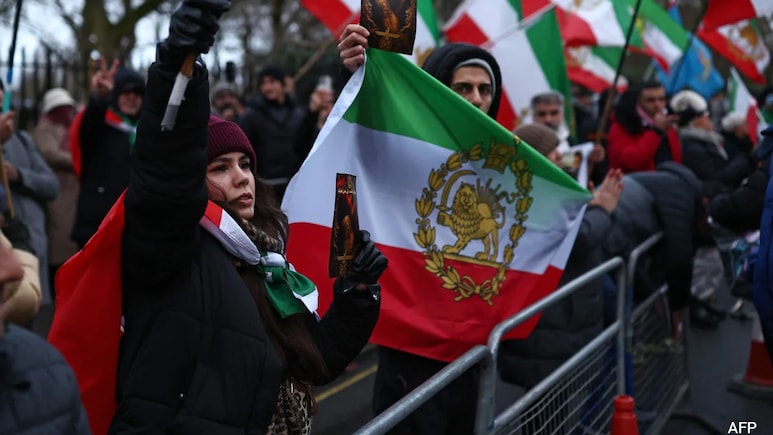
Amid continuing global scrutiny over Iran's internal unrest and regional posture, Dr A Hakimollahi, the representative of Iran's Supreme Leader Ayatollah Ali Khamenei in India, has strongly rejected allegations of internal instability, instead blaming foreign powers for what he described as a sustained and deliberate campaign to destabilise the country.
While speaking to NDTV on protests that started on 28 December 2025, sanctions, and covert operations, Dr Hakimollahi said Iran's long civilisational history and political resilience stand in sharp contrast to what he called "engineered chaos from outside to create anarchy".
Iran Protests Part Of Foreign Destabilisation Plot
Addressing the recent protests in Iran, Dr Hakimollahi claimed the unrest was not a spontaneous public uprising but the outcome of direct foreign intervention. He alleged that external actors funded, trained, and guided individuals to provoke violence and disorder across the country.
According to him, mosques were deliberately set on fire, copies of the Quran were burnt, and police personnel were attacked to inflame religious sentiments and create riot-like situations. "This was a calculated attempt to push Iran towards chaos, similar to the ISIS-style destabilisation seen in Iraq," he said.
He further alleged that arms training was provided, weapons were supplied, and even bounties were fixed for killings, with money distributed based on the scale of destruction carried out.
Sanctions, Sabotage And Covert Operations
Dr Hakimollahi also criticised the United States for imposing what he described as some of the harshest sanctions in modern history, aimed solely at destabilising Iran. While acknowledging economic hardships faced by citizens, he maintained that sanctions had failed to achieve their political objectives.
He further alleged that foreign intelligence agencies supplied materials for arson and bomb blasts and pumped in large sums of money to fuel unrest. Linking these activities to broader regional tensions, he referred to past Israeli operations targeting Iran's nuclear and missile programmes, including the embedding of agents and weapons systems within Iranian territory.
"Iran Has Never Started a War"
Emphasising Iran's 3,000-year-old civilisational legacy, Dr Hakimollahi asserted that Iran has never initiated a war in its history. "Iran is a peaceful country. Our history itself is the evidence," he said, adding that Iran has always acted defensively despite repeated provocations.
He accused the United States of pursuing long-standing plans to weaken Iran, including attempts to divide the country into six parts. "Every possible technique was tried to break Iran internally, but all such plans failed," he said, crediting the country's unity and institutional strength for resisting external pressure.
Highlighting the enduring bond between the two nations, Dr Hakimollahi said India and Iran share a civilisational relationship far older than modern borders. Shaped by shared trade and ideas, the two cultures enriched each other through language, philosophy, art and governance. Persian left a deep imprint on India's courts, poetry and architecture, while Indian spirituality and thought travelled west into Persia. From Indo-Aryan roots to Sufi traditions, literature and music, this timeless exchange continues to inspire mutual respect, cultural dialogue and enduring people-to-people ties.
The strongest evidence of this bond lies in the Supreme Leader himself. There are well-documented instances of Ayatollah Khamenei expressing a deep interest in India's history and culture, reflecting his immense love and profound respect for the people of India.
Concluding his remarks, Dr Hakimollahi said several arrested individuals had confessed to earning millions for creating unrest. "These confessions expose the real nature of the protests," he said, asserting that Iran's stability continues to be challenged not from within, but by sustained foreign interference-efforts that, he insisted, will ultimately fail.
Track Latest News Live on NDTV.com and get news updates from India and around the world


