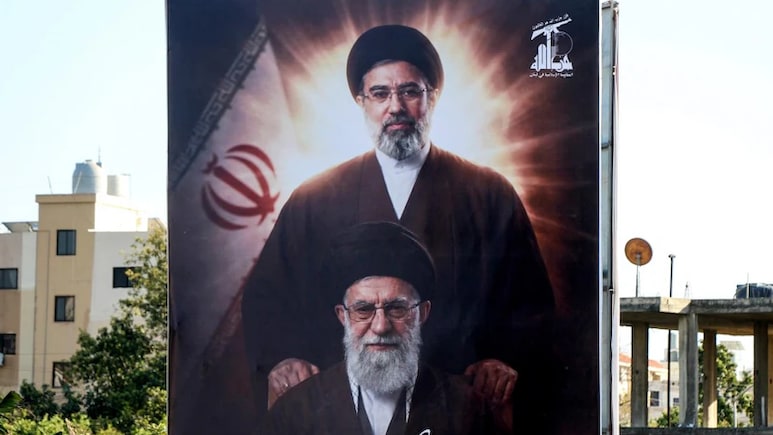
In the annals of history, transition often bears the weight of inherited legacy, and few legacies are as complex as that of Iran's Islamic Republic. With the ascent of Mojtaba Khamenei, the son of the late Supreme Leader Ali Khamenei, to the pinnacle of this contentious regime, the resonance of his name prompts both trepidation and intrigue among those who navigate the intricate interplay of power in the Middle East.
Mojtaba Khamenei's appointment as Supreme Leader is not merely the successor to a throne; it symbolises a profound tension between ideology and pragmatism. The Islamic Republic was born from the ashes of monarchical rule, designed to eschew dynastic supremacy and instead embrace the doctrine of velayat-e faqih, empowering clerical authority over familial lineage. Yet here we stand, at a moment where bloodlines intertwine with the exercise of power, challenging the tenets that brought the Republic to life. For many, this represents a betrayal of the revolutionary spirit; for others, it signifies a continuity born from shared struggle and sacrifice.
Narrative Of Martyrdom Legitimises Mojtaba Khamenei
Caught in the crosshairs of this ideological battlefield is the narrative of martyrdom--a cornerstone of Shiite belief solidified by the sacrifice of Imam Hussein at Karbala. Martyrdom, so entwined with Iran's political fabric, now shrouds Mojtaba Khamenei in a mantle wrought with both reverence and expectation. As the Islamic Republic transforms its narrative from a cautionary tale of familial connections to one of resistance against external adversaries, Mojtaba Khamenei stands poised to harness this symbolism. His father's death at the hands of foreign aggressors casts him not just as a leader but as a martyr's son, imbued with moral authority to galvanise the populace in a climate of crisis.
The Challenges Faced By Mojtaba Khamenei
AFP
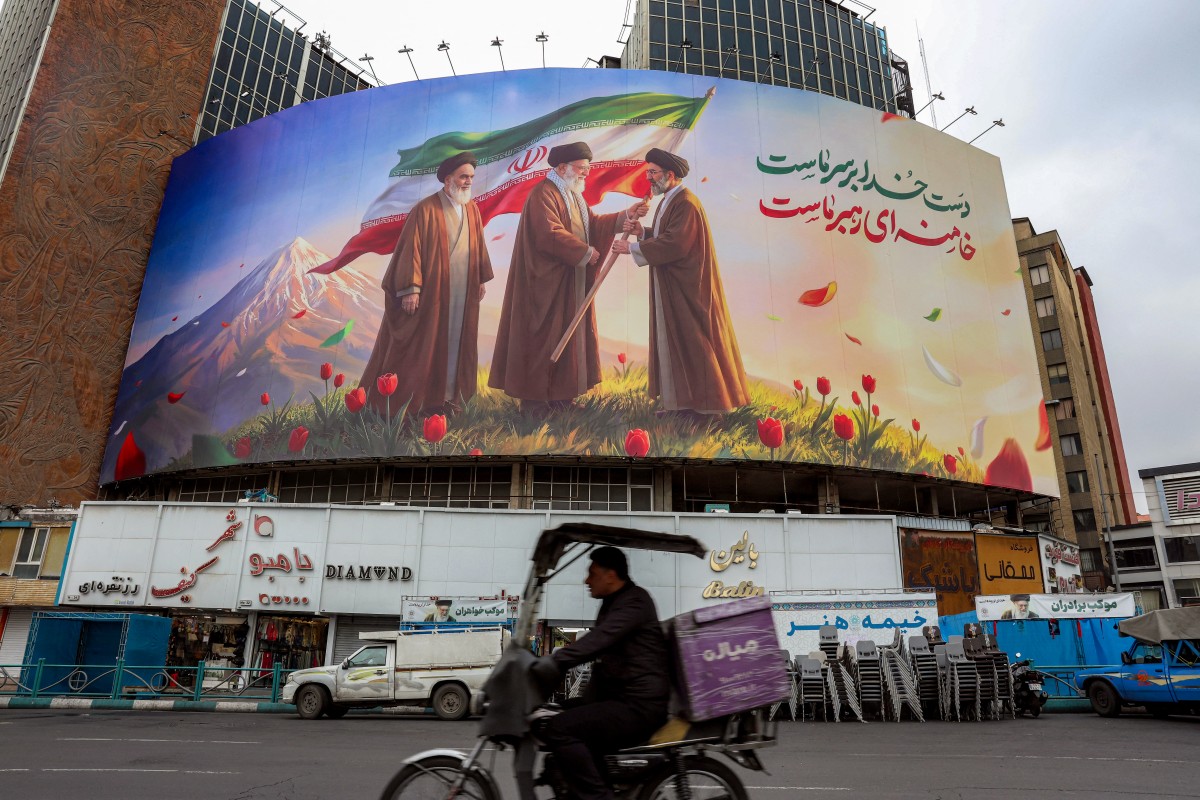
Yet amid the echoes of historic symbolism lies the stark reality of governance. The Iranian landscape is fraught with challenges ranging from total devastation of the infrastructure and the military arsenal to economic isolation induced by economic sanctions, internal dissent, and regional instability. Mojtaba Khamenei's journey will not simply be a retelling of his father's legacy; it will unfold on a stage where succession's solemnity navigates the intricate and often treacherous waters of international relations.
Indeed, the spectre of war lingers, and with it, an urgent imperative for Mojtaba Khamenei to adapt to the complexities of diplomacy--a realm where hardline ideologies must sometimes yield to pragmatic negotiations. His existing reputation, cultivated in the shadows of power, may serve him well. Analysts suggest that behind the enigmatic figure--the reserved man who rarely seeks the limelight--lies a strategist adept at forging alliances critical to his role as both a continuity of traditions and a harbinger of future paths.
Mojtaba Khamenei's Three Main Networks
Mojtaba Khamenei has built solid networks in three sectors of Iranian society: first, the clerical establishment; second, the security forces; and third, the political networks around the Supreme
Leader's office. Ali Hashem, former Tehran Bureau chief of Al Mayadeen news network and an Iran specialist, points out that within the Security forces, Mojtaba Khamenei is close to Mohammed Reza Naqdi, who served as the Commander of the Basij militia, and a cleric named Hossein Taeb, who served as an ex-intelligence chief of the Islamic Revolutionary Guard Corps (IRGC).
The Basij Militia
'Basij' in Persian means 'mobilisation'. The Basij Resistance Force is a massive paramilitary volunteer militia under Iran's Islamic Revolutionary Guard Corps (IRGC), primarily tasked with internal security, moral policing and suppressing dissent. It is similar to the Mutawwaa (thought-police) in Saudi Arabia. Founded in 1979 by Ayatollah Khomeini, it acts as a loyalist force to the regime, engaging in riot control and surveillance of civilians. The Basij militia has a core strength of 600,000 with theoretical reserves in the millions. They are the ones who enforce mandatory hijab laws and suppress protests. As of July 2019, the commander is Brig. Gen. Gholamreza Soleimani. The force is organised into specialised units, including Imam Ali battalions for riot control and Beit al-Muqaddas, battalions for security, extending down to local city and town levels.
The 20 Million-Strong IRGC
The IRGC can number up to 20 million. The former IRGC commander, Hossein Hamedani, is very close to Mojtaba Khamenei from their collaboration during the Iran-Iraq War. Mojtaba Khamenei served in the Habib Ibn Mazahir Battalion, a volunteer group linked to the revolutionary networks that later became part of Iran's security forces. Many among his fellow soldiers moved up into the senior echelons of the IRGC and intelligence services. These wartime brotherhoods helped establish Mojtaba Khamenei's position within the system's most powerful institutions.
Mojtaba Khamenei stays in the shadows. Given the threats to his life, he will be forced to stay invisible, unlike his father, Ali Khamenei. One of the last widely circulated photos of him was taken after Hezbollah leader Hasan Nasrallah was assassinated in 2024. Mojtaba Khamenei visited Hezbollah's office in Tehran to offer his condolences.
Mojtaba Khamenei's Financial Networks
Mojtaba Khamenei's name is also linked, according to Western media sources, to financial networks that moved assets internationally to avoid economic sanctions. Iranian banker, Ali Ansari, whose business empire included Ayandeh Bank and large real estate investments abroad, is a very close friend of Mojtaba Khamenei.
As a young man, Mojtaba Khamenei studied in Qom's seminaries and taught advanced Bahth al-kharij courses, the highest level of Shiite legal instructions. The Iranian Constitution does not require the Supreme Leader to be a top cleric. Since 1989, the only requirement has been that the leader must be able to make independent jurisprudential decisions. The early legal instructions in Qom seminaries and the advanced teaching experience of Bahth al-Kharij courses will surely help Mojtaba Khamenei in making independent jurisdictional decisions.
Can Mojtaba Khamenei Manoeuvre During Geopolitical Negotiations?

AFP
The aftermath of US and Israeli aggression hangs in the air like a cloud of uncertainty. While Mojtaba Khamenei may be seen as a bastion of resistance, his ascent could align with a dual narrative: one of arena politics aimed at confronting the enemy, and another embracing the possibility of negotiating a respite from
hostilities. Responding to the recent hostilities will require deft manoeuvring, and while he may be perceived as an ideologue, pragmatism could very well be the currency of power he wields most effectively. The world may anticipate a hardliner, yet, paradoxically, the savviest outcomes could emerge from calculated compromise.
What Critics Claim About Mojtaba Khemenei
Ali Alfoneh, a Senior Fellow at the Arab Gulf States Institute in Washington, claims: "Mr Mojtaba Khamenei has never given interviews, most Iranians have never heard the sound of his voice, and he appears in public only twice a year: at the Revolution Day parade on February 11 and at the Quds (Jerusalem) Day Rally on the last Friday of Ramadan."
A Princeton University scholar, Elizabeth Tsurkov, who was held hostage by the group Kata'ib Hezbollah for 903 days before her release in September 2025, in a tweet on X, claims: "Sheikh Jaberrajabii, who defected from the Iranian regime, is one of the few people to know Mojtaba Khamenei personally and spoke about him publicly. The Sheikh describes the 56-year-old cleric as a messianic extremist who believes himself to be the mythical Khorassani figure."
American Rebuke Strengthens Mojtaba Khamenei's Support Base Within Iran
In this unfolding tale, external perceptions--such as US dismissals or rebukes--also play a pivotal role. The United States' attempts to project strength often inadvertently strengthen the resolve of Iranian figures like Mojtaba Khamenei. Such commentary, rather than weakening his standing within Iran, positions him as a national leader aligned against foreign imposition, rallying the populace under the banner of sovereignty and resilience.
While political culture remains volatile, Mojtaba Khamenei faces an inexorable truth: he must navigate a shifting landscape where images of power often clash with the realities of governance. The alliances he forges within the clerical establishment, the security apparatus, and the political networks will be crucial. His relationships--particularly with the IRGC--not only anchor him within the political elite but also embolden a security strategy that views external threats as justifications for heightened internal control.
As he emerges onto the global stage, Mojtaba Khamenei must grapple with Iran's multifaceted identity. He represents a bridge between generations: the resolve of an old struggle intertwined with the demands of a modern state eager for engagement and progress. His ability to effectively manage this dichotomy may be the linchpin of his leadership.
While the road ahead certainly is fraught with dangers, the potential for Mojtaba Khamenei to redefine the contours of Iran's future is palpable. It invites contemplation of whether he will remain tightly tethered to his father's legacy and the revolutionary past, or skillfully carve a new narrative that transcends the history from which he springs. The legacy of martyrdom entwined with modern necessity may yet pave the way for an Iran that is both rooted in its past and agile in its aspirations for tomorrow. As the world watches, the question remains: can this son of Khamenei rise above the shadows of a patriarch and lead his nation into a new chapter of hope--a story that embraces the complexities of faith, power, and identity, while navigating the tempestuous currents of modern geopolitics?
Track Latest News Live on NDTV.com and get news updates from India and around the world


