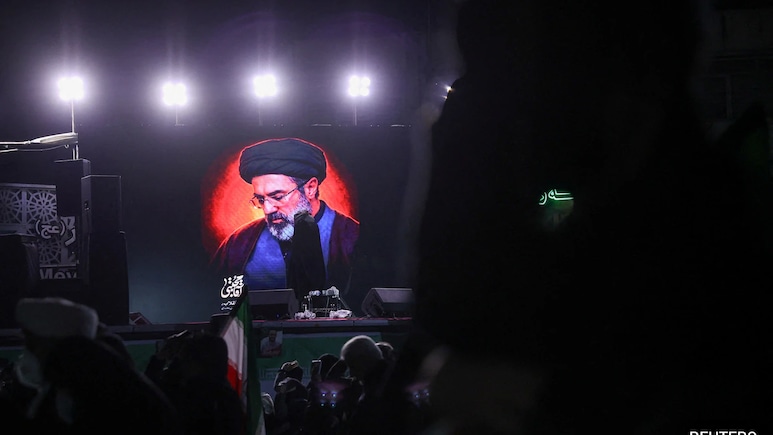
It's been nearly four days since Iran named Ayatollah Mojtaba Khamenei as its next Supreme Leader, but his whereabouts and the circumstances of his elevation remain shrouded in mystery. He has not appeared before the supporters or shared a video address. He or his office has not even issued a written statement, as state media leant into archival footage to introduce him.
Reports in Iran's state media indicate that the 56-year-old cleric was likely injured in the ongoing US-Israeli strike on Iran, which the Iranian regime has named the Ramadan War. Iran's state TV has referred to him as "Jaanbaz of Ramadan", meaning an "injured war veteran".
The anchors on Iranian state TV reports describe Mojtaba Khamenei as a 'jaanbaz,' or wounded by the enemy, in the 'Ramadan war' while reporting on his ascension as supreme leader. They did not elaborate further, fuelling speculation about his physical condition, particularly given that he has not been seen publicly since the war began.
This could have explained the lack of an in-person or a video address to the nation, but the lack of a written statement still remains a mystery.
Mojtaba Khamenei 'Safe And Sound'
However, son of the Iranian president on Wednesday clarified that Khamenei is "safe and sound" despite reports of an injury during the war with Israel and the United States.
"I heard news that Mr Mojtaba Khamenei had been injured. I have asked some friends who had connections. They told me that, thank God, he is safe and sound," said Yousef Pezeshkian, who is also a government adviser, in a post on his Telegram channel.
Khamenei, a discreet figure who has rarely appeared in public or spoken at official events, has yet to address the nation or issue a written statement since he was declared supreme leader on Sunday. But even though Mojtaba Khamenei remains remains in hiding, the public pledges of allegiance continue rolling in.
Videos from Tehran show that the historic Valiasr Square has a new mural showing the younger Khamenei receiving the flag from his dead father, Ali Khamenei, as the founder of the Islamic regime, Ruhollah Khomeini, watches on. The Valiasr Square mural, often used to portray the state narratives, is seen as an attempt by the theocratic regime to project the handover of power as seamless, despite the contradiction of a father-to-son succession in a system born from a revolution against monarchy.
Also Read: 'Moderate' Father vs 'Hardline' Son: The Differences Between Ali And Mojtaba Khamenei
Iranians also rallied in Tehran on Tuesday to pledge their allegiance to their new leader. The rally was reportedly organised in response to US President Donald Trump's remark claiming Iran's new leader should be chosen with his approval.
"We want to show that the leader of Iran is chosen by Iranians themselves," a protestor told RT.
RT correspondent reports from Tehran where Iranians rally to pledge allegiance to their new leader, Mojtaba Khamenei
— RT (@RT_com) March 10, 2026
This is 'a response to Trump, who said that leader of Iran should be chosen with his approval
We want to show that leader of Iran chosen by Iranians themselves' pic.twitter.com/MBvN7mM18h
Also Read: We "Respect" Iran's Choice Of New Supreme Leader: North Korea
Mojtaba Khamenei Gets Elite Security
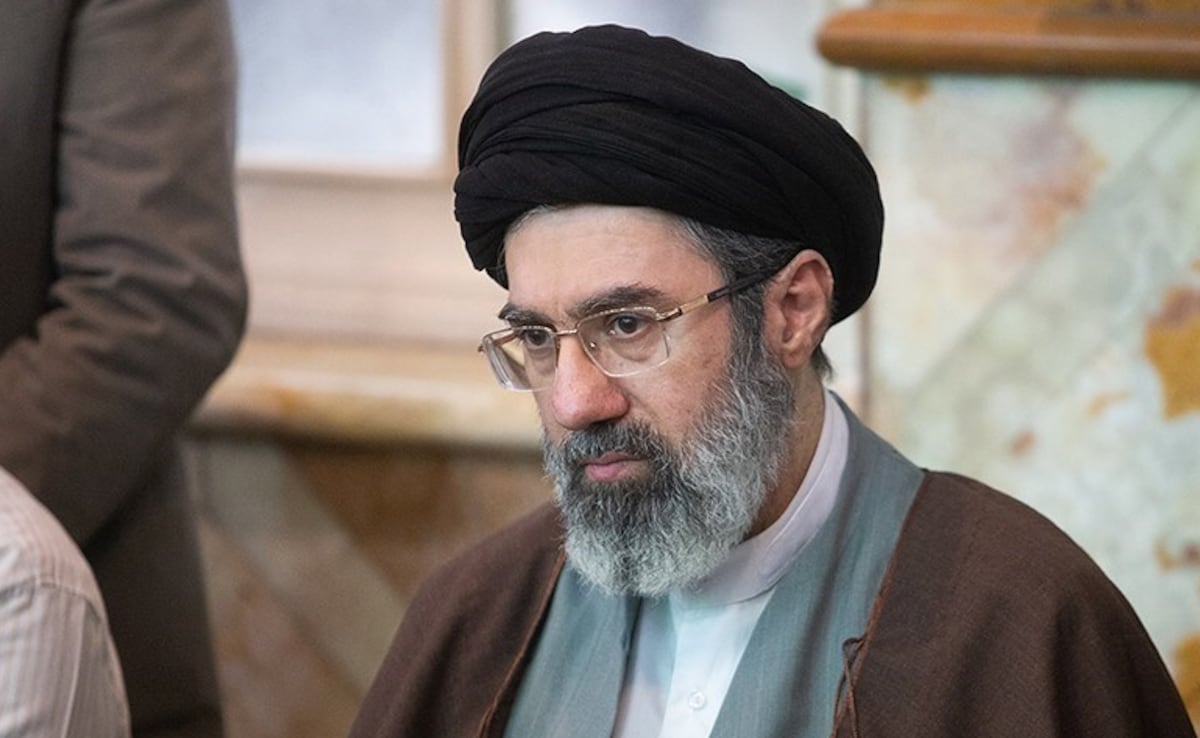
Photo Credit: Wikimedia Commons
Amid speculations about his whereabouts, a US media report claimed that an elite counterterrorism unit has been deployed to protect the new Ayatollah following the assassination of his father.
The force, known as NOPO — Iran's black-clad Counterterrorism Special Force — was assigned to safeguard the leader, according to a Fox News Digital report.
"With Khamenei gone, NOPO will likely now be protecting Mojtaba Khamenei," Ali Safavi, an official with the Foreign Affairs Committee of the Paris-based National Council of Resistance of Iran, or NCRI, told the publication.
The NOPO force, formed in 1991, had the 28th Ruhollah (Khomeini's first name) Division as its "nucleus", according to Safavi, and typically handles hostage rescue operations. "Its task was not to protect Khamenei", he added.
Also Read: In Khamenei's Will, He Didn't Want Son To Be Iran's Supreme Leader: Report
About Mojtaba Khamenei
For most of his 56 years, younger Khamenei has kept a low profile in the Islamic Republic, quietly building networks of influence in Iran's security apparatus, its clergy and within its wealthy business elite. As he steps into his father's shoes, he faces not only a US and Israeli war machine bent on his downfall but also a population in turmoil, much of which is desperate to see the back of his regime.
The second-eldest son of Ali Khamenei — the Supreme Leader killed in the opening hours of the US-Israel onslaught on Iran nine days ago — Mojtaba's ascent comes as Iran's Islamic regime battles the biggest existential threat in its near 50-year history.
He embodies everything that the many thousands of people who have protested against the Islamic Republic in recent years oppose. That includes the impunity with which his father's regime frequently targeted and killed citizens and political opponents and the financial cronyism and corruption that envelop the economy.
His appointment signals that the regime is less likely to concede to Trump's demand that Iran surrender and that he'll continue his father's hardline approach to rule-- prioritising Islam and an anti-US foreign policy above all else. He could also use his leadership to avenge the killing of his father, mother and wife in the February 28 strikes.
Track Latest News Live on NDTV.com and get news updates from India and around the world


