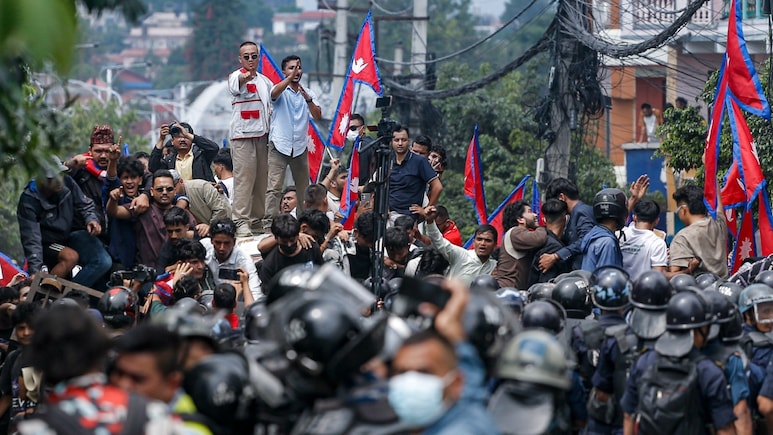
Nepalis voted for a new government on Thursday, March 5, in the country's first election since a Gen Z-led revolution in September 2025 turned the Himalayan nation into an unexpected symbol of youth-driven political change.
By Saturday, March 7, rapper-turned-politician Balendra Shah's newly formed Rastriya Swatantra Party (RSP) was heading for a sweeping victory, breaking the long-standing dominance of traditional parties in the politically fragile country. According to the latest data from the Election Commission, the RSP has won 20 seats and is leading in 98 others, NDTV reported.
The Nepali Congress has won four seats and is leading in 11 constituencies, while the Communist Party of Nepal (Unified Marxist-Leninist) has secured one seat and is ahead in 11 others. The Nepal Communist Party has won two seats and is leading in 10 constituencies. Meanwhile, the Shram Sanskriti Party was ahead in only three seats, down from six earlier.
The Rise Of Balendra Shah
According to a report in The New York Times, when young Nepalis are asked which leader excites them, many say it's Balendra Shah. He is the former mayor of Kathmandu, and at 35, he has become a symbol of political change for many young voters. As mayor, he gained attention for tackling the capital's long-standing garbage problem and built a reputation as an outsider challenging Nepal's traditional political class.
Often seen in black sunglasses and a black suit, Shah is also very active on social media, where he regularly criticises political rivals and foreign influence in Nepal's politics.
The 2025 Uprising And Fall Of A Powerful Leader
The September 2025 protests began with anger over corruption and poor governance, triggered by a government ban on social media. What started as demonstrations quickly grew into a nationwide revolt.
Nepal's Gen Z uprising unfolded at remarkable speed. On September 8, 2025, thousands of young Nepalis took to the streets of Kathmandu to protest corruption, nepotism and restrictions on social media. Security forces responded with lethal force, escalating tensions across the country, according to the NYT.
Within a day, the unrest spiralled into widespread chaos. Protesters attacked government buildings while coordinated arson targeted key symbols of the state, including Parliament and several ministries. Police opened fire during clashes, leaving many dead or injured.
Facing mounting pressure and a rapidly deteriorating situation, Oli resigned. But the damage had already been done. In just two days, a youth-led uprising had effectively brought down the government.
Decisive Moment For Nepal
If Balendra Shah secures victory, it would mark a dramatic break from a system that many believe has paralysed Nepal for decades, reported BBC. Over the past 30 years, the country has seen a revolving door of fragile coalition governments, largely dominated by three major parties, two of them communist.
This election is more than a routine transfer of power. It is a test of whether Gen Z voters, who led the 2025 protests, can persuade the wider electorate that Nepal is ready for a new political generation. Or whether seasoned leaders who have long controlled the system will once again retain power.
The results will determine whether Nepal's youth-driven uprising becomes a lasting political shift, or remains a moment of protest without permanent change.
Track Latest News Live on NDTV.com and get news updates from India and around the world


