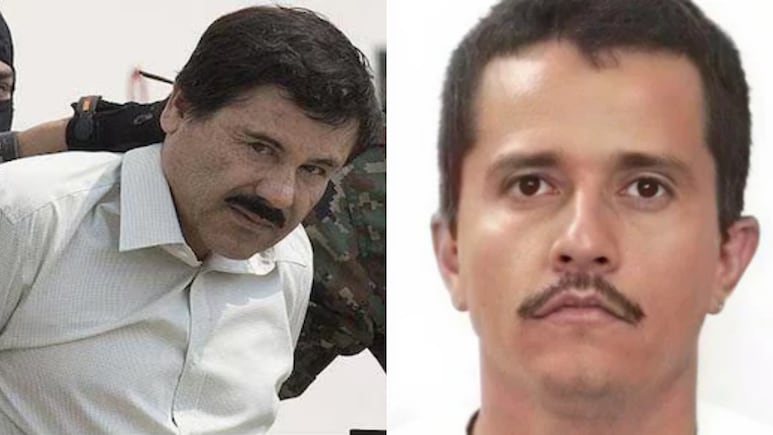
When Mexican soldiers finally cornered Nemesio ‘El Mencho' Oseguera Cervantes, the world's most wanted cartel boss, the ground he stood on was already soaked with the blood of a conflict that had ravaged Mexico for years. El Mencho, the leader of the Jalisco New Generation Cartel(CJNG), was killed in a Mexican military operation in Jalisco on Sunday.
For over a decade, the CJNG, once a regional band of smugglers, had grown into a sprawling empire of fentanyl labs, extortion rackets, and paramilitary hit squads. Under El Mencho's iron rule, the cartel drove with ruthless precision from the Pacific coast inward, confronting rivals with weapons and scorched‑earth violence. He is said to have transformed CJNG into a criminal juggernaut that operated in more than half of Mexico's states and had tentacles across the US border.
A War Between Giants
For decades, the Sinaloa Cartel, once led by Joaquin ‘El Chapo' Guzman, was Mexico's most dominant trafficking organisation. After El Chapo's arrest (he was arrested three times from 1993 to 2014) and extradition, the cartel splintered into rival camps. Los Chapitos, the sons and allies of El Chapo, were on one side and factions loyal to veteran boss El Mayo Zambada were on the other.
By late 2024, this internal war had turned into a full‑blown feud over territory, smuggling routes and legacy power.
The ‘Pact'
In 2024, as Los Chapitos struggled to hold their ground against rival Sinaloa forces, they reportedly struck a pact with El Mencho's CJNG. Known as Fuerzas Especiales Union, the alliance aimed to share fighters, weapons, and territorial control to strengthen each side against common enemies. Reports suggest CJNG supported the Chapitos in contested states like Nayarit and Zacatecas.
Los Chapitos needed reinforcements to survive the internecine Sinaloa conflict, and CJNG saw in them a chance to gain leverage in northern Mexico. That meant access to smuggling routes and influence in towns long held by its rival.
The alliance helped CJNG cement its reach beyond western Mexico, bleeding conflict across new frontiers and turning old battlegrounds into theatres of guerrilla‑style urban warfare.
The Human Cost
What followed was a wave of violence. Cities and highways became lines of fire. Public places would hear echoes of gunshots as rival gunmen battled for control of city blocks and crossroads. Civilians, shopkeepers, children, commuters, found themselves caught in a brutal tug‑of‑war that had only to do with power.
In Zacatecas, Chiapas, Jalisco and beyond, the cartel clashes left scorched roads and shattered families in their wake. Homes were burned, highways blocked by burning vehicles, and entire neighbourhoods saw their nights shattered by firefights between heavily armed groups.
This was Mexico, where fear and violence were part of routine life.
How The Sinaloa Cartel And CJNG Operate In The Americas
In the US, both cartels control the wholesale trade of drugs like fentanyl, cocaine, and meth, but avoid open violence. They instead rely on corruption and discreet operations. In Latin America, their expansion often leads to direct violence as they fight for local allies and drug routes, seen in countries like Colombia, Ecuador, and the Northern Triangle.
Since 2010, Mexican cartels have increased their presence in Colombia, managing production, trafficking, and local armed groups. CJNG aggressively tries to dominate local networks, investing in coca farms, labs, and quality control, going beyond simple trafficking. In some places, like Guatemala, CJNG has expanded more quietly, working with local allies and using threats rather than full-scale violence.
Both cartels plan strategically, mixing violence, corruption, and negotiation to protect their interests. Abroad, Sinaloa focuses on steady control and diplomacy, while CJNG favours fast expansion and intimidation.
Track Latest News Live on NDTV.com and get news updates from India and around the world


