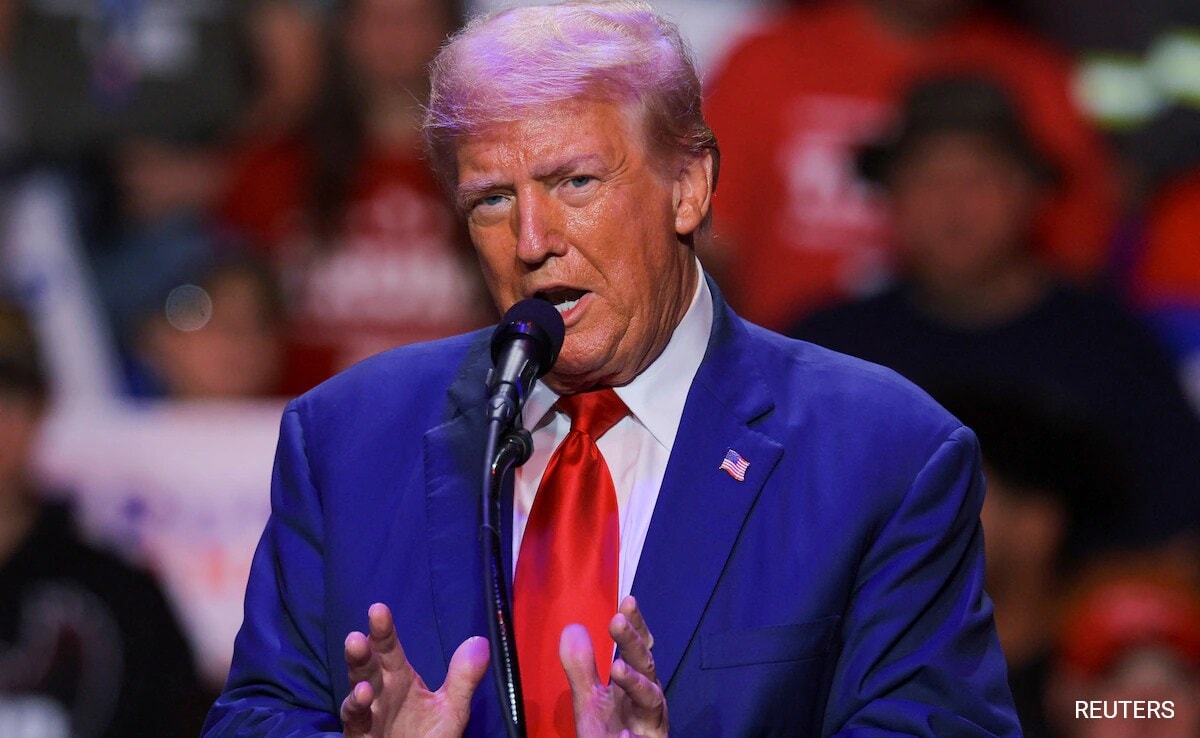
- Donald Trump discussed further military strikes on Iran but chose to continue diplomacy for now
- Trump is comfortable if nuclear talks extend beyond the August 18 deadline set for agreement
- Indirect talks resumed in Doha with envoys and technical experts exchanging messages
US President Donald Trump has discussed the possibility of launching another round of military strikes on Iran with senior defence officials in recent days but has decided to continue with diplomatic efforts for now, according to a report by the Wall Street Journal.
Trump held several conversations with Defence Secretary Pete Hegseth and Chairman of the Joint Chiefs of Staff Gen. Dan Caine about whether Washington should walk away from negotiations and return to a broader military campaign against Tehran.
While some officials described such a move as "finishing the job", Trump has not approved it. Instead, he has indicated that another large-scale attack could damage ongoing negotiations and make it harder to eventually dismantle Iran's nuclear programme.
No Rush To Meet August Deadline
Officials also said Trump has privately told aides that he is comfortable if talks continue beyond the August 18 deadline that had been set for reaching a nuclear agreement.
Rather than escalating immediately, the president is currently content with ordering limited military strikes whenever Iran violates the memorandum of understanding. Those targeted attacks triggered fresh exchanges over the weekend, shaking the fragile ceasefire that had been reached only two weeks earlier.
Military Plans Still On The Table
Presidents routinely receive briefings on military options during international conflicts, and Trump has continued to meet both formally and informally with his top defence team on Iran.
However, officials said the latest discussions show he has not completely ruled out another military campaign if diplomacy fails.
Several officials acknowledged that restarting the war would also amount to admitting that the current diplomatic effort had not delivered the results the administration hoped for.
Despite that, Trump has publicly projected confidence about the negotiations.
"They're agreeing to everything that I want, and they have to," he told reporters last week. "Otherwise, we just go back and do what we have to do."
A White House official said diplomacy remains Trump's preferred path and suggested Iran should seize the opportunity to reach an agreement with Washington.
Fresh Round Of Indirect Talks
Trump's special envoys Steve Witkoff and Jared Kushner travelled to Doha on Tuesday for another round of negotiations.
According to Qatari officials, the discussions remained indirect, with mediators carrying messages between the American and Iranian delegations. Technical experts from both countries were also expected to continue indirect discussions during the week.
The negotiations are now into their second week under a 60-day framework agreed upon last month.
Strait Of Hormuz Remains Biggest Sticking Point
One of the major disputes continues to be the Strait of Hormuz.
Iran wants to charge billions of dollars in fees from ships passing through the strategic waterway. The United States insists international shipping should continue freely, as it did before the conflict began.
Another major disagreement concerns Iran's nuclear programme. Tehran says it will not accept sweeping limits on its nuclear activities, despite Trump's repeated claims that Iran has already agreed to do so.
Energy Secretary Chris Wright criticised Tehran's approach on Tuesday.
"Iran has not been cooperative at all yet," he said on Fox News.
He argued that the US military presence was responsible for stabilising global energy supplies.
"With or without Iran, we will ensure energy flows through the Strait of Hormuz. Of course, better with their cooperation. We want to put an end to their nuclear programme."
Quiet Effort To Avoid Another Conflict
At the same time, Washington is trying to reduce the chances of accidental escalation.
US officials have been working to establish a direct crisis communication channel between the Islamic Revolutionary Guard Corps and US Central Command.
Some officials believe the effort reflects improving communication between both sides, although others cautioned that the arrangement is still in its early stages.
The White House said the communication line is already active and has been used by both countries.
Trump Continues To Review Military Options
Even as diplomacy moves ahead, Trump has continued asking advisers for alternative strategies.
According to officials, Hegseth and Gen. Caine have presented fresh plans that include renewed large-scale airstrikes targeting Iranian military infrastructure if negotiations collapse.
During Operation Epic Fury, which began on February 28, US forces struck more than 13,000 targets inside Iran. The campaign significantly damaged Tehran's stockpile of missiles and drones and weakened its ability to manufacture new weapons.
By late March, military leaders reportedly advised Trump that several more weeks of operations would be needed to fully eliminate Iran's military capabilities. Instead, Trump accepted a ceasefire on April 7.
Preferring Pressure Over War
Officials noted that despite issuing strong warnings since then, Trump has repeatedly stopped short of approving another major offensive.
At different points he threatened to destroy Iran's civilisation and target the country's key oil-export hub at Kharg Island but later stepped back and returned to negotiations.
Trump had previously told aides he would only resume the war if Iran killed American troops.
"If we go and bomb, which we can do very easily if we want, and we spend another two or three weeks bombing, they'll have nothing left whatsoever, but you won't have the strait opened for months. If we do the bombing, a lot of people are going to be killed. Who wants to do that? I don't," he said in June, adding that a deal would be "stronger than doing the bombing".
Track Latest News Live on NDTV.com and get news updates from India and around the world


