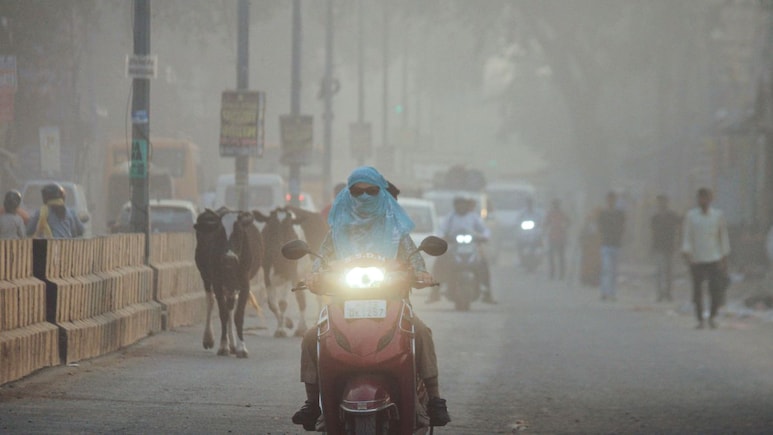
As Delhi and swathes of northern India choke under a blanket of toxic smog – the AQI in the national capital was 437 at 4 pm Tuesday and 370 8 am Wednesday – the Chinese embassy posted a note on X to underline relative success in Beijing's fight against crippling air pollution.
"Both China and India know the struggle with air pollution amid rapid urbanisation," embassy spokesperson Yu Jing said Monday evening, sharing screenshots of AQI readings over Beijing and surrounding areas and over the Delhi and the National Capital Region, or NCR.
The difference between the two readings was stark and deeply worrying; Beijing recorded an AQI of 68 (i.e., moderate air quality) and Delhi NCR a life-threatening 447 (i.e., hazardous air quality).
The difference, Yu said, was due to "China's sustained efforts over the past decade…" and added, "… we will share a bite-sized series exploring how China tackled air pollution…"
Both China and India know the struggle with air pollution amid rapid urbanization 🌫️📊.
— Yu Jing (@ChinaSpox_India) December 15, 2025
🌫️➡️🌤️ While the challenge remains complex, China's sustained efforts over the past decade have delivered noticeable improvements.
📌 In the coming days, we'll share a bite-sized series… pic.twitter.com/0ZG4Rl8ISD
The embassy's offer was well-received by a number of X users who commented on the post, underlining the dire state of affairs in the national capital, where horrific air quality, particularly during the winter months, has become a predictable (but unsolved) annual public crisis.
"Thank you so much. Smog towers built by your country may be gifted to tackle air pollution in Delhi. It may strengthen relations in a way…" one user said, to which Yu responded with a handshake emojis.
A second user said, "Please share your expertise... It will be highly appreciated for South Asia. I love China in terms of transformation of life. Thanks."
"Please ask China to take over the NCR region," a third quipped as others also blamed the government in India for having failed to control the air pollution problem. "China punishes corrupted officials… India rewards with suspension, a slap on the wrist. Results are visible."
Some, however, took pot shots at the Chinese offer. One person posted a screenshot indicating the AQI in Beijing (at 7 pm Monday) was 146. But the comparable reading for Delhi was over 400.
How China is winning its AQI battle
AQI in Beijing and surrounding areas has improved over the past decade after China announced a 'war on pollution' and launched a national, clean-air, action plan in 2013 that set regional targets (and pushed local government officials to meet those) to reduce PM2.5 levels.
Concurrently, the Chinese government expanded and improved monitoring of AQI levels; a critical step in this regard was ensuring data collected was not tampered with in any form.
The use of coal – particularly in heating for small houses and residential areas – was seen as a major reason for the bad air quality, and the Chinese government acted accordingly, weaning its capital off the noxious substance by shifting to gas-powered electricity and heating plants.
Simultaneously, China also clamped down on vehicle emissions through a mix of fuel/vehicle standards and demand management, which meant improving public transportation to encourage commuters to make that switch and regulating the number of private cars allowed.
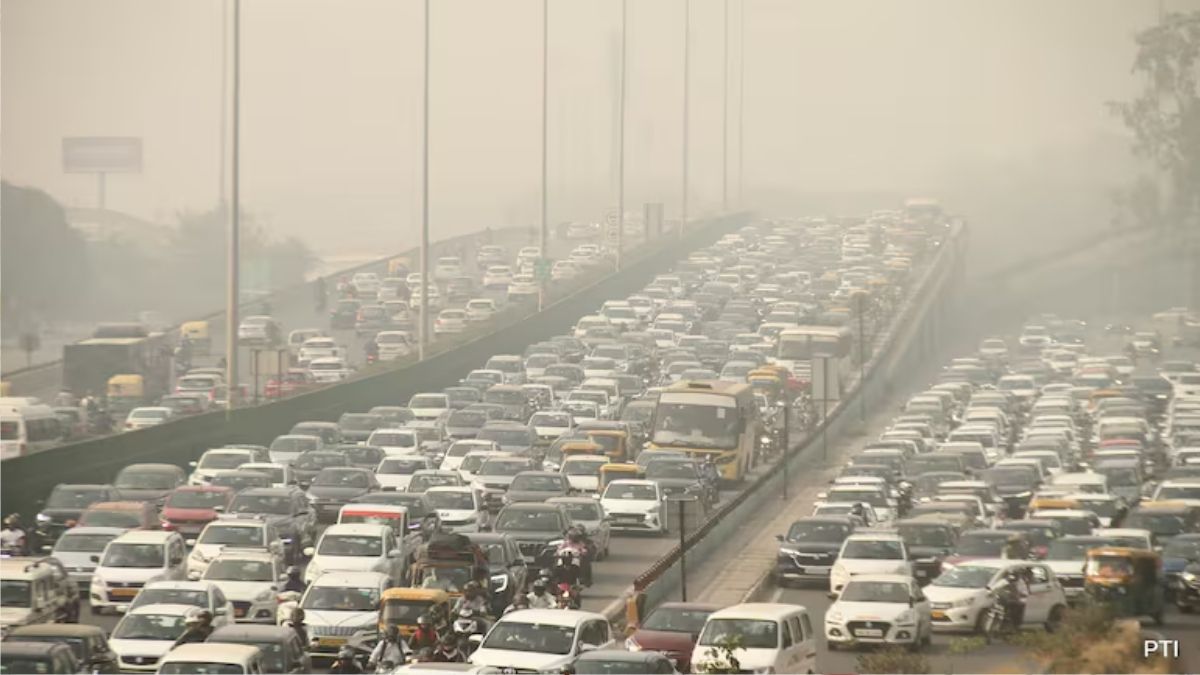
On Wednesday, December 17, Delhi restricted entry of vehicles to control air pollution (File).
The latter was accomplished by limiting the number of license plates issued.
Many of these measures are in place, to some extent, in and around Delhi, such as the previous AAP government's 'odd-even' plan and Delhi Transport Corporation's shift to electric buses, for instance.
But poor enforcement – particularly in the face of a public culture that revels in flouting authority and dropping names to evade accountability – has always been a problem.
But in China, over the next five years, i.e., from 2013 to 2018, these measures were strictly enforced, and added to in 2018 by revised policies focusing on long-term and more sustainable means of improving AQI, which included industrial restructuring and regional coordination.
The result was a staggering 64 per cent drop in PM2.5 levels between 2013 and 2023.
India's AQI problem
The problem Delhi and parts of north India face today is not very different; dust from out-of-control construction sites, vehicular emissions, toxic smoke from heavy industries, the burning of coal, all of these contribute to the blanket of smog that covers the capital every winter.
Like China, India has shifted, or is trying to shift, from taking episodic, or reactive, steps to being is proactive – i.e., identifying and eliminating causes rather than acting after AQI spikes.
Policies to remove older and more polluting vehicles from roads, targeting secondary PM sources like industries, and shifting to eco-friendly home fuels are examples of that attempt.
Enforcement, however, remains the biggest roadblock, and the reversal on the firecrackers ban before Diwali this year is a good illustration. In October, despite a 77.5 per cent drop in farm fires the air quality in the national capital plummeted to a five-year post-Diwali low.
READ | Pollution Measures To Affect 1.2 Million Vehicles In Delhi-NCR
Average PM2.5 levels reached shocking averages of 488 micrograms per cubic metre - nearly 100 times the exposure limit advised by the World Health Organization - and, perhaps worse, represented a catastrophic 212 per cent increase from pre-Diwali levels.
NDTV Special | 'Green' Crackers? Delhi's Worst Post-Diwali Air In 5 Years
Air pollution levels, in fact, reached a three-year high.
This after the Supreme Court permitted bursting of 'green' firecrackers within specified hours, orders that, experts argued, should not have been passed and, in any case, were ignored.
NDTV is now available on WhatsApp channels. Click on the link to get all the latest updates from NDTV on your chat.
Track Latest News Live on NDTV.com and get news updates from India and around the world


