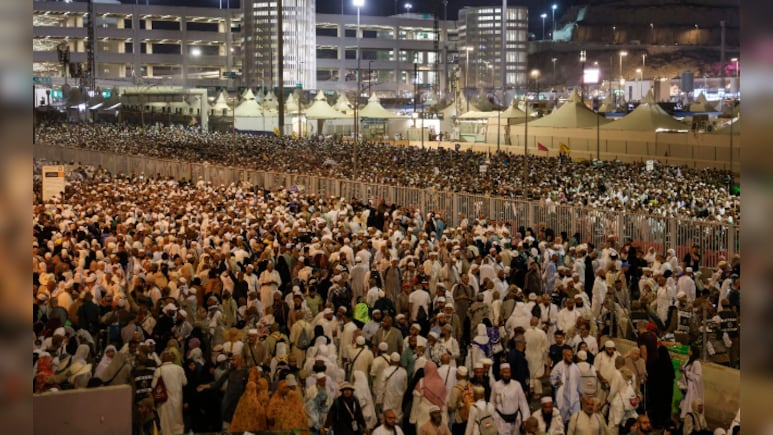
Climate change is gradually shrinking the times of year when the annual Muslim hajj pilgrimage can take place in safe weather conditions, according to a new study published on Friday.
The hajj in western Saudi Arabia, one of the most arid areas on the planet, is one of the world's largest religious gatherings, when hundreds of thousands of pilgrims are exposed to extreme heat.
This year's gathering was again held in temperatures exceeding 40 degrees Celcius.
According to the study by the Britain-based group World Weather Attribution, temperatures recorded in May in Mecca "are now typical of summer in the 1980s as climate change shrinks the safe window" for the hajj.
The hajj's timing is governed by the Islamic lunar calendar, and it moves back by about 11 days each year in the Gregorian calendar.
After taking place for several years during the hot season, this year's was at the end of May, and in 2027 it is expected to take place in mid-May.
The timing will move gradually closer to winter, offering a temporary respite, but this will not be enough to offset the rise in temperatures, the researchers said.
Climate change "is extending the duration of extreme heat in Mecca into historically cooler months," the study said.
"Average temperatures above 32 degrees C (90F) -- typical of summer between 1970 and 1990 -- are now expected almost every year in May. Climate change has increased these averages by about 3.5 degrees C" since pre-industrial times, it said.
The mainly open-air Islamic ritual, one of the five pillars of Islam, is held over several days in and around the holy city of Mecca.
After more than 1,300 people died during the 2024 pilgrimage in searing temperatures of above 50C, the Saudi authorities strengthened anti-heat measures, mainly through the massive use of air conditioning.
A study published in 2019 in the US journal Geophysical Research Letters said heat stress during the hajj could once again exceed the "extreme danger threshold" between 2047 and 2052, and then between 2079 and 2086.
(Except for the headline, this story has not been edited by NDTV staff and is published from a syndicated feed.)
Track Latest News Live on NDTV.com and get news updates from India and around the world


