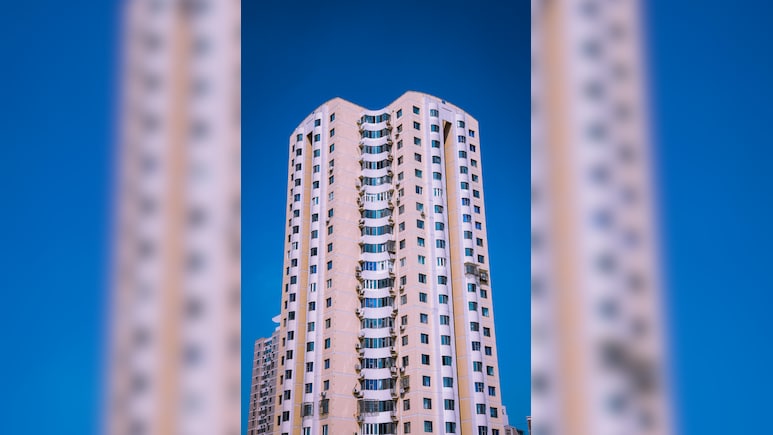
A Chinese homebuyer lost both his apartment and his money after discovering that the 34th-floor flat he purchased did not exist because the building itself was only 32 stories tall. The buyer, identified by his surname Shen, purchased the apartment in 2013 in a village near Xi'an in China's Shaanxi province. Years later, he learned that he had fallen victim to a real estate scam involving a form of grey-market housing, South China Morning Post reported.
Shen bought a 90-square-metre apartment on the supposed 34th floor for 2,646 yuan (about Rs 37,431) per square metre paying roughly one-third of the area's average market rate. The lower price (Rs 33.69 lakh) was due to the project's "limited property rights" status - an unofficial term for housing illegally built on collectively owned rural land instead of state-owned urban land.
These properties are often built without official approvals and lack the legal protections enjoyed by regular residential projects. They cannot be legally resold and are not recognised under China's property laws, but their affordability continues to attract buyers.
In 2013, Shen paid a down payment of 117,700 yuan (around Rs 16 lakh). According to him, the developer assured buyers that the necessary approvals and certificates would be secured later. However, such projects are typically unable to obtain the required legal documentation.
The apartment was originally scheduled for delivery in 2015, but construction delays pushed the timeline back. In 2017, the developer informed Shen that the completed building had only 32 floors, making his purchased unit impossible. The company initially offered him a replacement apartment on the 32nd floor. However, Shen was unable to immediately pay the remaining balance, and the unit was sold to another buyer two months later.
Left without a home, Shen sought a refund. The developer claimed it was facing financial difficulties and could not return the money in full. Shen received partial repayments of 20,000 yuan in 2020 and 50,000 yuan in 2022 before all communication from the developer stopped.
He later took the matter to arbitration. Authorities ordered the developer to repay the remaining 47,700 yuan of his down payment, along with 27,000 yuan in interest. The ruling also stipulated additional compensation of 47,000 yuan if the payment was not made.
Despite the order, Shen had still not received the outstanding amount as of May this year. A local court subsequently imposed a consumption restriction order on the debtor. However, enforcement proved difficult because the developer reportedly had no registered assets or savings under its name.
More than a decade after purchasing the apartment, Shen remains without a home and without full compensation, a case that has reignited discussion in China about the risks of buying low-cost properties that lack legal protections.
Track Latest News Live on NDTV.com and get news updates from India and around the world


