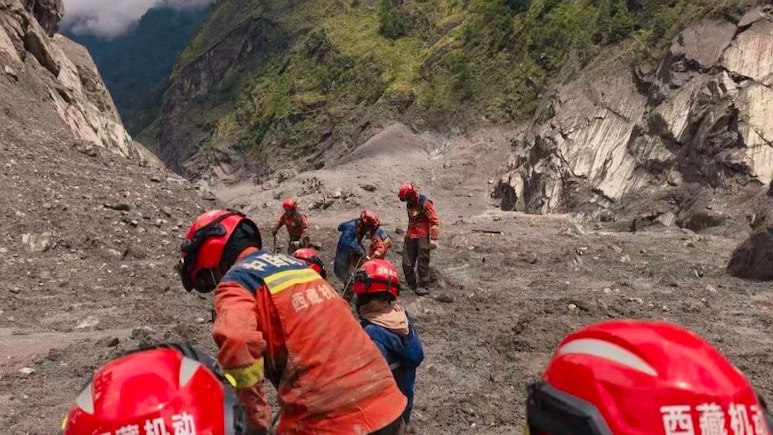
An independent and accurate assessment on the Chinese side of the damage caused by the same natural disaster that hit Nepal days ago, killing over 500, is difficult to make due to the Asian giant's iron grip on the flow of information from the Tibet region which it sees as sensitive, according to a report.
China has so far confirmed just five people died when the massive force of the flash flood carrying mud and boulders overran the area. However, the villages on the Chinese side of the border with Nepal were home to thousands of people, the British newspaper The Guardian reported.
Journalists from Nepal rushed towards the disaster site and tried to get as close as possible to assess the situation. They also showed the scale of the tragedy with eyewitnesses talking on camera how the nightmare unfolded.
However, in China, the state media only carried reports of rescue work and nothing about what the flash flood had destroyed and killed in its wake. The report said that in a "broadcast from a relief centre in Tibet, the [Chinese state media] journalist did not speak to any of the people sitting behind him."
Tibet, being a sensitive region for China, has seen intermittent protests including self-immolations by Tibetans calling for liberty and religious freedom. Except for the stage-managed visits sponsored by the Chinese government, the foreign press cannot access Tibet easily.
The Nepali army this morning said they are working to rescue workers who are believed trapped in a tunnel at the Trishuli 3A hydroelectric site after they successfully inserted a pipe into the passage.
Teams had "started sending air through the small opening", Nepal's Home Minister Sudan Gurung said in a statement. But efforts were affected by rain and rising river waters, with Nepal's disaster authorities urging rescue teams to exercise caution.
More than 100 workers may still be alive and trapped inside such tunnels, with rescue efforts focused on the Trishuli 3A and 3B sites.
While the exact cause of the collapse is unclear, climate change is causing glaciers to melt worldwide, increasing the risk of such disasters.
"The sudden glacial collapse and flash flood is a devastating reminder of how fragile these mountain environments can be," UN climate chief Simon Steill said in a statement.
Meanwhile, a fourth Indian flight carrying essential supplies and technical capabilities to support Nepal's rescue and relief operations touched down in Kathmandu, External Affairs Minister S Jaishankar said today.
He said an Indian Air Force (IAF) C-130 aircraft brought additional assistance to the Himalayan nation, carrying specialised teams and equipment. The equipment and personnel include a tunnel technical contingent along with tools for search and rescue operations, as well as a team of forensic experts and equipment for DNA analysis.
Track Latest News Live on NDTV.com and get news updates from India and around the world


