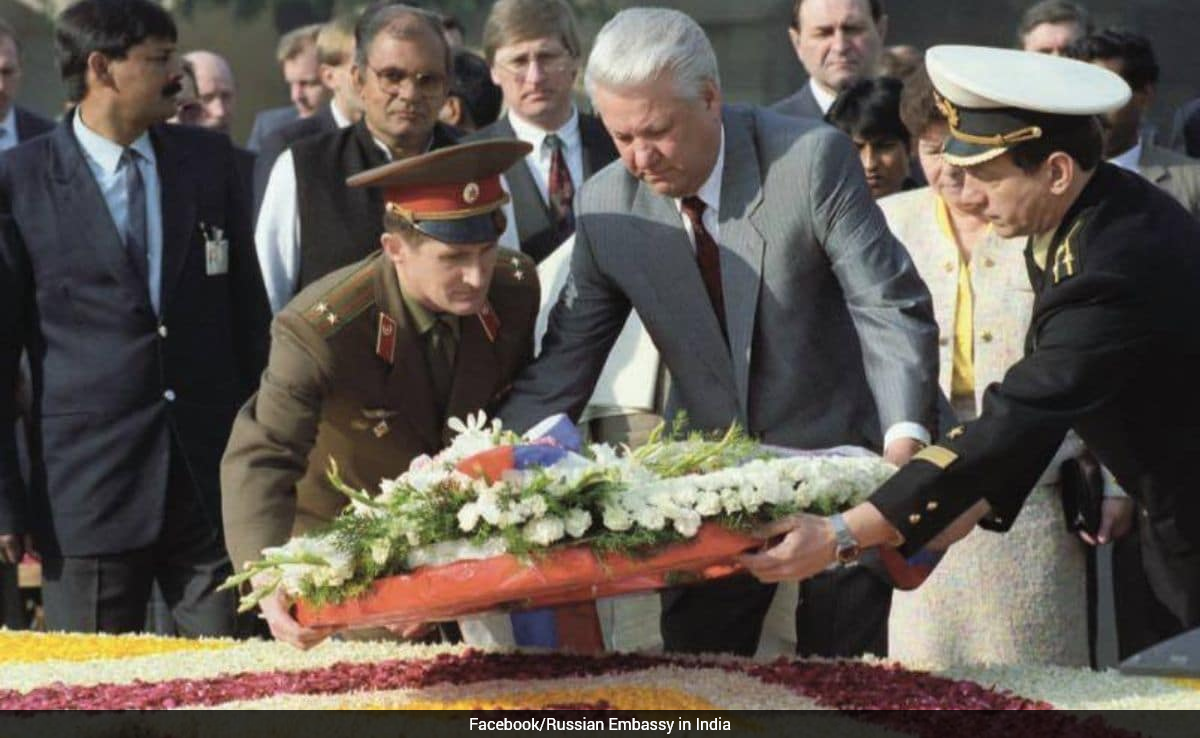
India and the Soviet Union shared friendly and cooperative relations during the Cold War, but the collapse of the USSR in 1991 and the emergence of a unipolar world left India in the lurch. In 1993, the Russian President paid a visit to India, and the situation demanded that the two countries be there for each other.
Russia, under President Boris Yeltsin, was trying to rebuild foreign relations, and his trip to India was a major step in that direction. It marked the beginning of a new era in India-Russia relations. Yeltsin wasn't just another leader; he led the nation through the transition from the old Soviet system to a new, more open nation.
Before leaving Moscow in 1993, Yeltsin told reporters, "We are eager to build strong ties with India, but without playing the India card against the United States and China as happened during the Cold War".
20-Year Friendship and Cooperation Treaty
One of the most important deals was the signing of a 20-year friendship treaty meant to reset and modernise relations after the collapse of the Soviet Union. It was inspired by the 1971 Indo-Soviet Treaty of Peace and Friendship.
The key difference, though, was skipping the military assistance clause. The 1971 treaty said, "If India or the USSR was attacked by another country, the other side would help or support them," but the new friendship treaty excluded this clause.
Strengthen Economic Issue
After the Soviet Union collapsed in 1991, Russia inherited all of the USSR's financial agreements, including India's large debt to the USSR. This debt had to be repaid, but the currency used earlier (the rupee–ruble trade system) no longer worked and Russia wanted repayment in hard currency, like US dollars.
Both countries needed each other's support at that time because Russia was in need of money, while India wanted Russia to continue supplying defence. Yeltsin then sent his Deputy Prime Minister, Vladimir Shumeik, to India a week before the visit, and a new trade and economic pact was signed.
His discussions with Prime Minister PV Narasimha Rao focused on overcoming challenges such as financial debt, stabilising defence collaboration, and reaffirming diplomatic trust. This visit laid the groundwork for all future India-Russia interactions in the post Soviet era.
Under the 1993 deal, they agreed that India would repay a tenth of its Rs 30,000 crore debt over 12 years, and the rest in 33 instalments with Indian exports. They also signed major deals to buy Su-30 fighter jets and upgrade MiG-21 aircraft.
The collapse of the Soviet Union also left the Indian armed forces short of spare parts in the defence sector, LA Times reported at the time. During Yeltsin's visit, the two countries agreed to set up factories to manufacture spares.
Track Latest News Live on NDTV.com and get news updates from India and around the world


